South · Central Flyway
Doves in Texas
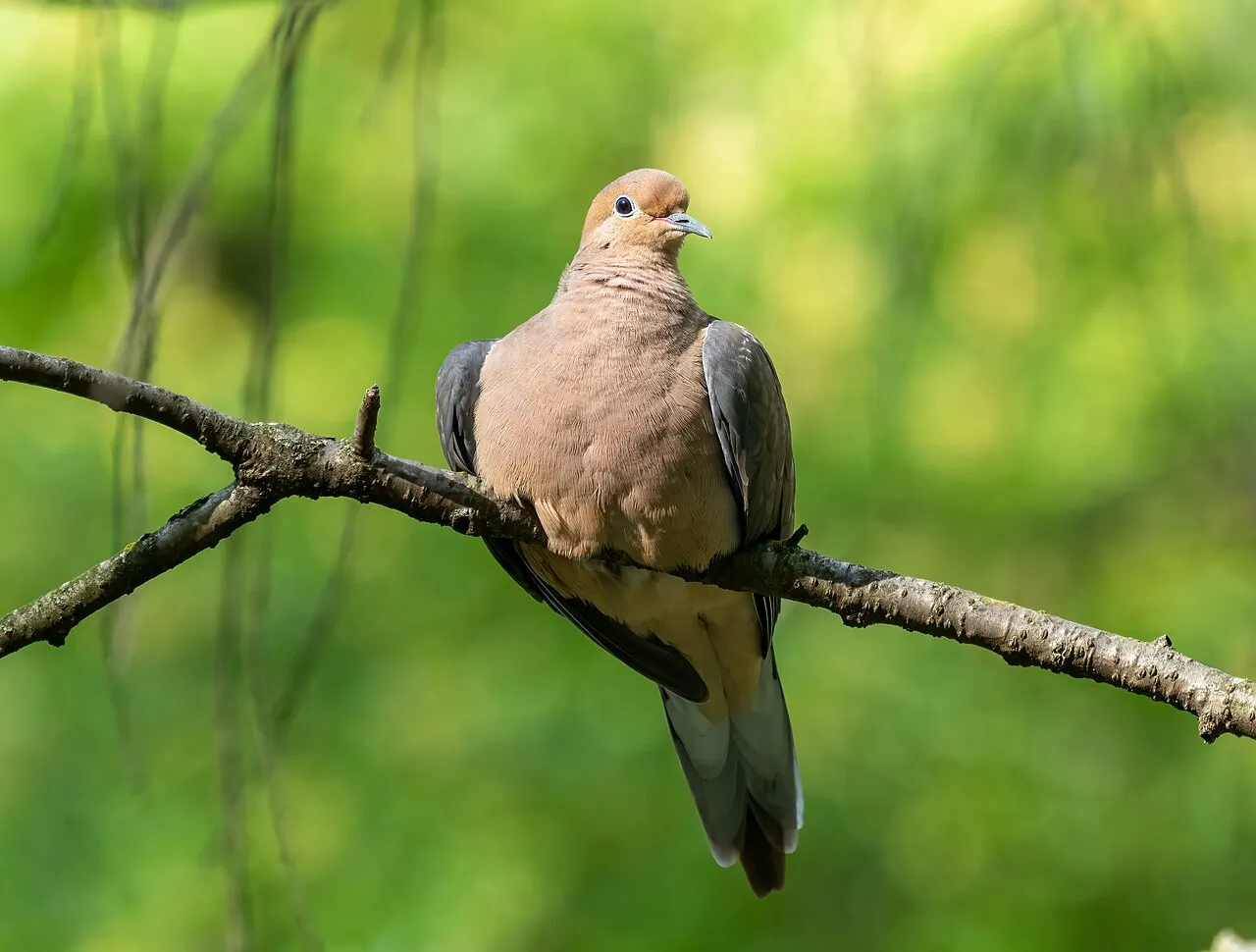
Doves in Texas come down to 11 species with regular eBird records, led by the Mourning Dove. Together they account for 2,087,674 of the 35 million eBird records from 2020–2024 — 5.9% of everything reported in the state.
The full list: Mourning Dove, White-winged Dove, Rock Pigeon, Eurasian Collared-Dove, Inca Dove, White-tipped Dove, Common Ground Dove, Red-billed Pigeon, Band-tailed Pigeon, Ruddy Ground Dove and African Collared-Dove. Doves and pigeons are the plump, small-headed birds that walk rather than hop and feed almost entirely on seeds. The Mourning Dove is among the most widespread birds in the country; several other species are regional, and the Eurasian Collared-Dove and Rock Pigeon are introduced.
Doves in Texas: every species, most-reported first
Every dove with at least 25 eBird records in the state from 2020–2024, most-reported first. The status label is derived from each species’ own monthly share of all state records.
1. Mourning Dove (Zenaida macroura) — 743,096 records, 2.1% of the state’s eBird total; a year-round resident, reported in every month.
2. White-winged Dove (Zenaida asiatica) — 692,714 records, 2.0% of the state’s eBird total; a year-round resident, reported in every month.
3. Rock Pigeon (Columba livia) — 226,143 records, 0.6% of the state’s eBird total; a year-round resident, reported in every month.
4. Eurasian Collared-Dove (Streptopelia decaocto) — 195,561 records, 0.6% of the state’s eBird total; a year-round resident, reported in every month.
5. Inca Dove (Columbina inca) — 125,979 records, 0.4% of the state’s eBird total; a year-round resident, reported in every month.
6. White-tipped Dove (Leptotila verreauxi) — 65,435 records, 0.2% of the state’s eBird total; a year-round resident, reported in every month.
7. Common Ground Dove (Columbina passerina) — 33,952 records, 0.10% of the state’s eBird total; a year-round resident, reported in every month.
8. Red-billed Pigeon (Patagioenas flavirostris) — 3,435 records, 0.01% of the state’s eBird total; a winter visitor, present mainly from November to April and peaking in March.
9. Band-tailed Pigeon (Patagioenas fasciata) — 749 records, 0.00% of the state’s eBird total; a summer visitor, present mainly from May to August and peaking in August.
10. Ruddy Ground Dove (Columbina talpacoti) — 546 records, 0.00% of the state’s eBird total; a winter visitor, present mainly from November to January and peaking in January.
11. African Collared-Dove (Streptopelia roseogrisea) — 64 records, 0.00% of the state’s eBird total; a summer visitor, present mainly from February to October and peaking in October.
When to see doves in Texas
Adding up every species’ share of state eBird records month by month, doves are most prominent in July, August and June and least in December and January. 7 of the 11 species are year-round — Mourning Dove, White-winged Dove, Rock Pigeon, Eurasian Collared-Dove, Inca Dove and White-tipped Dove and 1 more — so there is no month without them.
Summer visitors. Band-tailed Pigeon arrives around May and is mostly gone after August (peak August); African Collared-Dove arrives around February and is mostly gone after October (peak October).
Winter visitors. Red-billed Pigeon arrives around November and leaves after April (peak March); Ruddy Ground Dove arrives around November and leaves after January (peak January).
Attracting doves to Texas backyards
Doves feed on the ground and on platform feeders, taking millet, cracked corn, and sunflower. A shallow bird bath matters as much as food; doves drink more than most songbirds.
In Texas the dove most likely to turn up is the Mourning Dove, a year-round resident, followed by the White-winged Dove. Its own page covers month-by-month activity and attraction tips for this state.
Doves in Texas: FAQ
How many species of doves are there in Texas?
11 species of doves have regular eBird records in Texas (at least 25 records in 2020–2024): Mourning Dove, White-winged Dove, Rock Pigeon, Eurasian Collared-Dove, Inca Dove, White-tipped Dove, Common Ground Dove, Red-billed Pigeon, Band-tailed Pigeon, Ruddy Ground Dove and African Collared-Dove.
What is the most common dove in Texas?
The Mourning Dove, with 743,096 eBird records in 2020–2024, followed by the White-winged Dove with 692,714. It is a year-round resident, reported in every month.
When is the best time to see doves in Texas?
July, August and June, when the combined share of Texas eBird records belonging to doves is highest. Summer visitors such as the Band-tailed Pigeon arrive around May. Winter visitors such as the Red-billed Pigeon arrive around November.
More birds in Texas
Doves in other states
Doves in Texas: sources
Every number on this page comes from the EOD – eBird Observation Dataset published by the Cornell Lab of Ornithology and distributed through GBIF under a CC BY 4.0 license: Texas records from 2020–2024, retrieved 2026-09-18. Species are drawn from the families Columbidae; only species with at least 25 records are listed, and a species is called a year-round resident when its monthly share of state records stays above 30% of its own peak in ten or more months. “Records” are individual eBird observations, so they reflect how often birders report a species, not a population count.