South · Atlantic Flyway
Warblers in Florida
Warblers in Florida come down to 42 species with regular eBird records, led by the Palm Warbler. Together they account for 2,608,635 of the 32 million eBird records from 2020–2024 — 8.2% of everything reported in the state.
The full list: Palm Warbler, Yellow-rumped Warbler, Northern Parula, Common Yellowthroat, Pine Warbler, Black-and-white Warbler, Yellow-throated Warbler, Prairie Warbler, American Redstart, Ovenbird, Orange-crowned Warbler, Black-throated Blue Warbler, Cape May Warbler, Northern Waterthrush, Yellow Warbler, Blackpoll Warbler, Hooded Warbler, Magnolia Warbler, Worm-eating Warbler, Prothonotary Warbler, Tennessee Warbler, Black-throated Green Warbler, Louisiana Waterthrush, Bay-breasted Warbler, Chestnut-sided Warbler, Blackburnian Warbler, Swainson's Warbler, Blue-winged Warbler, Kentucky Warbler, Yellow-breasted Chat, Wilson's Warbler, Nashville Warbler, Golden-winged Warbler, Cerulean Warbler, Connecticut Warbler, Canada Warbler, Black-throated Gray Warbler, MacGillivray's Warbler, Kirtland's Warbler, Townsend's Warbler, Mourning Warbler and Hermit Warbler. Wood-warblers are small, active, often brightly colored insect-eaters, and for many birders they define spring migration. A few species winter in the southern states; most breed in the north and pass through in April–May and again in September–October.
Warblers in Florida: every species, most-reported first
Every warbler with at least 25 eBird records in the state from 2020–2024, most-reported first. The status label is derived from each species’ own monthly share of all state records.
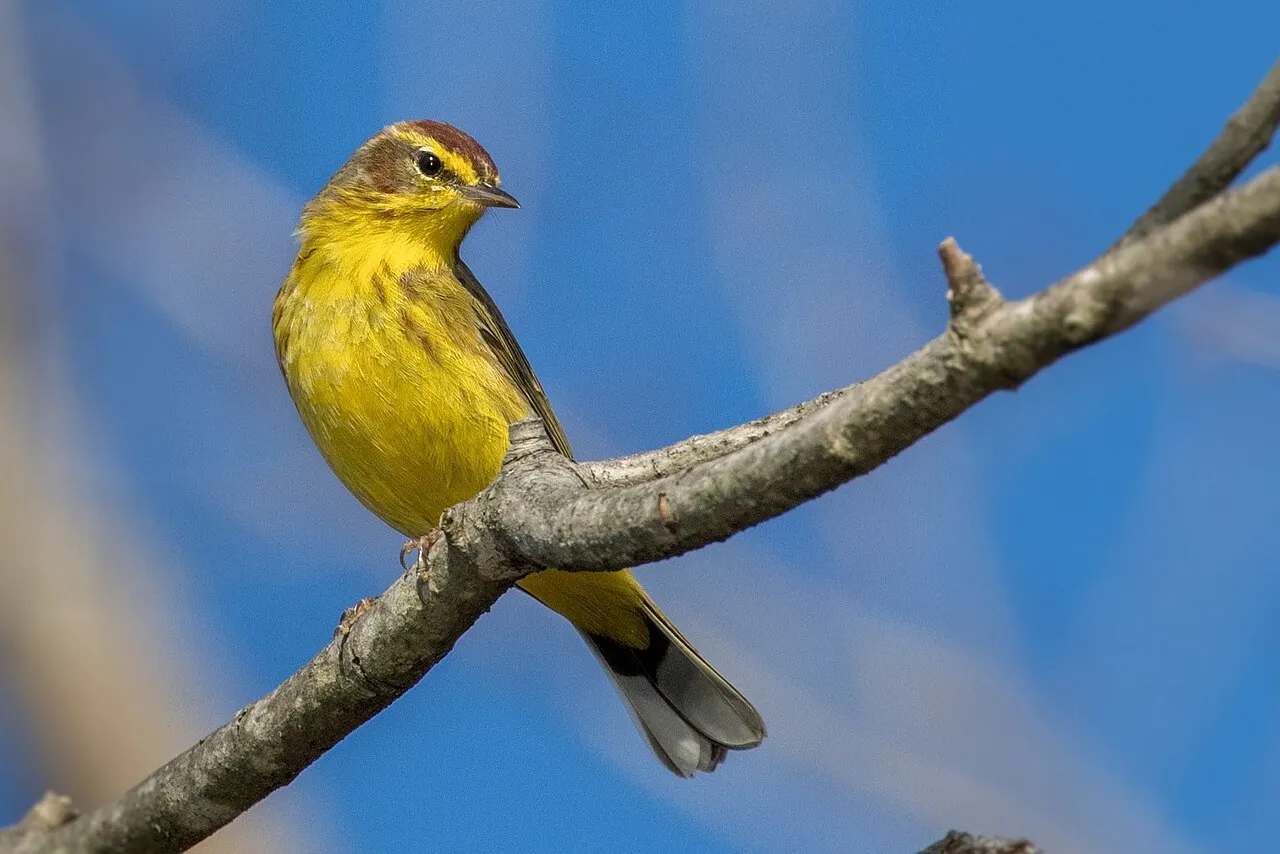
1. Palm Warbler (Setophaga palmarum) — 549,338 records, 1.7% of the state’s eBird total; a winter visitor, present mainly from October to April and peaking in November.
2. Yellow-rumped Warbler (Setophaga coronata) — 404,821 records, 1.3% of the state’s eBird total; a winter visitor, present mainly from November to March and peaking in February.
3. Northern Parula (Setophaga americana) — 285,456 records, 0.9% of the state’s eBird total; a summer visitor, present mainly from March to October and peaking in April.
4. Common Yellowthroat (Geothlypis trichas) — 229,394 records, 0.7% of the state’s eBird total; a year-round resident, reported in every month.
5. Pine Warbler (Setophaga pinus) — 182,372 records, 0.6% of the state’s eBird total; a year-round resident, reported in every month.
6. Black-and-white Warbler (Mniotilta varia) — 177,193 records, 0.6% of the state’s eBird total; a winter visitor, present mainly from August to April and peaking in October.
7. Yellow-throated Warbler (Setophaga dominica) — 137,388 records, 0.4% of the state’s eBird total; a winter visitor, present mainly from August to March and peaking in September.
8. Prairie Warbler (Setophaga discolor) — 123,483 records, 0.4% of the state’s eBird total; a passage migrant, reported mainly in March, April, August and September with a peak in September.
9. American Redstart (Setophaga ruticilla) — 110,083 records, 0.3% of the state’s eBird total; a passage migrant, reported mainly in April, May, August and September with a peak in October.
10. Ovenbird (Seiurus aurocapilla) — 60,143 records, 0.2% of the state’s eBird total; a passage migrant, reported mainly in April, September and October with a peak in September.
11. Orange-crowned Warbler (Leiothlypis celata) — 45,474 records, 0.1% of the state’s eBird total; a winter visitor, present mainly from November to March and peaking in December.
12. Black-throated Blue Warbler (Setophaga caerulescens) — 42,622 records, 0.1% of the state’s eBird total; a passage migrant, reported mainly in April, May, September and October with a peak in October.
The remaining 30 species — Cape May Warbler, Northern Waterthrush, Yellow Warbler, Blackpoll Warbler, Hooded Warbler, Magnolia Warbler, Worm-eating Warbler, Prothonotary Warbler, Tennessee Warbler, Black-throated Green Warbler, Louisiana Waterthrush, Bay-breasted Warbler, Chestnut-sided Warbler, Blackburnian Warbler, Swainson's Warbler, Blue-winged Warbler, Kentucky Warbler, Yellow-breasted Chat, Wilson's Warbler, Nashville Warbler, Golden-winged Warbler, Cerulean Warbler, Connecticut Warbler, Canada Warbler, Black-throated Gray Warbler, MacGillivray's Warbler, Kirtland's Warbler, Townsend's Warbler, Mourning Warbler and Hermit Warbler — are recorded regularly but in smaller numbers; see the cards above for their status.
When to see warblers in Florida
Adding up every species’ share of state eBird records month by month, warblers are most prominent in October, September and April and least in July and June. 2 of the 42 species are year-round — Common Yellowthroat and Pine Warbler — so there is no month without them.
Summer visitors. Northern Parula arrives around March and is mostly gone after October (peak April).
Winter visitors. Palm Warbler arrives around October and leaves after April (peak November); Yellow-rumped Warbler arrives around November and leaves after March (peak February); Black-and-white Warbler arrives around August and leaves after April (peak October); Yellow-throated Warbler arrives around August and leaves after March (peak September); Orange-crowned Warbler arrives around November and leaves after March (peak December); Black-throated Green Warbler arrives around March and leaves after April (peak October).
Passage migrants. Prairie Warbler is reported mainly in March, April, August and September; American Redstart is reported mainly in April, May, August and September; Ovenbird is reported mainly in April, September and October; Black-throated Blue Warbler is reported mainly in April, May, September and October; Cape May Warbler is reported mainly in April, May, September and October; Northern Waterthrush is reported mainly in April, August, September and October.
Attracting warblers to Florida backyards
Warblers rarely visit seed feeders. Native trees and shrubs that host insects, a shallow moving-water feature, and no pesticides are what bring them into a yard, especially during migration.
In Florida the warbler most likely to turn up is the Palm Warbler. Its own page covers month-by-month activity and attraction tips for this state.
Warblers in Florida: FAQ
How many species of warblers are there in Florida?
42 species of warblers have regular eBird records in Florida (at least 25 records in 2020–2024): Palm Warbler, Yellow-rumped Warbler, Northern Parula, Common Yellowthroat, Pine Warbler, Black-and-white Warbler, Yellow-throated Warbler, Prairie Warbler, American Redstart, Ovenbird, Orange-crowned Warbler, Black-throated Blue Warbler, Cape May Warbler, Northern Waterthrush, Yellow Warbler, Blackpoll Warbler, Hooded Warbler, Magnolia Warbler, Worm-eating Warbler, Prothonotary Warbler, Tennessee Warbler, Black-throated Green Warbler, Louisiana Waterthrush, Bay-breasted Warbler, Chestnut-sided Warbler, Blackburnian Warbler, Swainson's Warbler, Blue-winged Warbler, Kentucky Warbler, Yellow-breasted Chat, Wilson's Warbler, Nashville Warbler, Golden-winged Warbler, Cerulean Warbler, Connecticut Warbler, Canada Warbler, Black-throated Gray Warbler, MacGillivray's Warbler, Kirtland's Warbler, Townsend's Warbler, Mourning Warbler and Hermit Warbler.
What is the most common warbler in Florida?
The Palm Warbler, with 549,338 eBird records in 2020–2024, followed by the Yellow-rumped Warbler with 404,821. It is a winter visitor, present mainly from October to April and peaking in November.
When is the best time to see warblers in Florida?
October, September and April, when the combined share of Florida eBird records belonging to warblers is highest. Summer visitors such as the Northern Parula arrive around March. Winter visitors such as the Palm Warbler arrive around October.
More birds in Florida
Warblers in other states
Warblers in Florida: sources
Every number on this page comes from the EOD – eBird Observation Dataset published by the Cornell Lab of Ornithology and distributed through GBIF under a CC BY 4.0 license: Florida records from 2020–2024, retrieved 2026-09-18. Species are drawn from the families Parulidae; only species with at least 25 records are listed, and a species is called a year-round resident when its monthly share of state records stays above 30% of its own peak in ten or more months. “Records” are individual eBird observations, so they reflect how often birders report a species, not a population count.