Corvidae · reviewed profile
Blue Jay
Cyanocitta cristata
The blue jay is a large, crested, noisy songbird of eastern and central forests and suburbs, known for its intelligence, tight family bonds and habit of imitating hawks 12.
This profile draws on the Cornell Lab of Ornithology's All About Birds accounts 12 and on eBird records from the nine states covered on this site 3.
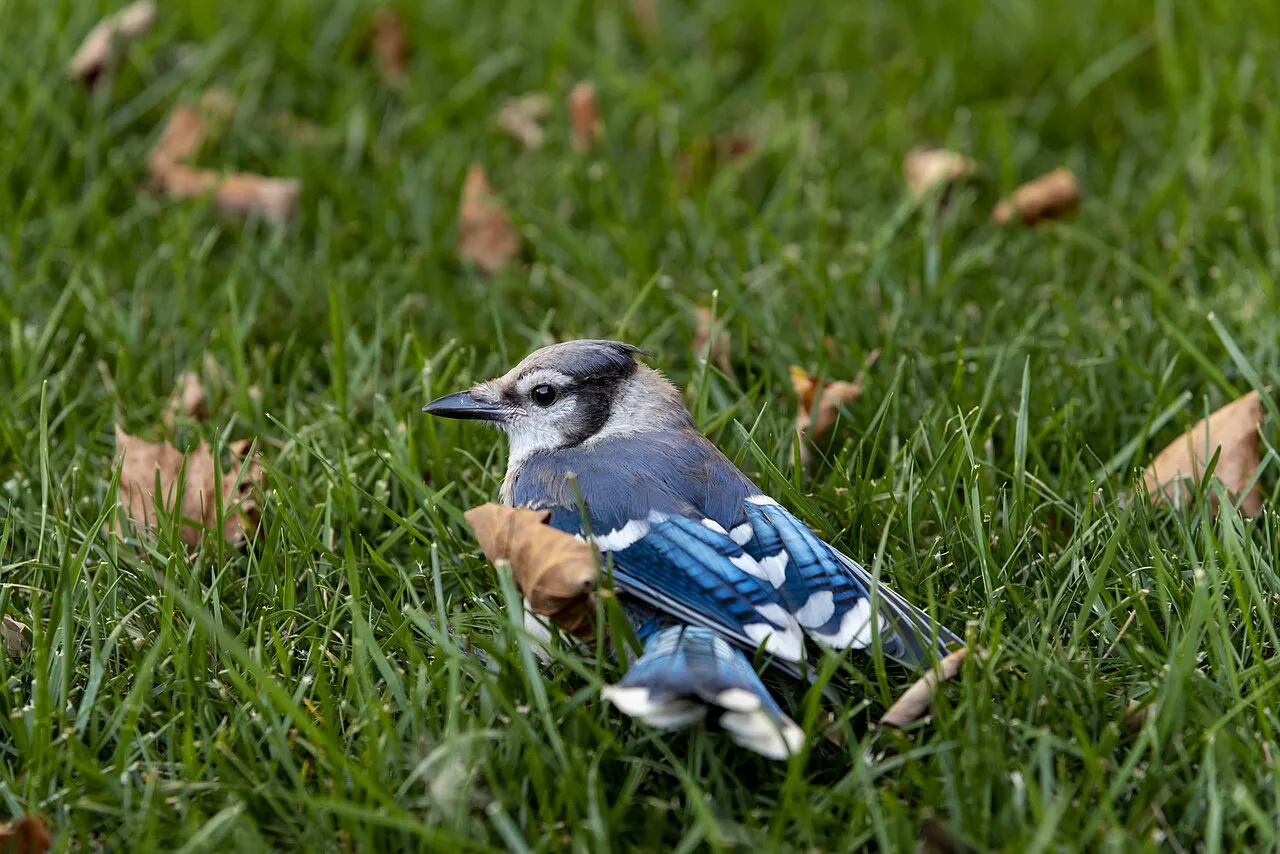
Blue jay identification and behavior
The perky crest and blue, white, gray and black plumage are unmistakable; the blue is not a pigment at all — the feathers contain brown melanin, and the blue is produced by light scattering in the feather structure 1. Jays lower the crest when feeding peacefully with family or tending nestlings 1.
Blue jays often mate for life and stay with their mate all year. Only the female incubates, fed entirely by the male; for the first 8–12 days after hatching she broods the young while he provides food 2. The jay frequently mimics the calls of hawks, especially the Red-shouldered Hawk, either to warn other jays or to fool other species into thinking a hawk is present 1.
Thousands of blue jays migrate in flocks along the Great Lakes and Atlantic coasts, yet much about it remains a mystery: some are present all winter everywhere in the range, and an individual may migrate south one year, stay north the next, and migrate again the year after 1.
Blue jay habitat and range
Blue jays occur in all kinds of forests but especially near oaks, and are more abundant near forest edges than in deep forest; they are common in urban and suburban areas, particularly where oaks or bird feeders are found 2.
Blue jay diet and feeder foods
Jays glean insects and take nuts, seeds and grains in trees, shrubs and on the ground. Stomach contents are about 22 percent insect over the year, with acorns, nuts, fruit and grain making up almost all the rest 2. The reputation for raiding nests is overstated: in an extensive study only 1% of jays showed evidence of eggs or birds in their stomachs, and of 530 stomachs examined, traces were found in just six 12.
At feeders, blue jays prefer tray or hopper feeders on a post rather than hanging feeders, and take peanuts, sunflower seeds and suet; they often drink from birdbaths, and planting oaks provides acorns for future jays 1.
Blue jay nesting
Jays build in the crotch or thick outer branches of a deciduous or coniferous tree, usually 10–25 feet up; both sexes gather material and build, the male doing more gathering and the female more building 2. Clutches are 2–7 bluish or light brown eggs with brownish spots, incubated 17–18 days, with the young leaving after 17–21 days; one brood a year 2.
Conservation status
Blue jays are common, but populations declined by an estimated 0.6% per year, about 27% in total, between 1966 and 2019 according to the North American Breeding Bird Survey. Partners in Flight estimates a global breeding population of 17 million and rates the species 9 out of 20 on the Continental Concern Score; the most frequent human-associated cause of death is attacks by cats and dogs 2.
Blue Jay by state: eBird records
Across the nine states with eBird occurrence data on this site (records from 2020–2024), the Blue Jay is reported most often in Florida, where it ranks #5 among all species with 743,299 records. It is rare or absent in Oregon, California, Arizona.
Attracting them to your yard
Serve · best foods
- peanuts
- sunflower seeds
- suet
Plant · useful plants
- native oak
- American beech
- serviceberry
Place · best feeders
- platform feeder
- peanut feeder
Frequently asked questions
What do blue jays eat?
Mostly acorns, nuts, seeds, grain and fruit, with insects about a fifth of the diet; at feeders, peanuts, sunflower seeds and suet 12.
Do blue jays like apples?
Fruit is part of the diet, but All About Birds lists peanuts, sunflower seeds and suet as the foods they prefer at feeders, offered on a tray or hopper feeder rather than a hanging one 1.
Why do blue jays sound like hawks?
They mimic hawks, especially the Red-shouldered Hawk — possibly to warn other jays, possibly to scare other birds away 1.
Do blue jays migrate?
Some do, in flocks along the Great Lakes and Atlantic coasts, but others stay all winter, and the same bird may migrate one year and not the next 1.