Picidae · reviewed profile
Downy Woodpecker
Dryobates pubescens
The downy woodpecker is the small black-and-white woodpecker most likely to visit a backyard feeder, and the one that eats foods larger woodpeckers cannot reach 1.
This profile draws on the Cornell Lab of Ornithology's All About Birds accounts 12 and on eBird records from the nine states covered on this site 3.
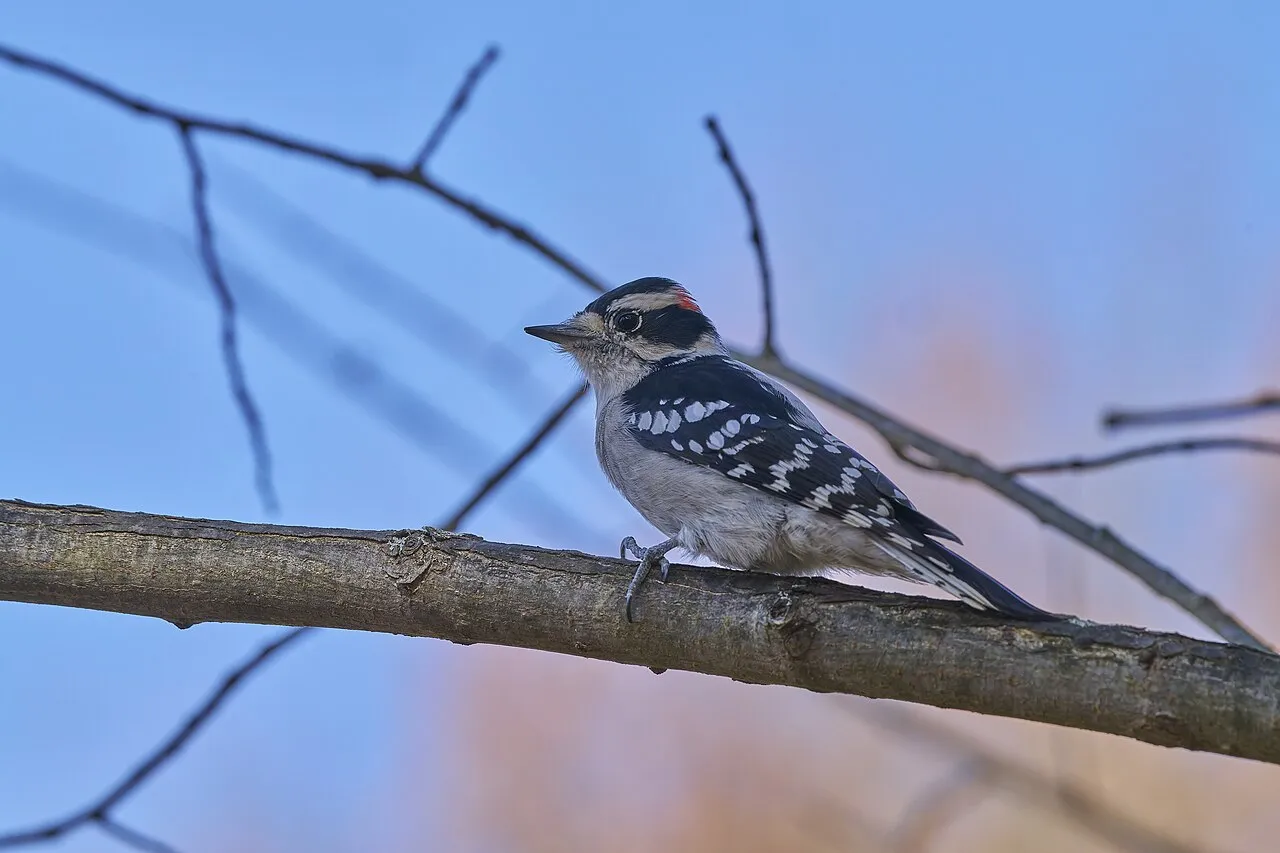
Downy woodpecker identification and behavior
An active woodpecker that moves quickly over trunks, branches and even the stems of grasses and wildflowers, leaning on its stiff tail feathers for support, and more willing than most woodpeckers to move horizontally and downwards on a tree 2. In late summer you may see one atop a goldenrod hammering at a plant gall for the fly larva inside 12.
Woodpeckers do not sing; they drum loudly on wood or metal for the same purpose, and feeding birds make surprisingly little noise 1. In winter downies join mixed flocks, and males and females divide the work — males on small branches and weed stems, females on larger branches and trunks 1.
Downy woodpecker habitat and range
Open woodlands, particularly deciduous woods and along streams, plus orchards, parks and suburbs; they also use open areas, nesting along fencerows and feeding among tall weeds 2.
Downy woodpecker diet and feeder foods
Mainly insects, including beetle larvae inside wood or bark, ants and caterpillars, and pest species such as corn earworm, tent caterpillars, bark beetles and apple borers; about a quarter of the diet is plant material — berries, acorns and grain 2.
Where they occur, downies are the most likely woodpecker to visit a feeder: they prefer suet, and also take black oil sunflower seeds, millet, peanuts and chunky peanut butter, occasionally drinking from oriole and hummingbird feeders 12.
Downy woodpecker nesting
Downies nest in dead trees or dead parts of live trees, typically choosing a small stub about 7 inches in diameter that leans away from vertical and placing the entrance on the underside; the wood is often softened by fungus 2. Clutches are 3–8 white eggs, incubated 12 days, with the young leaving after 18–21 days; one brood a year 2. They have even been found nesting inside the walls of buildings 1.
Conservation status
Downy woodpeckers are numerous and populations were stable between 1966 and 2015 according to the North American Breeding Bird Survey; Partners in Flight estimates a global breeding population of 13 million and rates the species 7 out of 20. The shift from wooden to metal fence posts may have reduced numbers, while forest clearing and thinning has helped, since downies do well in young forest 2.
Downy Woodpecker by state: eBird records
Across the nine states with eBird occurrence data on this site (records from 2020–2024), the Downy Woodpecker is reported most often in Michigan, where it ranks #10 among all species with 463,582 records. It is rare or absent in Arizona.
Attracting them to your yard
Serve · best foods
- suet
- peanuts
- sunflower seeds
Plant · useful plants
- native oak
- native birch
- serviceberry
Place · best feeders
- suet feeder
- peanut feeder
- hopper feeder
Frequently asked questions
What do downy woodpeckers eat?
Mostly insects, including wood-boring beetle larvae, ants and caterpillars, plus berries, acorns and grain; at feeders, suet first, then sunflower, peanuts and peanut butter 12.
How do I tell a downy from a hairy woodpecker?
Size and bill: the downy is much smaller with a short, stubby bill, and it forages on twigs and weed stems that the hairy cannot use 12.
Why does a woodpecker drum on my house?
Drumming is communication, not feeding; woodpeckers drum on resonant wood or metal in place of song 1.
What feeder attracts downy woodpeckers?
A suet feeder; they also take black oil sunflower, peanuts and millet 1.