Plant guide by bird
Plants for Downy Woodpeckers
Plants for downy woodpeckers are mostly about wood: the diet is mainly insects — beetle larvae inside wood or bark, ants and caterpillars — with about a quarter plant material such as berries, acorns and grain 1.
Downies nest in dead trees or dead parts of live trees, typically a small stub about 7 inches across, softened by fungus 1 — so the best plant is often the one you do not cut down. Growing facts are from the Wildflower Center [3–7], the native-plant case is Audubon's 2.
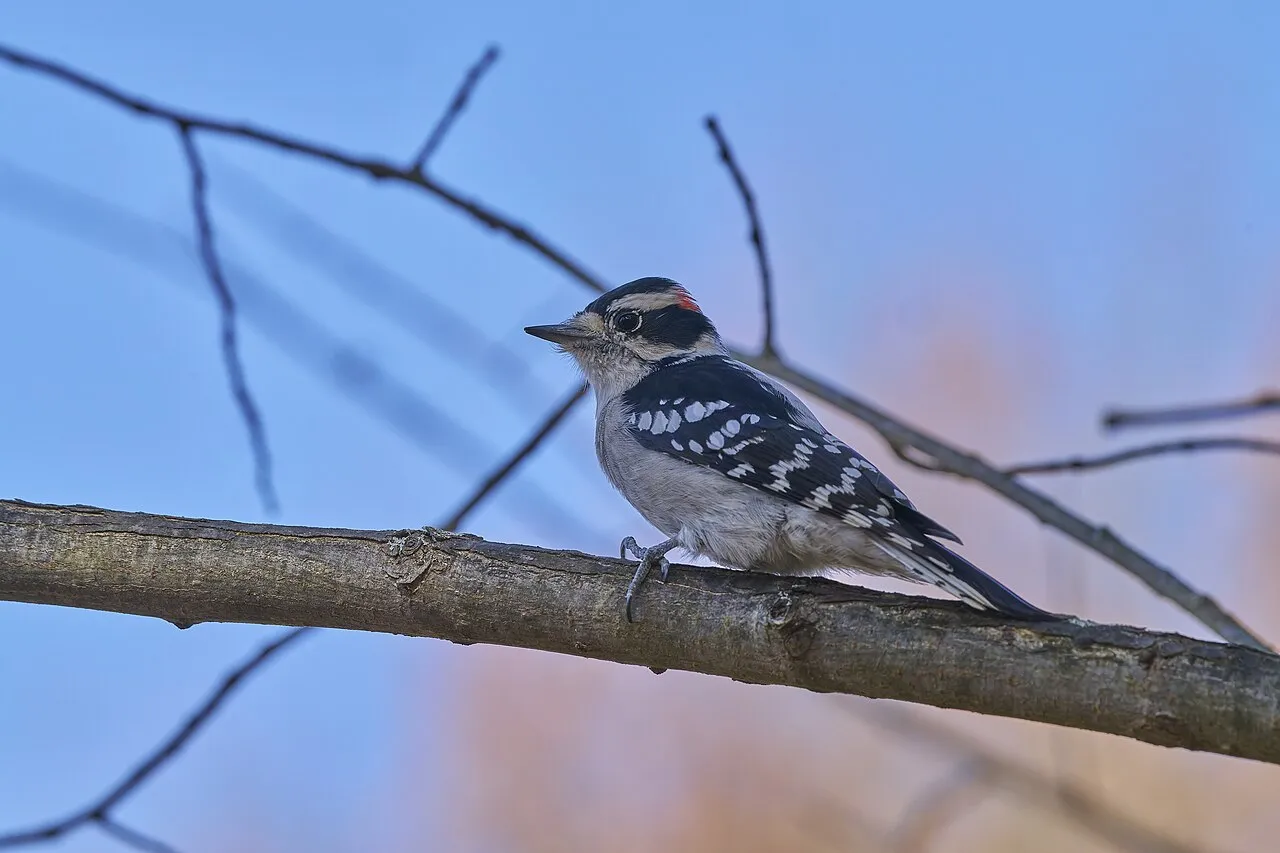
Plants for downy woodpeckers: trees with insects and nest stubs
Downies live in open deciduous woodlands, orchards, parks and suburbs, and feed along fencerows and among tall weeds 1. Paper birch, short-lived and prone to the bronze birch borer 3, is exactly the kind of tree that produces the beetle larvae and soft dead stubs downies use; American beech is long-lived with nesting sites and cover 4. Both host caterpillars, the food nesting birds need most 2. In late summer downies hammer plant galls on goldenrod for the fly larva inside 1 — leave a patch of goldenrod standing.
Berries and cover
Why native plants first
Native plants are those that occur naturally in the region where they evolved, and Audubon calls them the ecological basis on which birds depend: without them and the insects that co-evolved with them, local birds cannot survive 2. The scale matters — a native oak supports over 500 species of caterpillars where a ginkgo hosts five, and it takes more than 6,000 caterpillars to raise one brood of chickadees 2. Most nursery landscaping plants are alien species, so choosing natives is the single landscaping decision with the clearest effect on bird populations 2.
The alternative is what most yards already have. Audubon notes that manicured lawn now covers over 40 million acres of the United States as a green monoculture, that the traditional suburban lawn carries on average ten times more chemical pesticide per acre than farmland, and that the continental U.S. has lost 150 million acres of habitat and farmland to sprawl 2. Every bed of natives that replaces turf is habitat that lawn cannot be, and long-lived native trees such as oaks and maples also store carbon 2.
Check the native range before buying: the Wildflower Center record for this species lists the states and provinces where it occurs naturally 3, and Audubon's zip-code native plant database narrows that to your area and the bird groups each plant attracts 2. Once established, native plants generally need little maintenance and far less water than lawn, and they do not need the pesticides that make a yard poor bird habitat 2.
Related guides
More plant guides
Frequently asked questions
Sources
- All About Birds (Cornell Lab of Ornithology) — Downy Woodpecker: Overview and Life History
- National Audubon Society — Why Native Plants Matter
- Lady Bird Johnson Wildflower Center, Native Plant Database — Betula papyrifera (USDA symbol BEPA)
- Lady Bird Johnson Wildflower Center, Native Plant Database — Fagus grandifolia (USDA symbol FAGR)
- Lady Bird Johnson Wildflower Center, Native Plant Database — Parthenocissus quinquefolia (USDA symbol PAQU2)
- Lady Bird Johnson Wildflower Center, Native Plant Database — Cornus florida (USDA symbol COFL2)
- Lady Bird Johnson Wildflower Center, Native Plant Database — Juniperus virginiana (USDA symbol JUVI)