Fringillidae · reviewed profile
House Finch
Haemorhous mexicanus
The house finch is the streaky, red-headed finch of feeders and buildings across the United States — originally a western bird that reached the East through a failed pet-trade release in 1940 1.
This profile draws on the Cornell Lab of Ornithology's All About Birds accounts 12 and on eBird records from the nine states covered on this site 3.
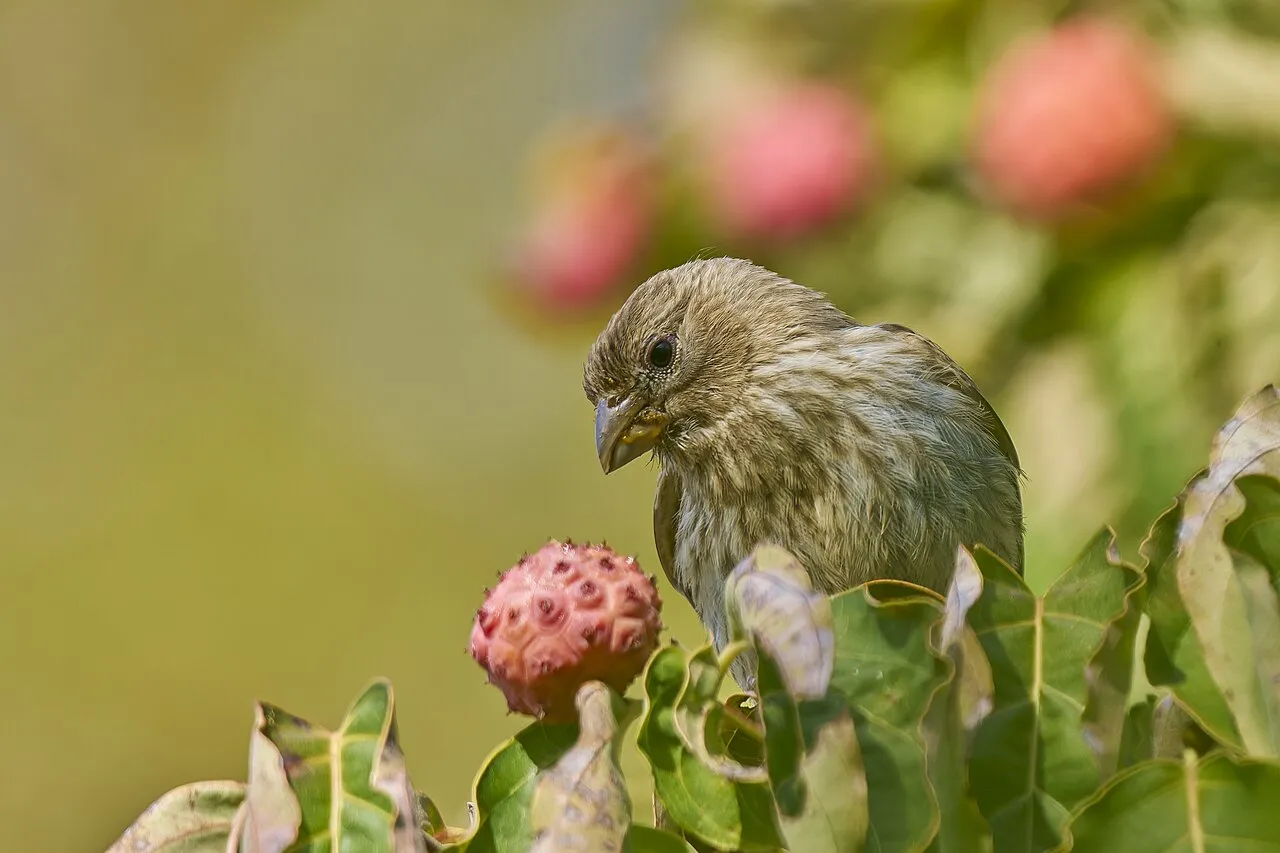
House finch identification and behavior
The red of a male house finch comes from pigments in its food during molt — birds cannot make red or yellow directly — so the more pigment in the diet, the redder the male, and orange or yellowish males turn up where the food is poor in it; females prefer the reddest male they can find 1. Highly social, house finches are rarely seen alone outside the breeding season and may form flocks of several hundred, feeding on the ground, at feeders or in fruiting trees and perching on the highest point available 2.
Where house finches live
House finches are birds of human-created habitats — buildings, lawns, small conifers and urban centers — and around barns and stables in rural areas; in their native western range they also live in desert, chaparral, oak savannah and open conifer forest below 6,000 feet 2.
The species was originally western. In 1940 a small number were released on Long Island, New York after failed attempts to sell them as cage birds, and within 50 years they had spread across almost the whole eastern United States and southern Canada; they were also introduced to Hawaii before 1870 1.
What house finches eat
House finches eat almost exclusively plant material: seeds, buds and fruit, including wild mustard, knotweed, thistle and mulberry, and orchard fruit such as cherries, apricots, peaches and figs. At feeders they take black oil sunflower over striped sunflower, plus millet and milo 2. They feed their nestlings entirely plant foods, which is rare among birds 1.
Fill feeders with small black oil sunflower seed; once house finches find them, they may bring flocks of 50 or more 1. Keep feeders clean and dry: some populations have declined steeply since 1994 because of mycoplasmal conjunctivitis, an eye disease spread at feeders 2.
House finch nesting
House finches nest in deciduous and coniferous trees, on cactus and rock ledges, and in or on buildings — vents, ledges, street lamps, ivy and hanging planters — and occasionally reuse other birds' nests 2. Clutches are 2–6 pale blue-to-white eggs speckled black and purple, incubated 13–14 days; young leave after 12–19 days, and pairs can raise as many as six broods in a year 2.
Conservation status
House finches are common throughout the U.S., parts of Canada and Mexico, but populations appear to have decreased slightly between 1966 and 2019 according to the North American Breeding Bird Survey; Partners in Flight estimates a global breeding population of 40 million and rates the species 6 out of 20 on the Continental Concern Scale 2. The oldest known bird was a female of at least 11 years, 7 months 1.
House Finch by state: eBird records
Across the nine states with eBird occurrence data on this site (records from 2020–2024), the House Finch is reported most often in California, where it ranks #1 among all species with 1,686,954 records.
Attracting them to your yard
Serve · best foods
- black-oil sunflower seeds
- sunflower chips
- millet
Plant · useful plants
- sunflower
- serviceberry
- native grasses
Place · best feeders
- tube feeder
- hopper feeder
- platform feeder
Frequently asked questions
What do house finches eat?
Almost entirely seeds, buds and fruit; at feeders, small black oil sunflower seed is their favorite 12.
Why is my house finch orange or yellow instead of red?
Male color comes from pigments in the food eaten during molt; a diet low in those pigments produces orange or yellow males 1.
Are house finches native to the eastern United States?
No — they were released on Long Island in 1940 and spread across the East within 50 years 1.
What is the eye disease in house finches?
Mycoplasmal conjunctivitis, which has caused steep declines in some populations since 1994; clean feeders regularly and take them down if you see sick birds 2.