Feeder guide by bird
Goldfinch Feeder
Almost any goldfinch feeder works: American Goldfinches use hopper, platform and hanging feeders, do not mind feeders that sway in the wind, and are most attracted to sunflower seed and nyjer 4.
Everything below about feeder design, foods, placement and cleaning is drawn from Project FeederWatch 12 and All About Birds 34.
What goldfinches eat
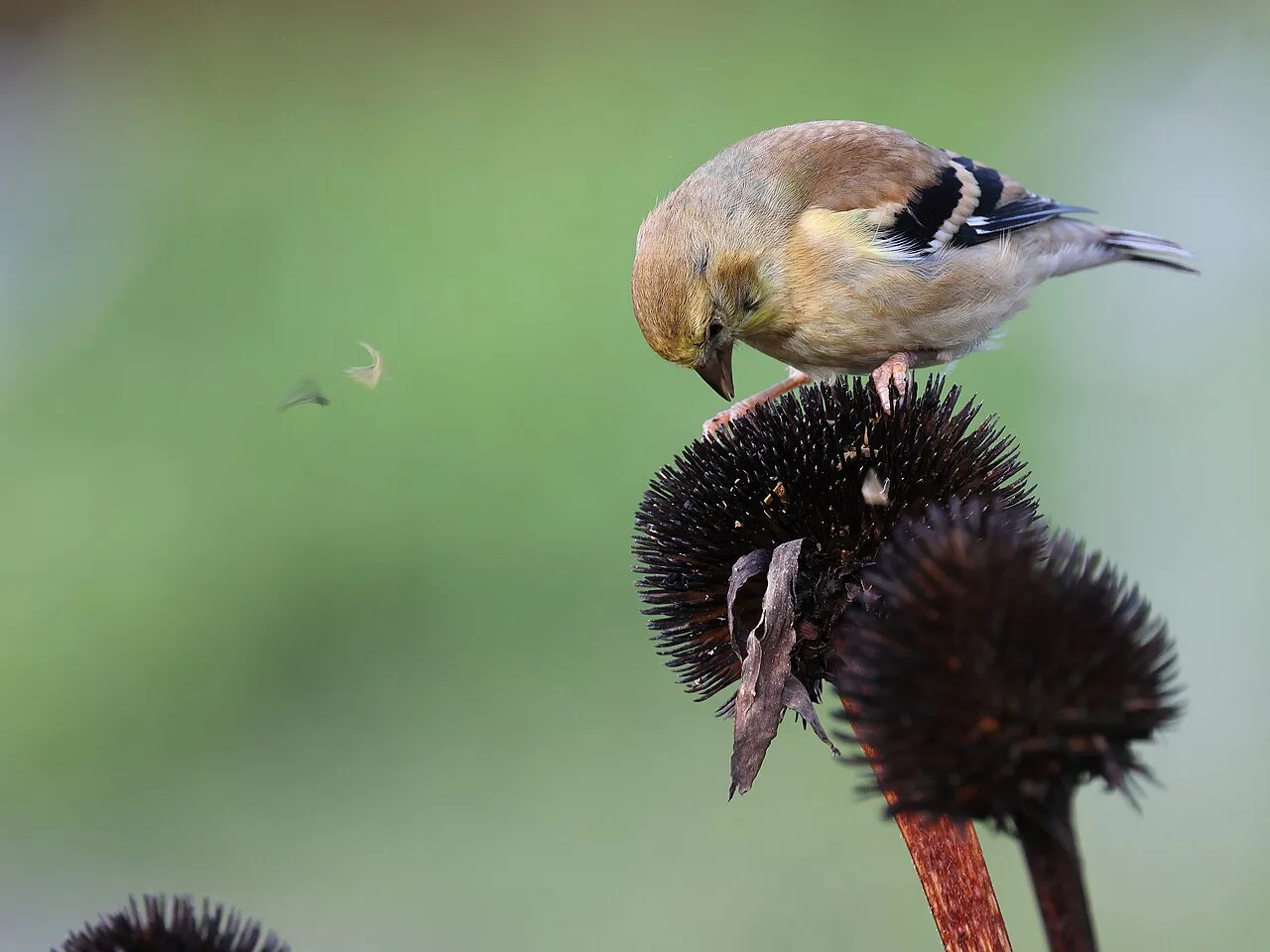
Goldfinches eat seeds almost exclusively — composites such as sunflowers, thistle and asters, grasses, and tree seeds from alder, birch, western red cedar and elm — and at feeders prefer nyjer and sunflower 4. Nyjer's popularity as a feeder seed is largely due to its ability to attract finches including American Goldfinch, Pine Siskin and Common Redpoll 1. They are also happy feeding on the ground beneath feeders on spilled seed 4.
The goldfinch feeder and the garden
A mesh sock or fine-port tube keeps nyjer dry and limits it to finches; tube feeders keep seed fairly dry and short perches exclude larger birds 1. For sunflower, any hopper or platform serves them. To keep goldfinches beyond the feeder, plant native thistles and other composite plants, as well as native milkweed — they nest late, in June or July, when those plants have set the fibrous seed they line nests with and feed to their young 4.
Placement, squirrels and windows
Place feeders close to natural cover such as trees or shrubs, which offer birds refuge from predators, but not so close to strong branches that squirrels can jump across — a distance of about 10 feet is the usual guidance 1. Windows are the other hazard: collisions kill perhaps a billion or more birds a year in North America, and older rules about safe feeder-to-window distances are no longer thought valid — if a window is near a feeder, treat the glass with markings spaced no more than 2 inches apart, external screens or cords, rather than worrying about the distance 3.
Squirrel baffles — barriers placed between squirrels and feeders — are usually the best defense. Squirrels can jump to feeders placed less than ten feet from a tree or building, so a pole-mounted feeder in the open with a baffle below it, or a tilting baffle at least 18 inches in diameter above a hanging feeder, is the arrangement that works 1.
Keeping the feeder clean and the birds healthy
Clean seed and suet feeders regularly — every week or two, and more often during heavy use or wet weather — by scrubbing off debris and washing the parts thoroughly with warm water and dish soap 1. Hummingbird feeders need cleaning far more often, every couple of days and ideally every time they are refilled; discard the solution and clean immediately at any sign of cloudy water or black mold 1.
If a sick bird appears — House Finch eye disease shows as red, swollen, runny or crusty eyes, and avian pox as wart-like growths around the eye, bill, legs and feet — remove the feeders the bird is using for a couple of weeks and clean the feeders and the area thoroughly, so disease is not spread at the feeder 2. Salmonellosis, caused by Salmonella bacteria, is a common cause of mortality in feeder birds and spreads the same way 2.
Recommended feeder types
More feeder guides
Frequently asked questions
What seed goes in a goldfinch feeder?
Nyjer (thistle) and sunflower, offered in a mesh or fine-port feeder for nyjer and any feeder for sunflower 14.
Why did goldfinches stop coming to my nyjer feeder?
Stale or damp nyjer; replace it, dry the feeder, and keep it out of the rain 1.
How often should I clean a bird feeder?
Every week or two for seed and suet feeders, more often in wet weather or heavy use; every couple of days for hummingbird feeders. Scrub, then wash with warm water and dish soap 1.
How far should a feeder be from a window?
Distance rules are no longer considered valid; instead make any nearby window bird-safe with markings spaced no more than 2 inches apart, exterior screens, or hanging cords 3.
Sources
- Project FeederWatch (Cornell Lab of Ornithology) — Feeding Birds: feeder types, food types, placement and cleaning
- Project FeederWatch — Sick Birds and Bird Diseases
- All About Birds (Cornell Lab of Ornithology) — Why Birds Hit Windows, and How You Can Help Prevent It
- All About Birds (Cornell Lab of Ornithology) — American Goldfinch: Overview and Life History