Paridae · reviewed profile
Black-capped Chickadee
Poecile atricapillus
The black-capped chickadee is, for many people, the first bird they learn: a tiny, round-headed bird with a black cap and bib, white cheeks, gray back and wings, and buffy sides, curious about everything in its territory including humans, and quick to find a new feeder 1.
This profile draws on the Cornell Lab of Ornithology's All About Birds accounts for identification, diet, nesting and conservation 12, and on eBird records from the nine states covered on this site to show where the species is actually reported 3.
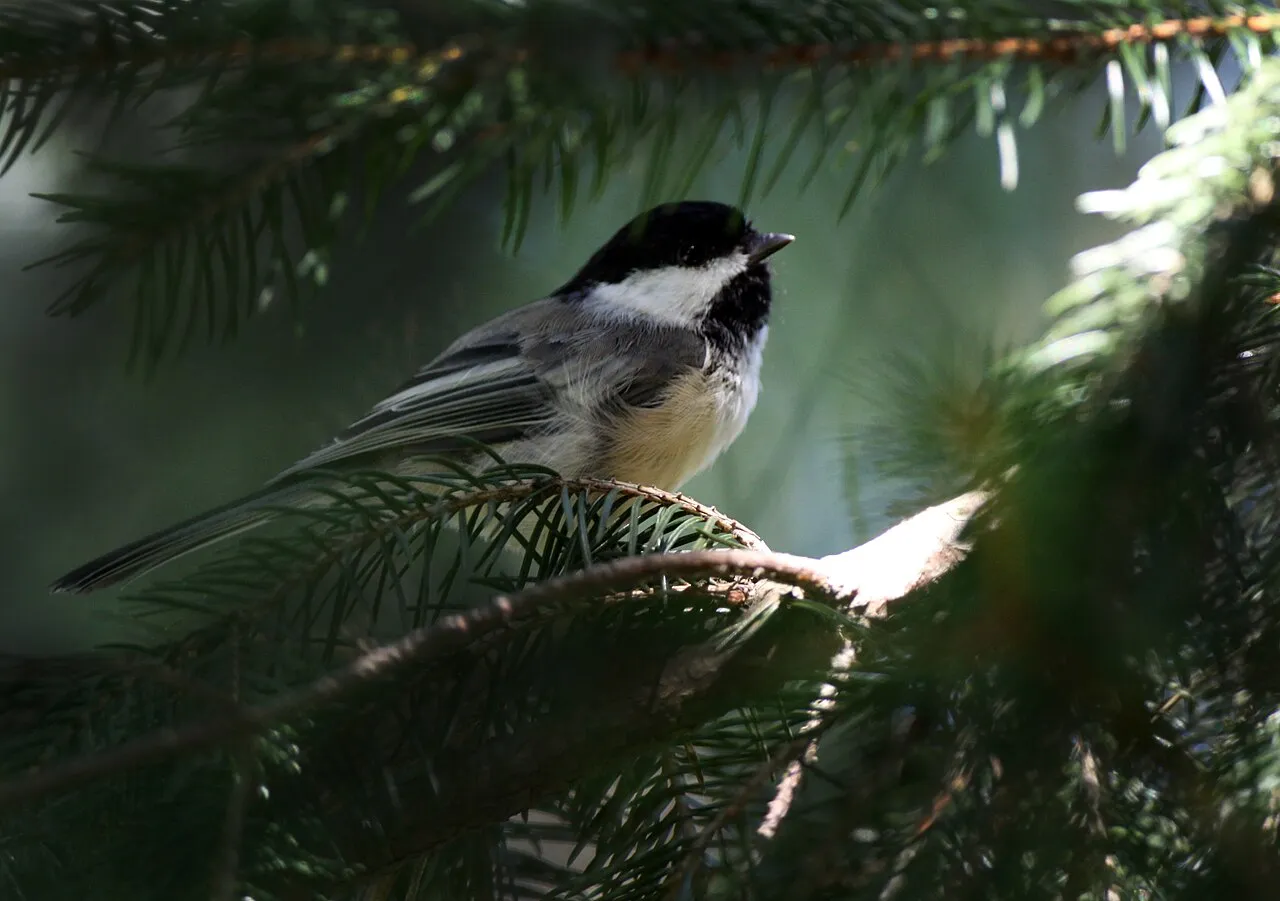
Black-capped chickadee identification and behavior
The combination of black cap and bib with bright white cheeks is distinctive; the back, wings and tail are gray and the underparts whitish with buff flanks 1. Chickadees are active, acrobatic and social, living in flocks that often include woodpeckers, nuthatches, warblers, vireos and other small woodland birds, and they seldom perch within a few feet of each other while eating 2.
The calls are complex: the familiar chickadee-dee-dee carries information about flock identity and threats, and the more dee notes in the call, the higher the threat level 1. Because migrating songbirds join chickadee flocks, listening for chickadees in spring and fall is a reliable way to find other species 1.
Two facts explain why chickadees are such good winter birds. They hide seeds and other food items to eat later, each in a different spot, and can remember thousands of hiding places; and even when temperatures are far below zero they sleep alone in their own individual cavities, which they can excavate themselves in rotten wood 1. The oldest known wild black-capped chickadee was at least 11 years, 8 months old 1.
Black-capped chickadee habitat and range
Black-capped chickadees are found in deciduous and mixed forests, open woods, parks, willow thickets, cottonwood groves and disturbed areas 2. In the nine states with eBird data on this site they are among the most-reported birds in Michigan, Colorado, Oregon and Rhode Island, and essentially unrecorded in Florida, Texas and Arizona, where other chickadee species take their place 3.
Black-capped chickadee diet and feeder foods
In winter about half the diet is seeds, berries and other plant matter and half animal food — insects, spiders, suet and occasionally fat from carcasses; in spring, summer and fall, insects, spiders and other animal food make up 80–90 percent of what they eat 2. At feeders they take mostly sunflower seeds, peanuts, suet, peanut butter and mealworms, pecking a hole in a seed's shell and chipping out tiny bits 2.
Chickadees are one of the easiest birds to attract to feeders with suet, sunflower and peanuts; they do not mind tiny hanging feeders that swing in the wind and readily use window feeders 1.
Black-capped chickadee nesting
Chickadees nest in nest boxes, small natural cavities or abandoned Downy Woodpecker holes, and often excavate their own cavity in dead snags or rotten branches, frequently alder or birch; nests are usually 1.5–7 m up 2. Both sexes excavate and the female builds a cup of moss lined with softer material such as rabbit fur 2.
Clutches run from 1 to 13 eggs, white with fine reddish-brown dots, incubated 12–13 days; the young leave the nest after 12–16 days, and there is one brood a year 2. To host a pair, put up a box well before the breeding season, add a predator guard, and fill it with sawdust or wood shavings — chickadees are especially attracted to a box they can excavate; placing it at least 60 feet into woodland keeps House Wrens from taking it over 1.
Conservation status
Black-capped chickadees are common, and overall populations increased slightly between 1966 and 2019 according to the North American Breeding Bird Survey; Partners in Flight estimates the global breeding population at 43 million and rates the species 7 out of 20 on the Continental Concern Score, a species of low conservation concern that also benefits from people who keep feeders 2.
Black-capped Chickadee by state: eBird records
Across the nine states with eBird occurrence data on this site (records from 2020–2024), the Black-capped Chickadee is reported most often in Michigan, where it ranks #3 among all species with 630,864 records. It is rare or absent in California, Tennessee, Arizona, Florida, Texas.
Attracting them to your yard
Serve · best foods
- black-oil sunflower seeds
- peanuts
- suet
Plant · useful plants
- native birch
- serviceberry
- native willow
Place · best feeders
- tube feeder
- hopper feeder
- suet feeder
Frequently asked questions
What does a black-capped chickadee eat?
Insects, spiders and other animal food make up 80–90 percent of the diet outside winter; in winter about half is seeds and berries. At feeders: sunflower seeds, peanuts, suet, peanut butter and mealworms 2.
Where do black-capped chickadees live?
In deciduous and mixed forests, open woods, parks and thickets across the northern United States and Canada, year-round 12.
How long do black-capped chickadees live?
The oldest known wild bird was at least 11 years, 8 months old when recaptured in New York in 2021 1.
What is the best feeder for chickadees?
Almost any: they take suet, sunflower and peanuts from small hanging feeders, window feeders and tube feeders alike 1.