How to attract · species guide
How to Attract Black-capped Chickadees
How to attract black-capped chickadees barely needs a guide: All About Birds calls them one of the easiest birds to attract to feeders, for suet, sunflower and peanuts, and notes they do not mind tiny hanging feeders that swing in the wind and readily visit window feeders 4.
Species facts are from All About Birds 4; feeder and safety facts from FeederWatch 1 and All About Birds 2; native-plant guidance from Audubon 35.
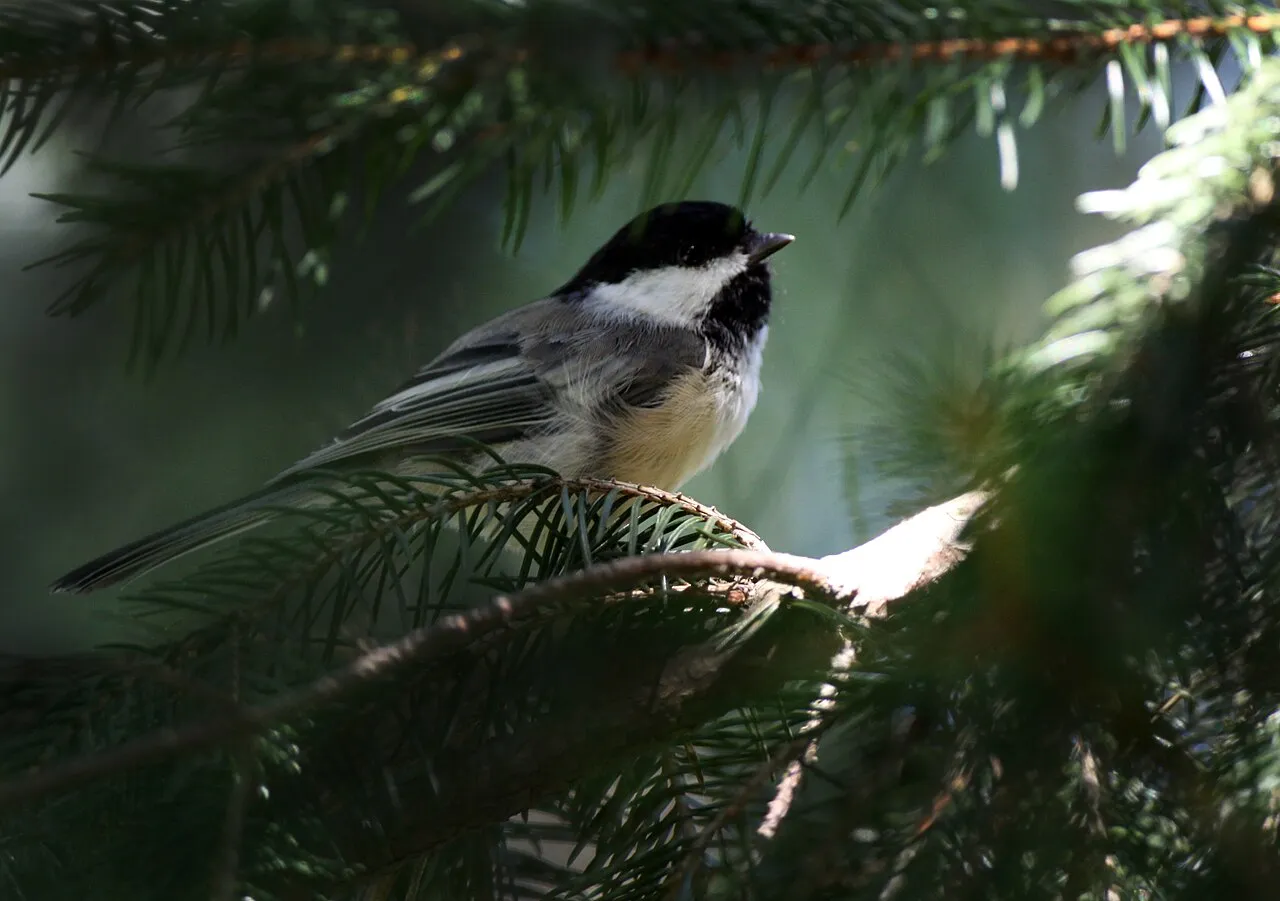
How to attract black-capped chickadees to a feeder
At feeders chickadees take mostly sunflower seeds, peanuts, suet, peanut butter and mealworms, pecking a hole in a seed's shell and chipping out tiny bits 4. Suet is a good choice for attracting insect-eating birds, and shelled peanuts in a mesh feeder suit small birds better than whole ones jays carry off 1. A tube with short perches keeps larger birds off 1, and a window feeder brings them to the glass — treat the glass with 2-inch-spaced markings first 2.
Chickadees hide seeds to eat later, each in a different spot, and remember thousands of hiding places, which is why a feeder empties faster than the flock could eat 4.
Nest boxes for chickadees and the caterpillar supply
Put up a nest box well before the breeding season, with a predator guard, and fill it with sawdust or wood shavings — chickadees are especially attracted to a box they can excavate — at least 60 feet into a wooded area if House Wrens are around 4. They also excavate their own cavities in dead snags or rotten branches, frequently alder or birch, so leave dead wood standing where safe 4.
Outside winter, insects, spiders and other animal food are 80–90 percent of the diet 4, and Audubon's figure is more than 6,000 caterpillars to raise one brood of chickadees — which a native oak (over 500 caterpillar species) supplies and a ginkgo (five) does not 5. Native trees are the long-term chickadee plan; the feeder is the short-term one.
Keep the birds you attract safe: windows, cats, clean feeders
Window collisions kill perhaps a billion or more birds a year in North America, and far more die at homes and low-rise buildings than at high-rises simply because there are so many of them 2. Older rules about safe feeder-to-window distances are no longer thought valid; the fix is to make the glass visible — markings spaced no more than 2 inches apart on the outside, exterior screens, or hanging cords 12.
Cats are the most numerous pet in North America and kill hundreds of millions of birds each year; ground-feeding birds, ground-nesting birds and fledglings are at greatest risk, and feeder birds are easy prey, so FeederWatch strongly recommends keeping cats indoors 1. Clean seed and suet feeders every week or two — more often in heavy use or wet weather — with warm water and dish soap, since leftover seed and hulls harbor pathogens 1.
Related guides for this bird
More attraction guides
Frequently asked questions
What attracts black-capped chickadees?
Sunflower, peanuts and suet in almost any feeder, plus a nest box with shavings and a predator guard put up before spring 14.
Do chickadees use birdhouses?
Yes — a box with a predator guard, filled with sawdust or shavings they can excavate, placed 60 feet into woodland to avoid House Wrens 4.
Sources
- Project FeederWatch (Cornell Lab of Ornithology) — Feeding Birds: feeders, foods, water, placement, cleaning and safety
- All About Birds (Cornell Lab of Ornithology) — Why Birds Hit Windows, and How You Can Help Prevent It
- National Audubon Society — How to Make Your Yard Bird-Friendly
- All About Birds (Cornell Lab of Ornithology) — Black-capped Chickadee: Overview and Life History
- National Audubon Society — Why Native Plants Matter