Fall · September–November · Cardinalis cardinalis
Northern Cardinal in Fall
The northern cardinal in fall stops being a pair: cardinals move in pairs during the breeding season, but in fall and winter form flocks of a dozen to several dozen birds, sometimes foraging with juncos, sparrows, titmice and goldfinches 3.
Behavior is from All About Birds 3, feeding from Project FeederWatch 2, and the state numbers from eBird records on this site 1. The eBird section on this page is computed from the dataset itself: for each of the nine states with occurrence data on this site, it shows the species' share of all eBird records in these months against its share across the year, so you can see where the season actually concentrates the bird 1.
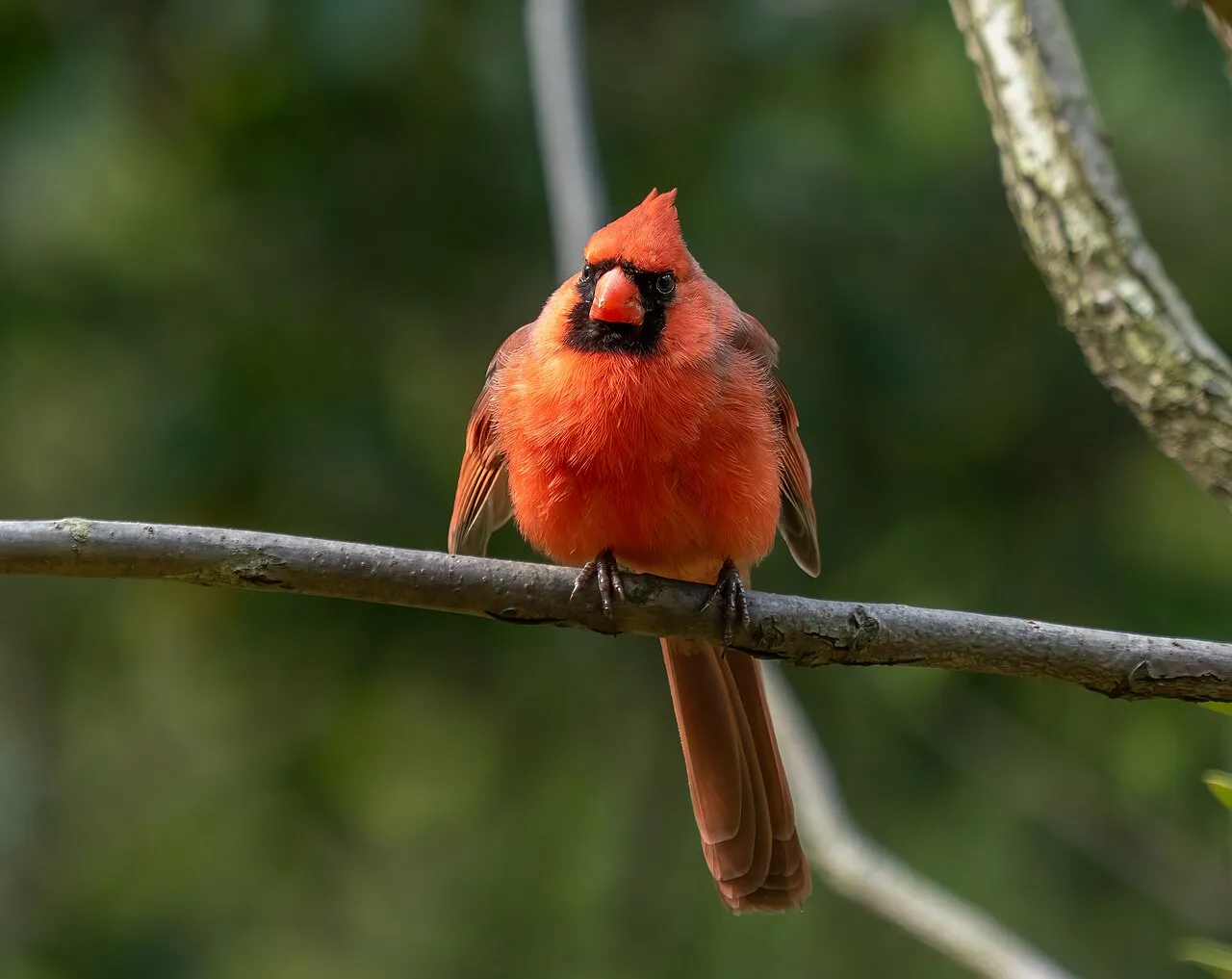
What the northern cardinal in fall is doing
Nesting is over — cardinals raise one to two broods a year 3 — and the flocks form. Cardinals hop through low branches and forage on or near the ground, and sing and preen from a high branch of a shrub, the crest lowered almost flat at rest 3. The diet is mainly seeds and fruit with insects as a supplement, and fall is when wild foods peak: dogwood, wild grape, mulberry, hackberry, blackberry and sumac are all on the All About Birds list 3.
Where to look for cardinals in fall
Look in dense shrubby areas: forest edges, overgrown fields, hedgerows, backyards, marshy thickets, mesquite, regrowing forest and ornamental landscaping 3. Cardinals do not migrate, and the growth of towns and suburbs across eastern North America has helped the species expand its range northward 3, so a fall flock in a suburban hedge is the same birds that will be singing there in March. In the West and Southwest the eBird cards below show how thin the species becomes: it is a regular bird in Arizona but essentially absent from Colorado, California and Oregon 1.
Feeding cardinals in fall
At feeders cardinals eat many kinds of birdseed, particularly black oil sunflower 3, which FeederWatch calls the preferred food for a wide variety of birds and a cardinal favorite; safflower attracts cardinals and other big-billed birds too 2. Serve it on a large hopper or a tray, where larger species can feed 2, and clean the feeder every week or two, more often in wet fall weather 2. Leaving undergrowth at the yard's edges holds the flock through winter and can bring a nesting pair next spring 3.
eBird records by state: Northern Cardinal, September–November
In September–November the Northern Cardinal makes up the largest share of eBird records in Tennessee (4.0% of all records, against 4.1% across the year). In no state does the season raise its share above the annual figure — this is a bird seen in every month. Records are eBird checklists reported 2020–2024 and retrieved through GBIF.
Frequently asked questions
Sources
- EOD – eBird Observation Dataset, Cornell Lab of Ornithology, via GBIF.org (CC BY 4.0); monthly records 2020–2024 for the nine states on this site
- Project FeederWatch (Cornell Lab of Ornithology) — Feeding Birds
- All About Birds (Cornell Lab of Ornithology) — Northern Cardinal: Overview and Life History