West · Pacific Flyway
Ducks in Arizona
Ducks in Arizona come down to 31 species with regular eBird records, led by the Mallard. Together they account for 1,086,104 of the 20 million eBird records from 2020–2024 — 5.3% of everything reported in the state.
The full list: Mallard, Ruddy Duck, American Wigeon, Northern Shoveler, Ring-necked Duck, Green-winged Teal, Cinnamon Teal, Gadwall, Mexican Duck, Northern Pintail, Lesser Scaup, Bufflehead, Redhead, Canvasback, Blue-winged Teal, Common Merganser, Hooded Merganser, Wood Duck, Common Goldeneye, Black-bellied Whistling-Duck, Muscovy Duck, Greater Scaup, Red-breasted Merganser, Eurasian Wigeon, Barrow's Goldeneye, Surf Scoter, Mandarin Duck, White-winged Scoter, Long-tailed Duck, Black Scoter and Fulvous Whistling-Duck. Ducks divide into dabblers, which tip up in shallow water, and divers, which disappear underwater for their food. Most species breed far to the north and are winter visitors across much of the country, so the best duck-watching is usually from late fall through early spring.
Ducks in Arizona: every species, most-reported first
Every duck with at least 25 eBird records in the state from 2020–2024, most-reported first. The status label is derived from each species’ own monthly share of all state records.
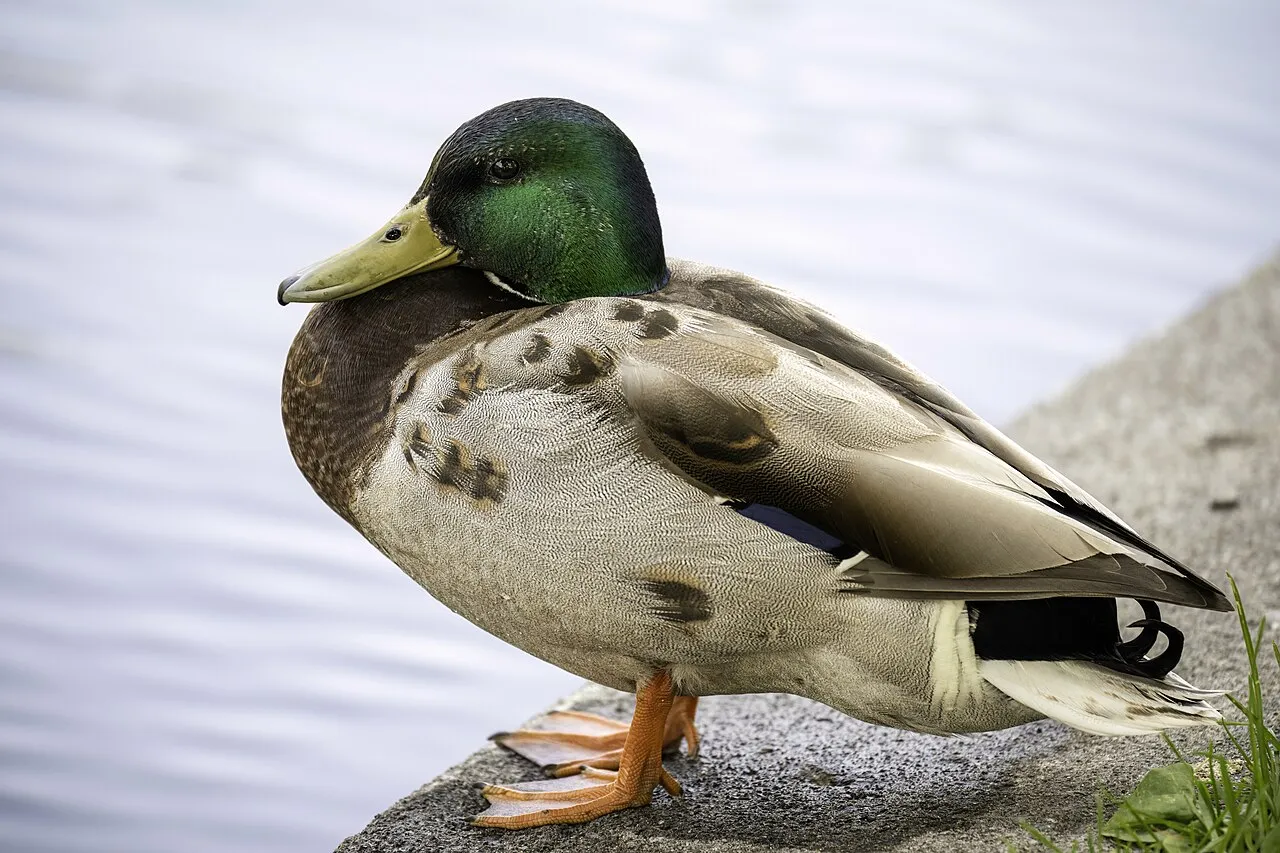
1. Mallard (Anas platyrhynchos) — 215,562 records, 1.1% of the state’s eBird total; a year-round resident, reported in every month.
2. Ruddy Duck (Oxyura jamaicensis) — 106,922 records, 0.5% of the state’s eBird total; a winter visitor, present mainly from October to April and peaking in January.
3. American Wigeon (Mareca americana) — 105,415 records, 0.5% of the state’s eBird total; a winter visitor, present mainly from October to March and peaking in November.
4. Northern Shoveler (Spatula clypeata) — 91,186 records, 0.4% of the state’s eBird total; a winter visitor, present mainly from September to March and peaking in January.
5. Ring-necked Duck (Aythya collaris) — 86,425 records, 0.4% of the state’s eBird total; a winter visitor, present mainly from October to March and peaking in January.
6. Green-winged Teal (Anas crecca) — 67,299 records, 0.3% of the state’s eBird total; a winter visitor, present mainly from September to March and peaking in February.
7. Cinnamon Teal (Spatula cyanoptera) — 66,997 records, 0.3% of the state’s eBird total; a winter visitor, present mainly from August to April and peaking in March.
8. Gadwall (Mareca strepera) — 51,504 records, 0.3% of the state’s eBird total; a winter visitor, present mainly from October to March and peaking in January.
9. Mexican Duck (Anas diazi) — 46,777 records, 0.2% of the state’s eBird total; a year-round resident, reported in every month.
10. Northern Pintail (Anas acuta) — 39,272 records, 0.2% of the state’s eBird total; a winter visitor, present mainly from October to February and peaking in January.
11. Lesser Scaup (Aythya affinis) — 36,924 records, 0.2% of the state’s eBird total; a winter visitor, present mainly from November to March and peaking in January.
12. Bufflehead (Bucephala albeola) — 33,497 records, 0.2% of the state’s eBird total; a winter visitor, present mainly from November to March and peaking in January.
The remaining 19 species — Redhead, Canvasback, Blue-winged Teal, Common Merganser, Hooded Merganser, Wood Duck, Common Goldeneye, Black-bellied Whistling-Duck, Muscovy Duck, Greater Scaup, Red-breasted Merganser, Eurasian Wigeon, Barrow's Goldeneye, Surf Scoter, Mandarin Duck, White-winged Scoter, Long-tailed Duck, Black Scoter and Fulvous Whistling-Duck — are recorded regularly but in smaller numbers; see the cards above for their status.
When to see ducks in Arizona
Adding up every species’ share of state eBird records month by month, ducks are most prominent in January, February and December and least in July and June. 3 of the 31 species are year-round — Mallard, Mexican Duck and Wood Duck — so there is no month without them.
Summer visitors. Black-bellied Whistling-Duck arrives around May and is mostly gone after November (peak August).
Winter visitors. Ruddy Duck arrives around October and leaves after April (peak January); American Wigeon arrives around October and leaves after March (peak November); Northern Shoveler arrives around September and leaves after March (peak January); Ring-necked Duck arrives around October and leaves after March (peak January); Green-winged Teal arrives around September and leaves after March (peak February); Cinnamon Teal arrives around August and leaves after April (peak March).
Passage migrants. Blue-winged Teal is reported mainly in March, April, September and October; Eurasian Wigeon is reported mainly in January, February and November; Surf Scoter is reported mainly in October and November; White-winged Scoter is reported mainly in January; Black Scoter is reported mainly in January and November; Fulvous Whistling-Duck is reported mainly in July and November.
Attracting ducks to Arizona backyards
Unless you have a pond, ducks are birds to go and see rather than attract. Local reservoirs, sewage ponds, and coastal inlets in winter are where the variety is.
In Arizona the duck most likely to turn up is the Mallard, a year-round resident, followed by the Mexican Duck.
Ducks in Arizona: FAQ
How many species of ducks are there in Arizona?
31 species of ducks have regular eBird records in Arizona (at least 25 records in 2020–2024): Mallard, Ruddy Duck, American Wigeon, Northern Shoveler, Ring-necked Duck, Green-winged Teal, Cinnamon Teal, Gadwall, Mexican Duck, Northern Pintail, Lesser Scaup, Bufflehead, Redhead, Canvasback, Blue-winged Teal, Common Merganser, Hooded Merganser, Wood Duck, Common Goldeneye, Black-bellied Whistling-Duck, Muscovy Duck, Greater Scaup, Red-breasted Merganser, Eurasian Wigeon, Barrow's Goldeneye, Surf Scoter, Mandarin Duck, White-winged Scoter, Long-tailed Duck, Black Scoter and Fulvous Whistling-Duck.
What is the most common duck in Arizona?
The Mallard, with 215,562 eBird records in 2020–2024, followed by the Ruddy Duck with 106,922. It is a year-round resident, reported in every month.
When is the best time to see ducks in Arizona?
January, February and December, when the combined share of Arizona eBird records belonging to ducks is highest. Summer visitors such as the Black-bellied Whistling-Duck arrive around May. Winter visitors such as the Ruddy Duck arrive around October.
More birds in Arizona
Ducks in other states
Ducks in Arizona: sources
Every number on this page comes from the EOD – eBird Observation Dataset published by the Cornell Lab of Ornithology and distributed through GBIF under a CC BY 4.0 license: Arizona records from 2020–2024, retrieved 2026-09-18. Species are drawn from the families Anatidae; only species with at least 25 records are listed, and a species is called a year-round resident when its monthly share of state records stays above 30% of its own peak in ten or more months. “Records” are individual eBird observations, so they reflect how often birders report a species, not a population count.