West · Pacific Flyway
Woodpeckers in Arizona
Woodpeckers in Arizona come down to 15 species with regular eBird records, led by the Gila Woodpecker. Together they account for 1,286,964 of the 20 million eBird records from 2020–2024 — 6.3% of everything reported in the state.
The full list: Gila Woodpecker, Ladder-backed Woodpecker, Northern Flicker, Acorn Woodpecker, Gilded Flicker, Arizona Woodpecker, Hairy Woodpecker, Red-naped Sapsucker, Lewis's Woodpecker, Williamson's Sapsucker, Downy Woodpecker, Yellow-bellied Sapsucker, American Three-toed Woodpecker, Red-breasted Sapsucker and Red-headed Woodpecker. Woodpeckers are the birds you hear before you see: drumming on trunks, excavating nest cavities, and calling loudly from the canopy. Most are year-round residents, and the holes they leave behind become homes for owls, bluebirds, and other cavity nesters.
Woodpeckers in Arizona: every species, most-reported first
Every woodpecker with at least 25 eBird records in the state from 2020–2024, most-reported first. The status label is derived from each species’ own monthly share of all state records.
1. Gila Woodpecker (Melanerpes uropygialis) — 485,581 records, 2.4% of the state’s eBird total; a year-round resident, reported in every month.
2. Ladder-backed Woodpecker (Dryobates scalaris) — 241,316 records, 1.2% of the state’s eBird total; a year-round resident, reported in every month.
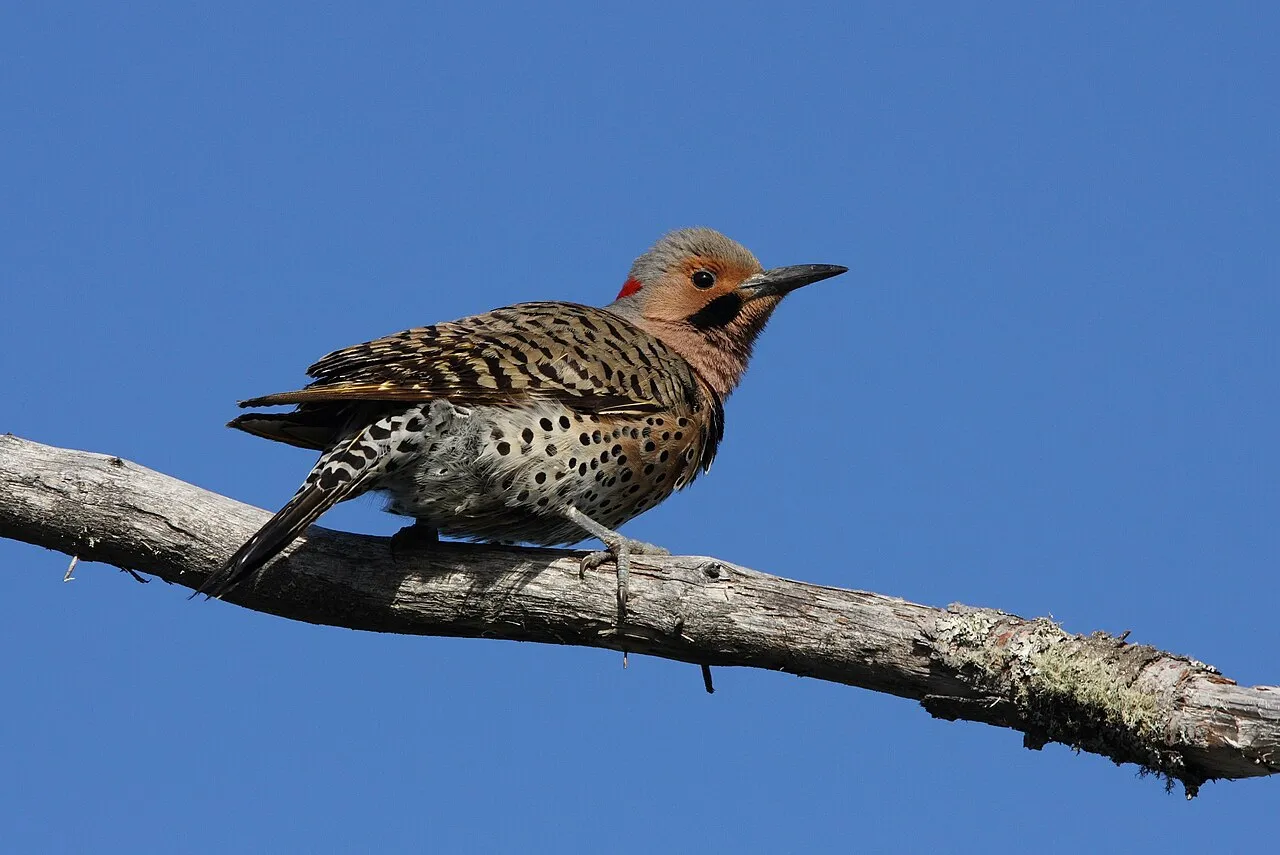
3. Northern Flicker (Colaptes auratus) — 184,801 records, 0.9% of the state’s eBird total; a year-round resident, reported in every month.
4. Acorn Woodpecker (Melanerpes formicivorus) — 180,308 records, 0.9% of the state’s eBird total; a year-round resident, reported in every month.
5. Gilded Flicker (Colaptes chrysoides) — 47,778 records, 0.2% of the state’s eBird total; a year-round resident, reported in every month.
6. Arizona Woodpecker (Leuconotopicus arizonae) — 46,768 records, 0.2% of the state’s eBird total; a year-round resident, reported in every month.
7. Hairy Woodpecker (Leuconotopicus villosus) — 46,059 records, 0.2% of the state’s eBird total; a summer visitor, present mainly from April to December and peaking in June.
8. Red-naped Sapsucker (Sphyrapicus nuchalis) — 37,038 records, 0.2% of the state’s eBird total; a winter visitor, present mainly from October to February and peaking in October.
9. Lewis's Woodpecker (Melanerpes lewis) — 5,963 records, 0.03% of the state’s eBird total; a year-round resident, reported in every month.
10. Williamson's Sapsucker (Sphyrapicus thyroideus) — 4,615 records, 0.02% of the state’s eBird total; a year-round resident, reported in every month.
11. Downy Woodpecker (Dryobates pubescens) — 3,192 records, 0.02% of the state’s eBird total; a year-round resident, reported in every month.
12. Yellow-bellied Sapsucker (Sphyrapicus varius) — 2,286 records, 0.01% of the state’s eBird total; a winter visitor, present mainly from October to February and peaking in November.
The remaining 3 species — American Three-toed Woodpecker, Red-breasted Sapsucker and Red-headed Woodpecker — are recorded regularly but in smaller numbers; see the cards above for their status.
When to see woodpeckers in Arizona
Adding up every species’ share of state eBird records month by month, woodpeckers are most prominent in December, October and November and least in May and April. 9 of the 15 species are year-round — Gila Woodpecker, Ladder-backed Woodpecker, Northern Flicker, Acorn Woodpecker, Gilded Flicker and Arizona Woodpecker and 3 more — so there is no month without them.
Summer visitors. Hairy Woodpecker arrives around April and is mostly gone after December (peak June); American Three-toed Woodpecker arrives around May and is mostly gone after September (peak June).
Winter visitors. Red-naped Sapsucker arrives around October and leaves after February (peak October); Yellow-bellied Sapsucker arrives around October and leaves after February (peak November); Red-breasted Sapsucker arrives around October and leaves after January (peak October); Red-headed Woodpecker arrives around June and leaves after June (peak December).
Attracting woodpeckers to Arizona backyards
Suet is the food that brings woodpeckers to feeders, with peanuts and black-oil sunflower seed close behind. Leaving a dead tree or large dead limb standing, where it is safe to do so, is the single most effective habitat step.
In Arizona the woodpecker most likely to turn up is the Gila Woodpecker, a year-round resident, followed by the Ladder-backed Woodpecker.
Woodpeckers in Arizona: FAQ
How many species of woodpeckers are there in Arizona?
15 species of woodpeckers have regular eBird records in Arizona (at least 25 records in 2020–2024): Gila Woodpecker, Ladder-backed Woodpecker, Northern Flicker, Acorn Woodpecker, Gilded Flicker, Arizona Woodpecker, Hairy Woodpecker, Red-naped Sapsucker, Lewis's Woodpecker, Williamson's Sapsucker, Downy Woodpecker, Yellow-bellied Sapsucker, American Three-toed Woodpecker, Red-breasted Sapsucker and Red-headed Woodpecker.
What is the most common woodpecker in Arizona?
The Gila Woodpecker, with 485,581 eBird records in 2020–2024, followed by the Ladder-backed Woodpecker with 241,316. It is a year-round resident, reported in every month.
When is the best time to see woodpeckers in Arizona?
December, October and November, when the combined share of Arizona eBird records belonging to woodpeckers is highest. Summer visitors such as the Hairy Woodpecker arrive around April. Winter visitors such as the Red-naped Sapsucker arrive around October.
More birds in Arizona
Woodpeckers in other states
Woodpeckers in Arizona: sources
Every number on this page comes from the EOD – eBird Observation Dataset published by the Cornell Lab of Ornithology and distributed through GBIF under a CC BY 4.0 license: Arizona records from 2020–2024, retrieved 2026-09-18. Species are drawn from the families Picidae; only species with at least 25 records are listed, and a species is called a year-round resident when its monthly share of state records stays above 30% of its own peak in ten or more months. “Records” are individual eBird observations, so they reflect how often birders report a species, not a population count.