West · Pacific Flyway
Wrens in Arizona
Wrens in Arizona come down to 8 species with regular eBird records, led by the Cactus Wren. Together they account for 581,298 of the 20 million eBird records from 2020–2024 — 2.9% of everything reported in the state.
The full list: Cactus Wren, Bewick's Wren, House Wren, Rock Wren, Canyon Wren, Marsh Wren, Winter Wren and Pacific Wren. Wrens are small, brown, energetic birds with cocked tails and remarkably loud songs for their size. Some are year-round residents that sing all winter; others arrive in spring and nest in cavities, boxes, and any sheltered nook they can find.
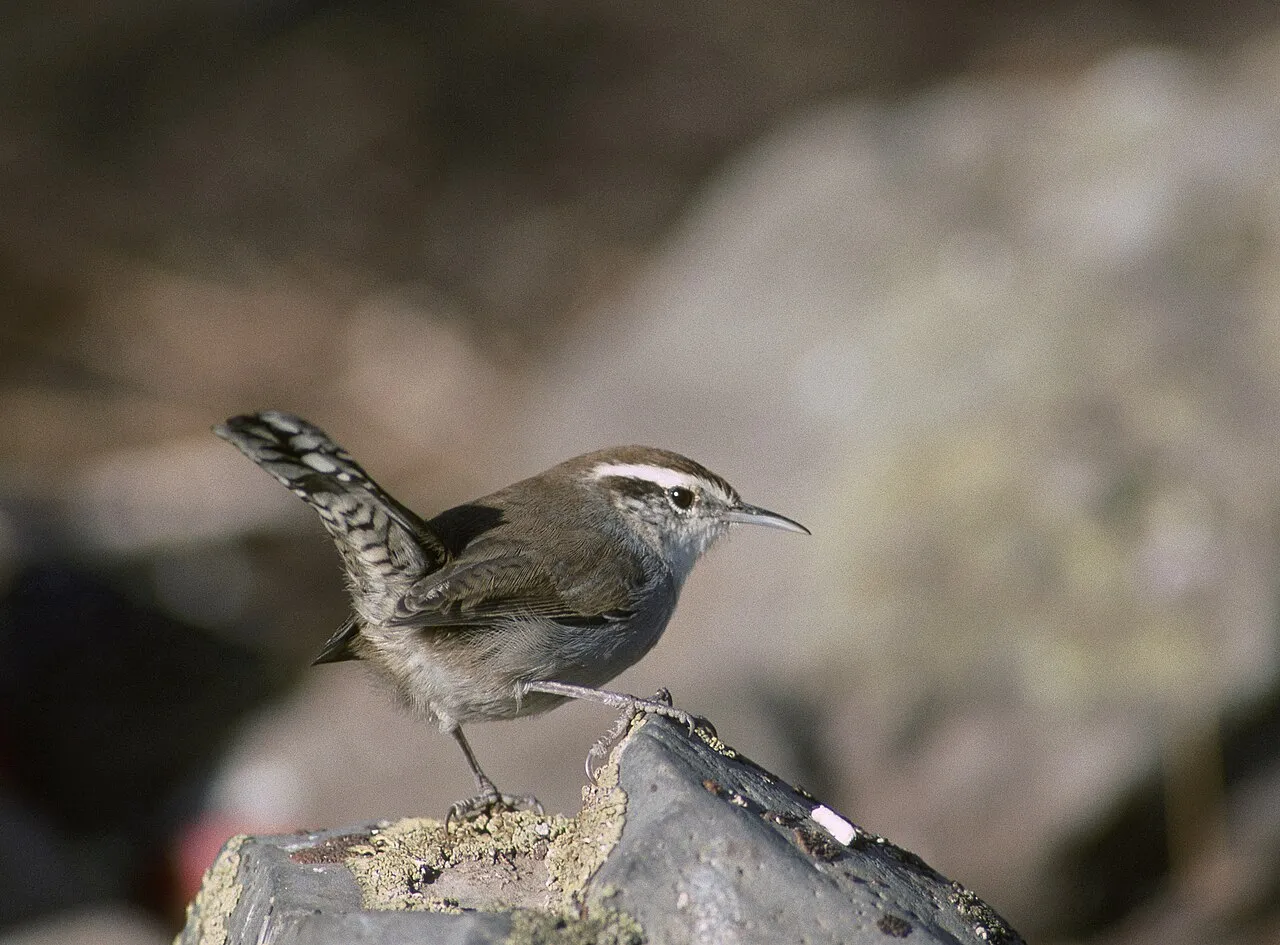
Wrens in Arizona: every species, most-reported first
Every wren with at least 25 eBird records in the state from 2020–2024, most-reported first. The status label is derived from each species’ own monthly share of all state records.
1. Cactus Wren (Campylorhynchus brunneicapillus) — 193,486 records, 0.9% of the state’s eBird total; a year-round resident, reported in every month.
2. Bewick's Wren (Thryomanes bewickii) — 175,732 records, 0.9% of the state’s eBird total; a year-round resident, reported in every month.
3. House Wren (Troglodytes aedon) — 75,566 records, 0.4% of the state’s eBird total; a year-round resident, reported in every month.
4. Rock Wren (Salpinctes obsoletus) — 60,554 records, 0.3% of the state’s eBird total; a year-round resident, reported in every month.
5. Canyon Wren (Catherpes mexicanus) — 38,198 records, 0.2% of the state’s eBird total; a year-round resident, reported in every month.
6. Marsh Wren (Cistothorus palustris) — 36,259 records, 0.2% of the state’s eBird total; a winter visitor, present mainly from October to March and peaking in November.
7. Winter Wren (Troglodytes hiemalis) — 1,005 records, 0.00% of the state’s eBird total; a winter visitor, present mainly from November to February and peaking in December.
8. Pacific Wren (Troglodytes pacificus) — 498 records, 0.00% of the state’s eBird total; a winter visitor, present mainly from November to March and peaking in December.
When to see wrens in Arizona
Adding up every species’ share of state eBird records month by month, wrens are most prominent in October, March and November and least in April and May. 5 of the 8 species are year-round — Cactus Wren, Bewick's Wren, House Wren, Rock Wren and Canyon Wren — so there is no month without them.
Winter visitors. Marsh Wren arrives around October and leaves after March (peak November); Winter Wren arrives around November and leaves after February (peak December); Pacific Wren arrives around November and leaves after March (peak December).
Attracting wrens to Arizona backyards
Wrens are insect-eaters that mostly ignore seed, though some take suet and mealworms. A small-holed nest box, brush piles, and leaving leaf litter under shrubs bring them in.
In Arizona the wren most likely to turn up is the Cactus Wren, a year-round resident, followed by the Bewick's Wren.
Wrens in Arizona: FAQ
How many species of wrens are there in Arizona?
8 species of wrens have regular eBird records in Arizona (at least 25 records in 2020–2024): Cactus Wren, Bewick's Wren, House Wren, Rock Wren, Canyon Wren, Marsh Wren, Winter Wren and Pacific Wren.
What is the most common wren in Arizona?
The Cactus Wren, with 193,486 eBird records in 2020–2024, followed by the Bewick's Wren with 175,732. It is a year-round resident, reported in every month.
When is the best time to see wrens in Arizona?
October, March and November, when the combined share of Arizona eBird records belonging to wrens is highest. Winter visitors such as the Marsh Wren arrive around October.
More birds in Arizona
Wrens in other states
Wrens in Arizona: sources
Every number on this page comes from the EOD – eBird Observation Dataset published by the Cornell Lab of Ornithology and distributed through GBIF under a CC BY 4.0 license: Arizona records from 2020–2024, retrieved 2026-09-18. Species are drawn from the families Troglodytidae; only species with at least 25 records are listed, and a species is called a year-round resident when its monthly share of state records stays above 30% of its own peak in ten or more months. “Records” are individual eBird observations, so they reflect how often birders report a species, not a population count.