Feeder problem guide
Weather Resistant Bird Feeder
A weather resistant bird feeder is less about a label than about three things: a roof that sheds rain, a base that drains, and seed that is replaced as soon as it gets wet 1.
Everything below about feeder design, foods, placement and cleaning is drawn from Project FeederWatch 12 and All About Birds 3.
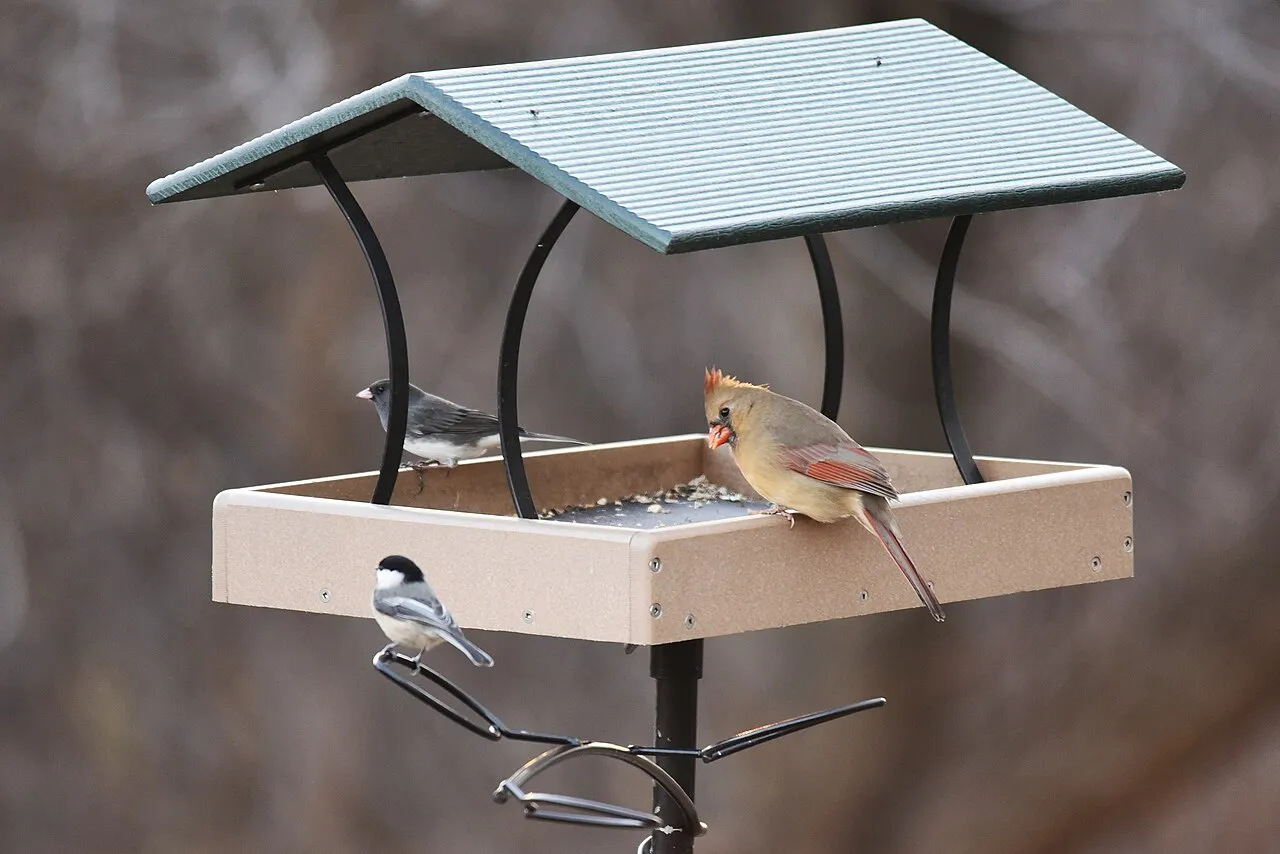
Weather resistant bird feeder designs that keep seed dry
Tube feeders keep seed fairly dry 1, because the seed is enclosed and only the ports are exposed; a tube with a dome or weather guard above it is the driest common design. Hoppers add a roof over an open tray, and large hoppers attract most species of feeder birds including larger ones like doves and grackles 1. Open platforms are the wettest: they attract the widest range of birds 1, but need drainage holes or a mesh floor and only a day's seed at a time.
Wet seed is not a storage problem, it is a health problem
Clean feeders more often during wet weather 1. Damp seed and hulls mold, and mold plus crowded birds is how salmonellosis, a common cause of mortality in feeder birds, spreads 2. Discard wet or clumped seed rather than letting birds finish it, move the feeder out of driving rain, and let a washed feeder dry completely before refilling 1.
For nectar feeders the rule is stricter still: at any sign of cloudy water or black mold, discard the solution and clean immediately 1.
Placement, squirrels and windows
Place feeders close to natural cover such as trees or shrubs, which offer birds refuge from predators, but not so close to strong branches that squirrels can jump across — a distance of about 10 feet is the usual guidance 1. Windows are the other hazard: collisions kill perhaps a billion or more birds a year in North America, and older rules about safe feeder-to-window distances are no longer thought valid — if a window is near a feeder, treat the glass with markings spaced no more than 2 inches apart, external screens or cords, rather than worrying about the distance 3.
Squirrel baffles — barriers placed between squirrels and feeders — are usually the best defense. Squirrels can jump to feeders placed less than ten feet from a tree or building, so a pole-mounted feeder in the open with a baffle below it, or a tilting baffle at least 18 inches in diameter above a hanging feeder, is the arrangement that works 1.
Keeping the feeder clean and the birds healthy
Clean seed and suet feeders regularly — every week or two, and more often during heavy use or wet weather — by scrubbing off debris and washing the parts thoroughly with warm water and dish soap 1. Hummingbird feeders need cleaning far more often, every couple of days and ideally every time they are refilled; discard the solution and clean immediately at any sign of cloudy water or black mold 1.
If a sick bird appears — House Finch eye disease shows as red, swollen, runny or crusty eyes, and avian pox as wart-like growths around the eye, bill, legs and feet — remove the feeders the bird is using for a couple of weeks and clean the feeders and the area thoroughly, so disease is not spread at the feeder 2. Salmonellosis, caused by Salmonella bacteria, is a common cause of mortality in feeder birds and spreads the same way 2.
More feeder guides
Frequently asked questions
What kind of feeder keeps seed dry?
A tube feeder, ideally with a weather dome above it; hoppers with a roof are next best, and open platforms need drainage and daily refills 1.
Can birds eat wet birdseed?
Throw it out. Wet seed molds and moldy feeders spread salmonellosis; clean feeders more often in wet weather 12.
How often should I clean a bird feeder?
Every week or two for seed and suet feeders, more often in wet weather or heavy use; every couple of days for hummingbird feeders. Scrub, then wash with warm water and dish soap 1.
How far should a feeder be from a window?
Distance rules are no longer considered valid; instead make any nearby window bird-safe with markings spaced no more than 2 inches apart, exterior screens, or hanging cords 3.