Spring · March–May · Poecile atricapillus
Black-capped Chickadee in Spring
The black-capped chickadee in spring leaves the winter flock: pairs excavate their own cavity in dead snags or rotten branches, frequently alder or birch, or take a nest box put up well before the breeding season 3.
Behavior is from All About Birds 3, feeding from Project FeederWatch 2, and the state numbers from eBird records on this site 1. The eBird section on this page is computed from the dataset itself: for each of the nine states with occurrence data on this site, it shows the species' share of all eBird records in these months against its share across the year, so you can see where the season actually concentrates the bird 1.
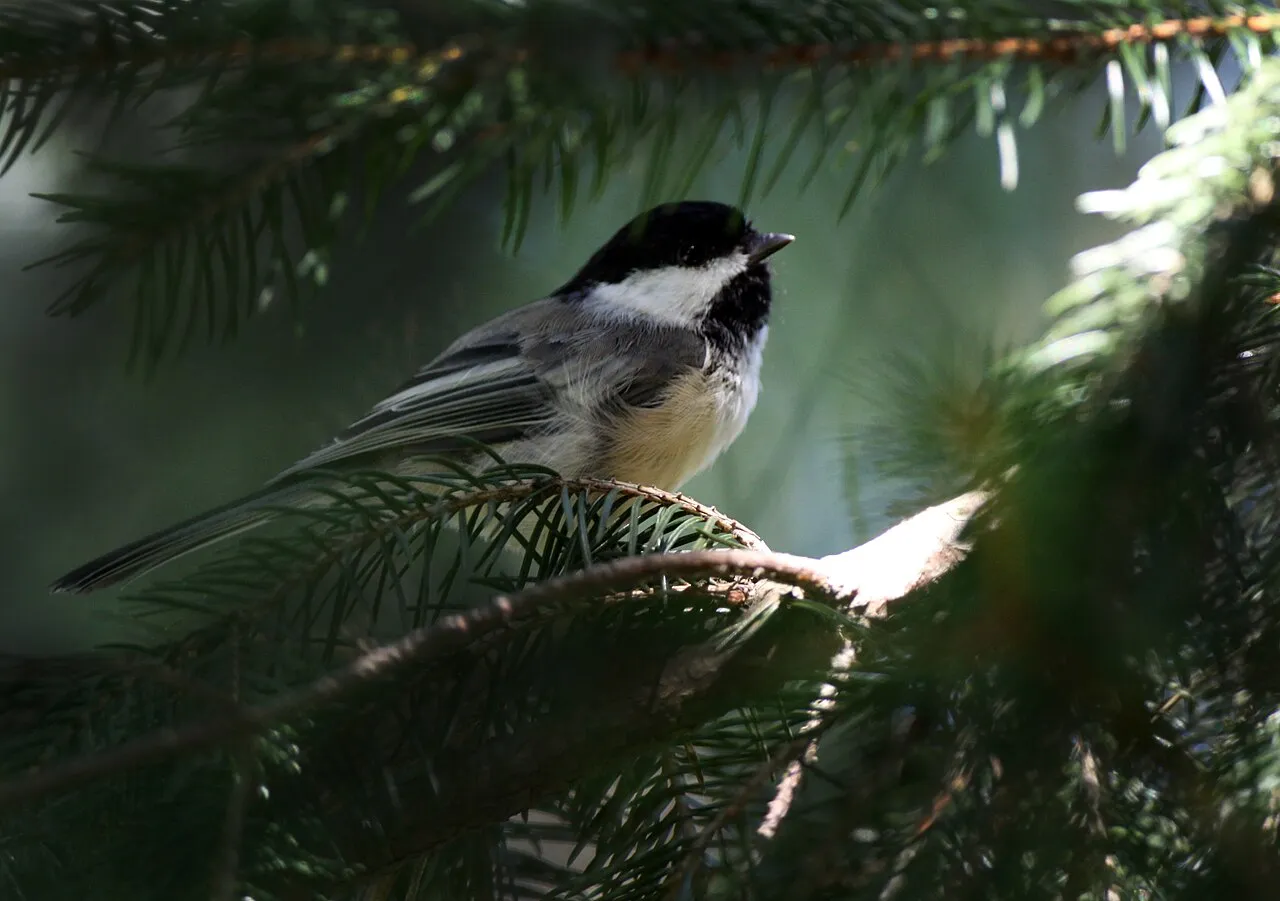
What the black-capped chickadee in spring is doing
Both sexes excavate and the female builds a cup of moss lined with softer material such as rabbit fur, usually 1.5–7 meters up; clutches run from 1 to 13 eggs, incubated 12–13 days, with the young leaving after 12–16 days and one brood a year 3. The diet swings to animal food: in spring, summer and fall, insects, spiders and other animal food make up 80–90 percent of what chickadees eat, against about half in winter 3. Because migrating songbirds join chickadee flocks, listening for chickadees in spring is a reliable way to find other species passing through 3.
Where to look for chickadees in spring
Chickadees are active, acrobatic and social, and in spring the winter flock — which often included woodpeckers, nuthatches, warblers, vireos and other small woodland birds — thins to pairs on territory 3. The chickadee-dee-dee call carries information about flock identity and threats, and the more dee notes, the higher the threat 3. Because migrating songbirds join chickadee flocks, listening for chickadees in spring is a reliable way to find other species 3; the eBird cards below show where the species is a regular spring bird, and that in Florida, Texas and Arizona it is essentially absent 1.
Hosting chickadees in spring
Put up a box with a predator guard before the season and fill it with sawdust or wood shavings — chickadees are especially attracted to a box they can excavate — at least 60 feet into woodland if House Wrens are around 3. They stay easy to feed: suet, sunflower and peanuts from tiny hanging feeders or window feeders 3, with suet the food FeederWatch recommends for insect-eating birds 2. Clean feeders every week or two and more often in wet spring weather 2.
eBird records by state: Black-capped Chickadee, March–May
In March–May the Black-capped Chickadee makes up the largest share of eBird records in Rhode Island (2.6% of all records, against 2.6% across the year). In no state does the season raise its share above the annual figure — this is a bird seen in every month. Records are eBird checklists reported 2020–2024 and retrieved through GBIF.
Frequently asked questions
When do black-capped chickadees nest?
Spring — they excavate a cavity in rotten wood or take a box put up before the breeding season; one brood a year 3.
Do chickadees use nest boxes?
Yes, especially a box with a predator guard filled with sawdust or shavings they can dig out, placed 60 feet into woodland 3.
Sources
- EOD – eBird Observation Dataset, Cornell Lab of Ornithology, via GBIF.org (CC BY 4.0); monthly records 2020–2024 for the nine states on this site
- Project FeederWatch (Cornell Lab of Ornithology) — Feeding Birds
- All About Birds (Cornell Lab of Ornithology) — Black-capped Chickadee: Overview and Life History