Summer · June–August · Poecile atricapillus
Black-capped Chickadee in Summer
The black-capped chickadee in summer is an insect-eater: in spring, summer and fall, insects, spiders and other animal food make up 80–90 percent of the diet, and the single brood of the year has left the cavity after 12–16 days 3.
Behavior is from All About Birds 3, feeding from Project FeederWatch 2, and the state numbers from eBird records on this site 1. The eBird section on this page is computed from the dataset itself: for each of the nine states with occurrence data on this site, it shows the species' share of all eBird records in these months against its share across the year, so you can see where the season actually concentrates the bird 1.
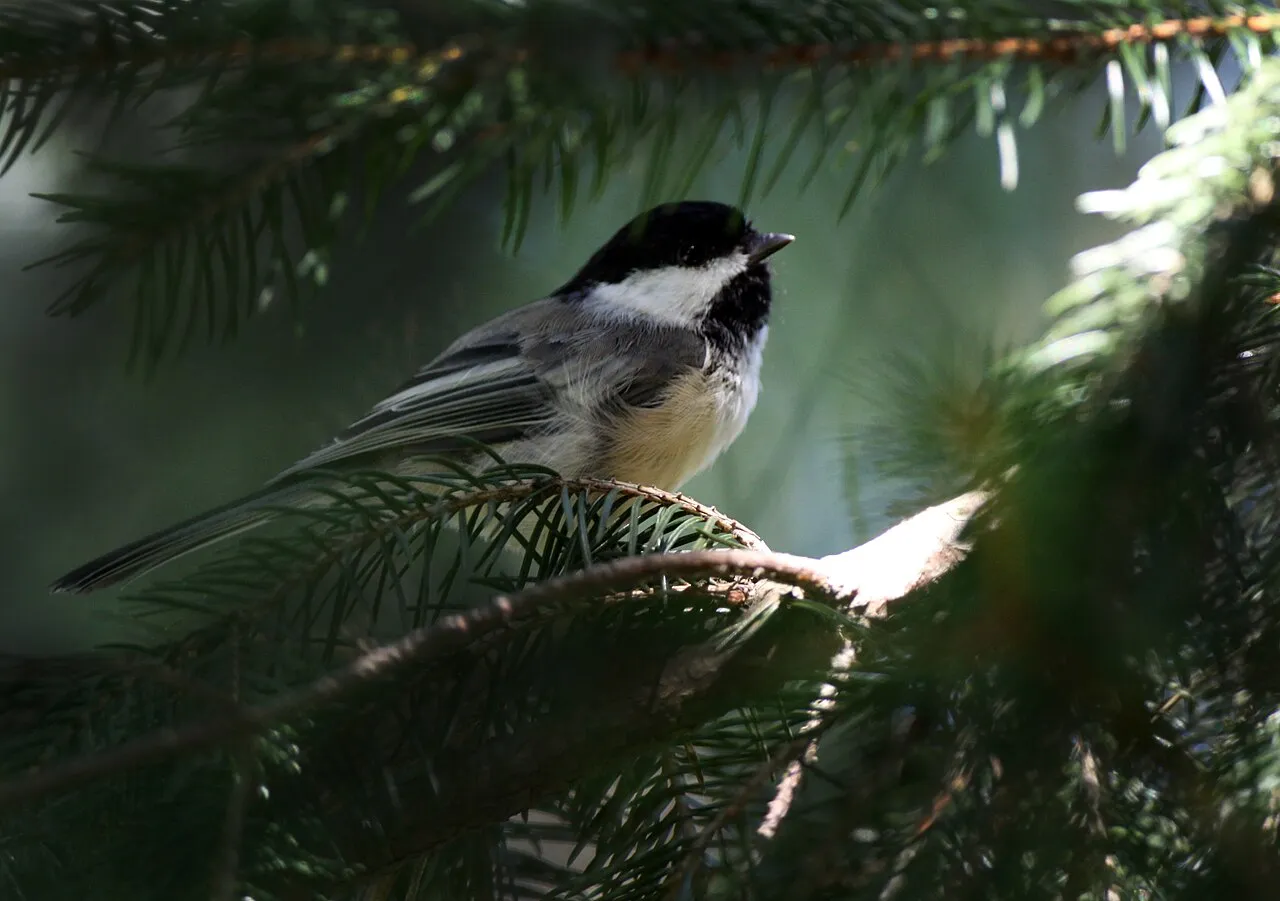
What the black-capped chickadee in summer is doing
Chickadees are active, acrobatic and social, and after the brood fledges the family forages together through the canopy, often with nuthatches and other small birds, seldom perching within a few feet of each other while eating 3. The familiar chickadee-dee-dee carries information about flock identity and threats — the more dee notes, the higher the threat 3. By late summer they begin hiding seeds to eat later, each in a different spot, remembering thousands of hiding places for the winter 3.
Where to look for chickadees in summer
Chickadees live in flocks that often include woodpeckers, nuthatches, warblers and vireos, and they seldom perch within a few feet of each other while eating 3. They can also excavate their own sleeping cavities in rotten wood and sleep alone in them 3. The eBird cards below show the species is a bird of the northern states on this site and absent from the Southeast and Southwest 1.
Feeding chickadees in summer
Summer is also when the next generation learns the yard. Fledglings follow the adults to feeders and baths within days of leaving the cavity, and a family group of six or seven chickadees at a suet cage in July is the year's single brood 3. Keep cats indoors — fledglings are among the birds at greatest risk from cats, and feeder birds are easy prey 2.
At feeders chickadees take mostly sunflower seeds, peanuts, suet, peanut butter and mealworms 3; suet is the food for insect-eating birds 2, and in heat use rendered cakes and watch for softening. They do not mind tiny hanging feeders that swing in the wind and readily visit window feeders 3. Clean feeders every week or two and more often in heavy use 2, and keep a shallow bath changed daily 2.
eBird records by state: Black-capped Chickadee, June–August
In June–August the Black-capped Chickadee makes up the largest share of eBird records in Michigan (2.5% of all records, against 3.2% across the year). In no state does the season raise its share above the annual figure — this is a bird seen in every month. Records are eBird checklists reported 2020–2024 and retrieved through GBIF.
Frequently asked questions
Sources
- EOD – eBird Observation Dataset, Cornell Lab of Ornithology, via GBIF.org (CC BY 4.0); monthly records 2020–2024 for the nine states on this site
- Project FeederWatch (Cornell Lab of Ornithology) — Feeding Birds
- All About Birds (Cornell Lab of Ornithology) — Black-capped Chickadee: Overview and Life History