Summer · June–August
Summer Birds
Summer birds are busy and quieter: cardinals on a second brood, chickadees and titmice eating almost nothing but insects, goldfinches only now starting to nest, and hummingbird males already heading south 3456.
The behavior below is from All About Birds species accounts [3–8], feeding advice from Project FeederWatch 2, and the state-by-state numbers from eBird records on this site 1.
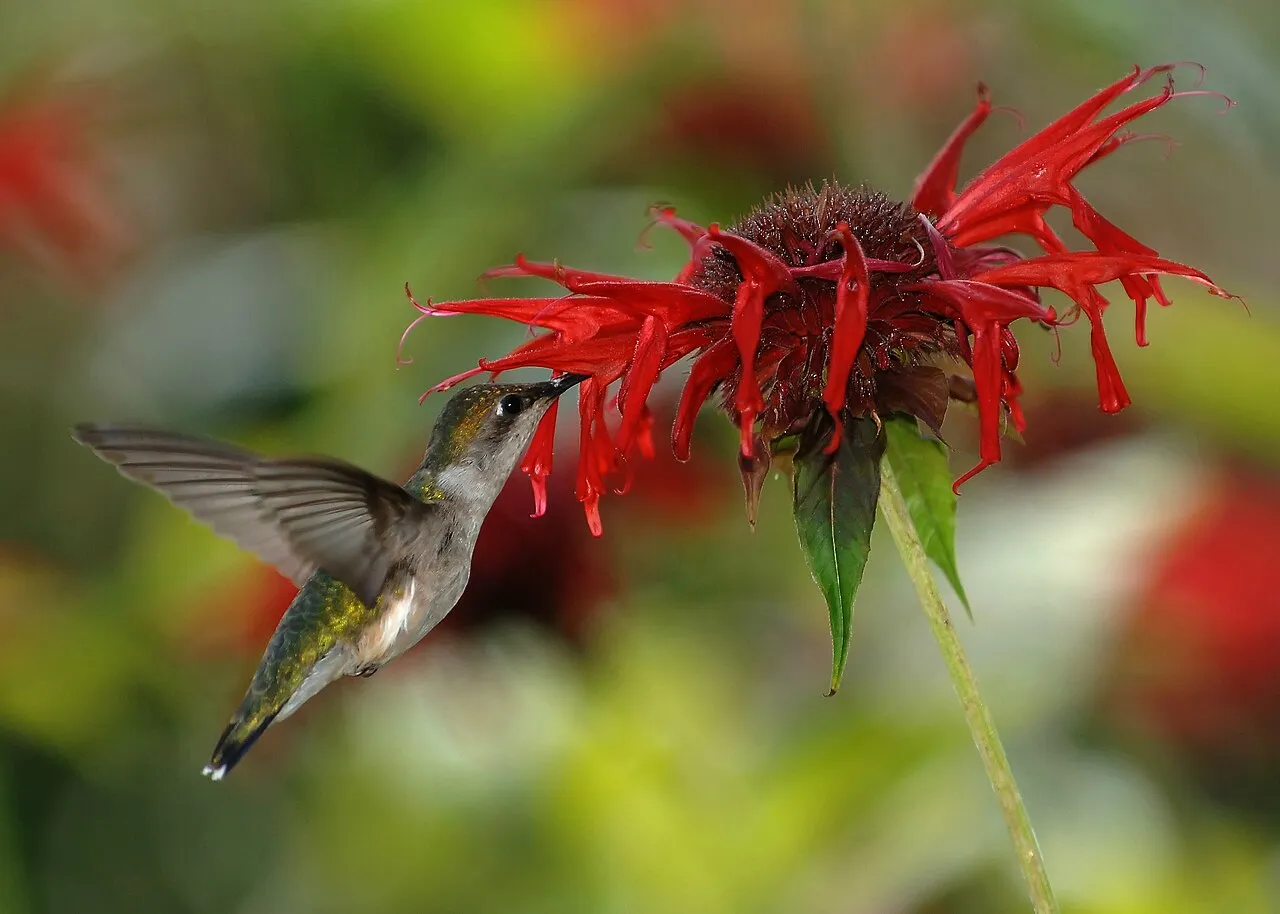
Summer birds raising young
Northern Cardinals raise one to two broods a year; clutches of 2–5 eggs hatch in 11–13 days and the young leave after 7–13, fed mostly insects 3. Black-capped Chickadees eat 80–90 percent insects and spiders in spring, summer and fall and raise one brood 4; Tufted Titmice eat caterpillars, beetles, ants, wasps, stink bugs and treehoppers in summer, and occasionally a young bird stays to help raise the next year's brood 5. Baltimore Orioles feed their young protein-rich insects — beetles, crickets, moths, tent caterpillars — and visit fruit feeders less until late summer 6.
Summer birds on their own schedule
American Goldfinches breed later than most North American birds, waiting until June or July when milkweed, thistle and other plants have produced the fibrous seeds they weave into nests and feed to their young 7. Ruby-throated Hummingbirds are the opposite: pairs stay together only days to weeks, and males may begin migrating by early August while females are still feeding young 8.
At the feeder, summer means heat: sugar water ferments rapidly to produce toxic alcohol in hot weather, so change it before it clouds and clean hummingbird feeders every couple of days 28; clean seed feeders every week or two, more often in heavy use, and never let wet seed sit 2.
The most seasonal summer birds by state, from eBird
For each state with eBird data on this site, these are the backyard species whose share of June–August records rises most above their year-round share — the birds that are most a summer bird there. Records are eBird checklists reported 2020–2024, retrieved through GBIF.
Florida: Black-bellied Whistling-Duck (2.3× its annual share), Ruby-throated Hummingbird (1.7× its annual share), White-winged Dove (1.7× its annual share), Orchard Oriole (1.6× its annual share)
Arizona: Painted Bunting (3.0× its annual share), Band-tailed Pigeon (2.5× its annual share), Rufous Hummingbird (2.4× its annual share), Indigo Bunting (2.2× its annual share)
California: Clark's Nutcracker (2.7× its annual share), Indigo Bunting (2.7× its annual share), Black-chinned Hummingbird (2.4× its annual share), Mountain Chickadee (2.1× its annual share)
Colorado: Rufous Hummingbird (3.3× its annual share), Calliope Hummingbird (3.2× its annual share), Broad-tailed Hummingbird (2.4× its annual share), Indigo Bunting (2.2× its annual share)
Oregon: Gray Catbird (2.8× its annual share), Lazuli Bunting (2.4× its annual share), Black-headed Grosbeak (2.2× its annual share), Western Tanager (2.2× its annual share)
Tennessee: Indigo Bunting (2.4× its annual share), Ruby-throated Hummingbird (2.4× its annual share), Chimney Swift (2.0× its annual share), Common Yellowthroat (1.8× its annual share)
Texas: Calliope Hummingbird (4.5× its annual share), Band-tailed Pigeon (4.3× its annual share), Painted Bunting (3.2× its annual share), Black-chinned Hummingbird (2.9× its annual share)
Michigan: Indigo Bunting (2.3× its annual share), Cedar Waxwing (2.2× its annual share), Ruby-throated Hummingbird (2.1× its annual share), Common Yellowthroat (1.9× its annual share)
Rhode Island: Chimney Swift (2.3× its annual share), Cedar Waxwing (2.2× its annual share), Laughing Gull (2.1× its annual share), Great Egret (2.0× its annual share)
Summer guides by species
Frequently asked questions
Why are there fewer birds at my feeder in summer?
Insects: chickadees, titmice, orioles and cardinals switch to insects to feed young, and natural food is everywhere; they return as it thins in fall 3456.
When do goldfinches nest?
June or July — later than almost any other North American songbird — once thistle and milkweed have set seed 7.
Sources
- EOD – eBird Observation Dataset, Cornell Lab of Ornithology, via GBIF.org (CC BY 4.0); monthly records 2020–2024 for the nine states on this site
- Project FeederWatch (Cornell Lab of Ornithology) — Feeding Birds
- All About Birds (Cornell Lab of Ornithology) — Northern Cardinal: Overview and Life History
- All About Birds (Cornell Lab of Ornithology) — Black-capped Chickadee: Overview and Life History
- All About Birds (Cornell Lab of Ornithology) — Tufted Titmouse: Overview and Life History
- All About Birds (Cornell Lab of Ornithology) — Baltimore Oriole: Overview and Life History
- All About Birds (Cornell Lab of Ornithology) — American Goldfinch: Overview and Life History
- All About Birds (Cornell Lab of Ornithology) — Ruby-throated Hummingbird: Overview and Life History