Amelanchier canadensis · Rosaceae
Canada Serviceberry for Birds
Canada serviceberry — shadblow — is a small understory tree or large multi-trunked shrub whose white spring blossoms are followed by small, crimson, apple-like fruit, and the Wildflower Center calls it an important browse and food plant for birds and other wildlife 1.
The growing facts below come from the Wildflower Center's record for Amelanchier canadensis 1; the native-plant case is Audubon's 2; bird diets from All About Birds 3.
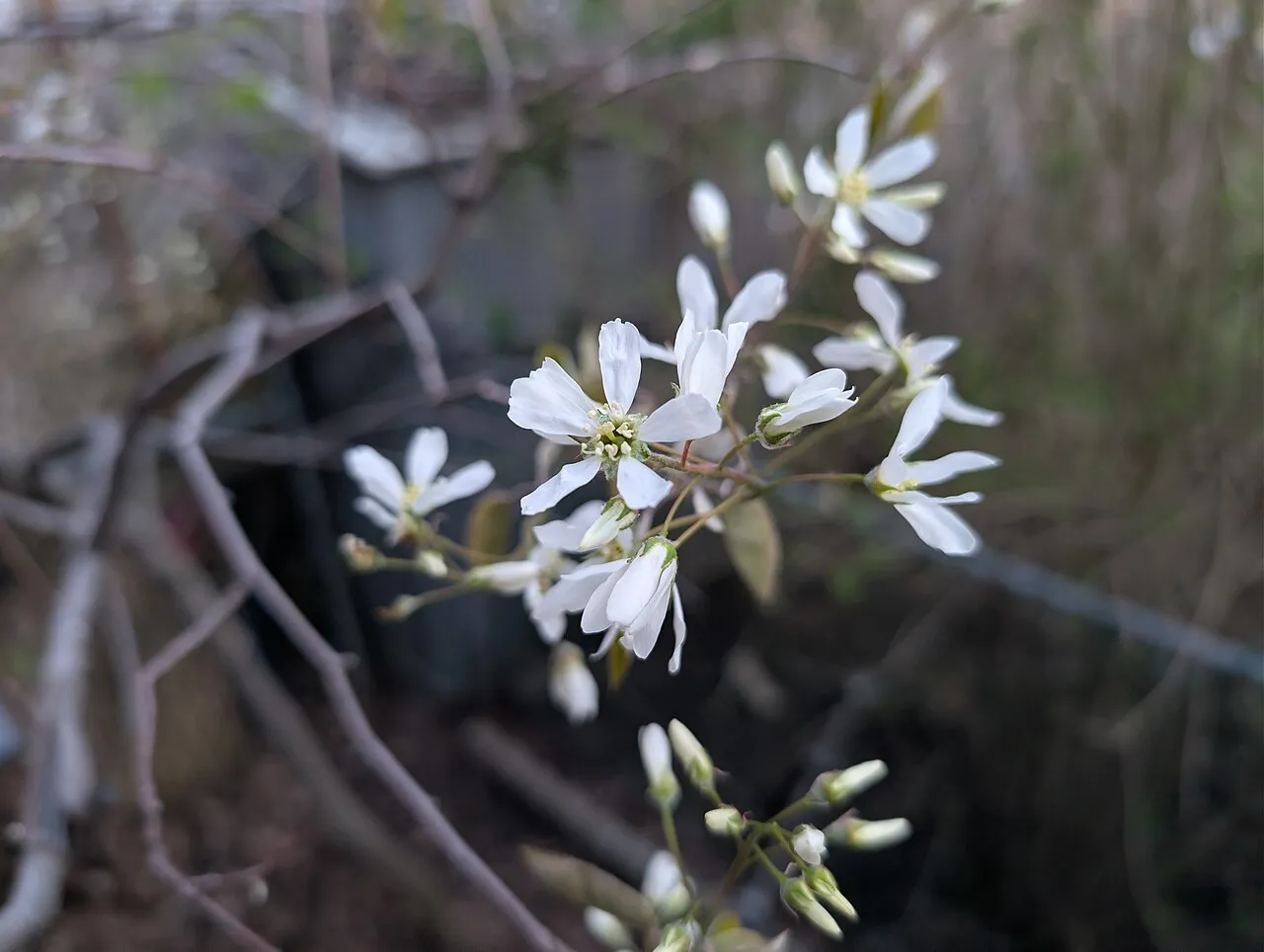
What Canada serviceberry looks like
A deciduous plant of 6–20 feet, sometimes taller (the record allows up to about 30 feet), usually growing in clumps with many upright branches and a delicate, open crown 1. Long-petaled white blossoms open in April and May before the leaves emerge, the fruit ripens red to purple in early summer, and fall foliage is an enduring orange to rusty red 1.
What serviceberry does for birds
An important browse and food plant for birds and other wildlife, attracting birds and with special value to native bees 1. The fruit ripens in early summer, weeks before most berries — American Robins, which eat an enormous variety of fruit and feed fruit to their young 3, are the classic serviceberry bird, and cardinals take similar small fruits 4.
Native range and growing conditions
An East Coast plant, native from Maine to Georgia and west to central New York, in wood borders and moist upland woods 1. It takes sun, part shade or shade, medium water, and moist but well-drained soils 1.
Serviceberries are subject to many disease and insect problems, but the damage is usually cosmetic rather than life-threatening 1.
Planting it for birds: native range and care
Check the native range before buying: the Wildflower Center record for this species lists the states and provinces where it occurs naturally 1, and Audubon's zip-code native plant database narrows that to your area and the bird groups each plant attracts 2. Once established, native plants generally need little maintenance and far less water than lawn, and they do not need the pesticides that make a yard poor bird habitat 2.
Native plants are those that occur naturally in the region where they evolved, and Audubon calls them the ecological basis on which birds depend: without them and the insects that co-evolved with them, local birds cannot survive 2. The scale matters — a native oak supports over 500 species of caterpillars where a ginkgo hosts five, and it takes more than 6,000 caterpillars to raise one brood of chickadees 2. Most nursery landscaping plants are alien species, so choosing natives is the single landscaping decision with the clearest effect on bird populations 2.
Birds this plant supports
More plant guides
Frequently asked questions
What birds eat serviceberries?
The Wildflower Center calls it an important food plant for birds; robins and other fruit-eaters take the early-summer fruit 13.
How big does Canada serviceberry get?
Usually 6–20 feet, occasionally to about 30, as a clump-forming shrub or small tree 1.
Is Canada serviceberry native to my area?
Its native range is Maine to Georgia and west to central New York; other Amelanchier species cover the rest of the continent 1.
Sources
- Lady Bird Johnson Wildflower Center, Native Plant Database — Amelanchier canadensis (USDA symbol AMCA4)
- National Audubon Society — Why Native Plants Matter
- All About Birds (Cornell Lab of Ornithology) — American Robin: Overview and Life History
- All About Birds (Cornell Lab of Ornithology) — Northern Cardinal: Overview and Life History