Betula papyrifera · Betulaceae
Paper Birch for Birds
Paper birch is the white-barked tree of the Northwoods, used by songbirds, ground birds and mammals, and one of the trees whose seeds goldfinches eat and whose rotten branches chickadees excavate for nests 134.
The growing facts below come from the Wildflower Center's record for Betula papyrifera 1; the native-plant case is Audubon's 2; bird notes from All About Birds 34.
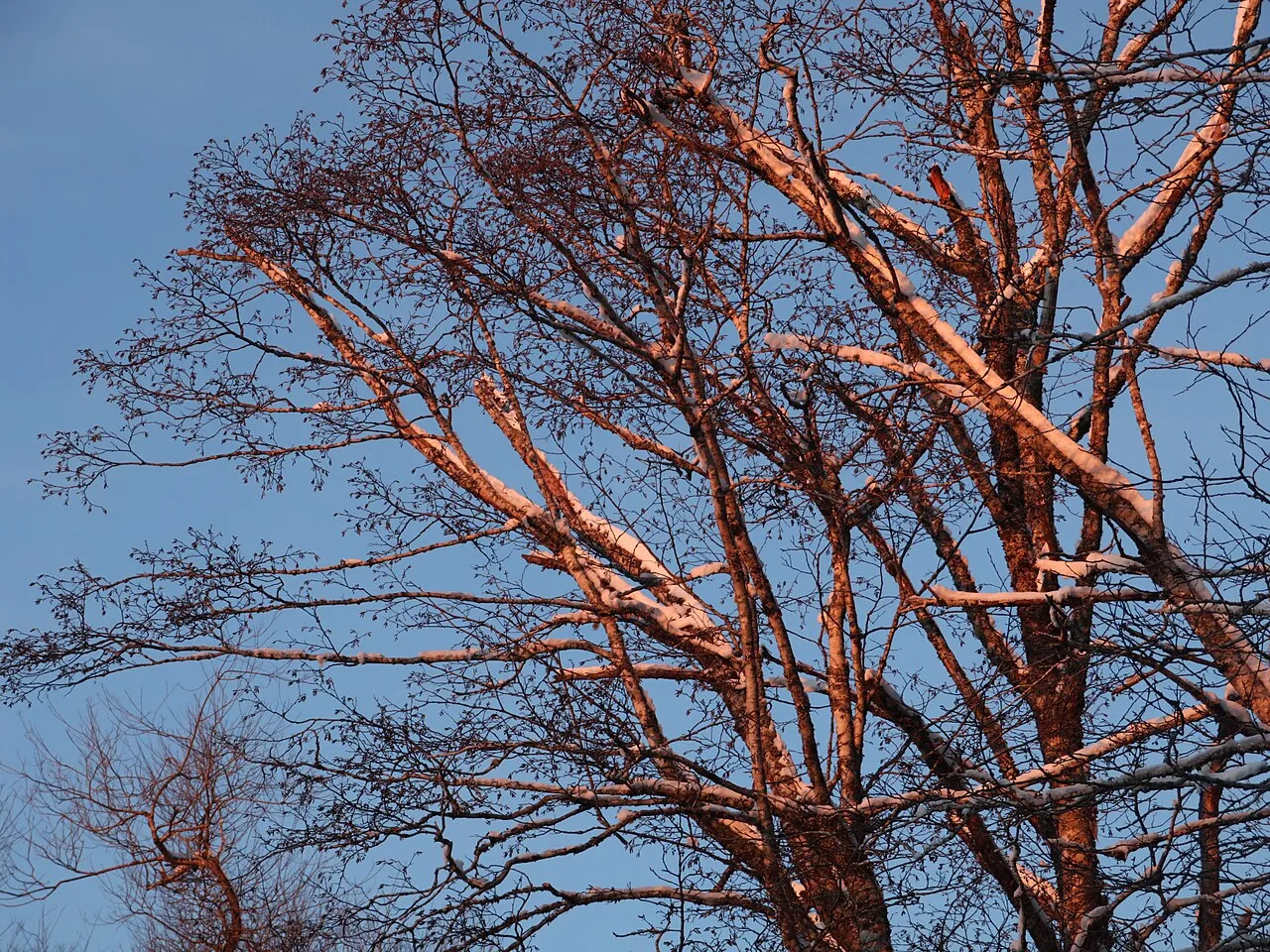
What paper birch looks like
What paper birch does for birds
Songbirds, ground birds and mammals use this species, and it is a larval host for the Eastern Tiger Swallowtail and Luna moth 1. American Goldfinches eat tree seeds including alder and birch 3; Black-capped Chickadees often excavate their own nest cavity in dead snags or rotten branches, frequently alder or birch 4. Caterpillars from its two moth and butterfly hosts feed nesting birds 2.
Native range and growing conditions
Native from Newfoundland and Labrador to Alaska, south to New Jersey, the Virginia mountains, northeastern Indiana, Wyoming and northeastern Oregon, in low wet areas, moist hillsides and stream banks 1. It wants sun to shade, high water, and moist, fertile, cool soils 1.
It requires cool summers where average July temperatures are below 70 °F, is short-lived and sensitive to the bronze birch borer and birch dieback under unfavorable conditions, and should not be pruned until summer when the sap has stopped flowing 1.
Planting it for birds: native range and care
Check the native range before buying: the Wildflower Center record for this species lists the states and provinces where it occurs naturally 1, and Audubon's zip-code native plant database narrows that to your area and the bird groups each plant attracts 2. Once established, native plants generally need little maintenance and far less water than lawn, and they do not need the pesticides that make a yard poor bird habitat 2.
Native plants are those that occur naturally in the region where they evolved, and Audubon calls them the ecological basis on which birds depend: without them and the insects that co-evolved with them, local birds cannot survive 2. The scale matters — a native oak supports over 500 species of caterpillars where a ginkgo hosts five, and it takes more than 6,000 caterpillars to raise one brood of chickadees 2. Most nursery landscaping plants are alien species, so choosing natives is the single landscaping decision with the clearest effect on bird populations 2.
Birds this plant supports
More plant guides
Frequently asked questions
Which birds use paper birch?
Songbirds and ground birds generally; goldfinches eat birch seed and chickadees excavate nest cavities in rotten birch 134.
Can I grow paper birch in a warm climate?
It needs cool summers with average July temperatures below 70 °F; elsewhere it is short-lived and borer-prone 1.
When should I prune paper birch?
Not until summer, after the sap has stopped flowing 1.
Sources
- Lady Bird Johnson Wildflower Center, Native Plant Database — Betula papyrifera (USDA symbol BEPA)
- National Audubon Society — Why Native Plants Matter
- All About Birds (Cornell Lab of Ornithology) — American Goldfinch: Overview and Life History
- All About Birds (Cornell Lab of Ornithology) — Black-capped Chickadee: Overview and Life History