Sambucus canadensis · Adoxaceae
Elderberry Habitat
Elderberry habitat is wet ground: alluvial forests, bogs, ditches, the edges of riparian thickets — and, planted in a yard, a fast-growing shrub whose berries are relished by many bird species and mammals 1.
The growing facts below come from the Wildflower Center's record for Sambucus nigra ssp. canadensis, the current name for American elderberry 1; the native-plant case is Audubon's 2; bird diets are from All About Birds 34.
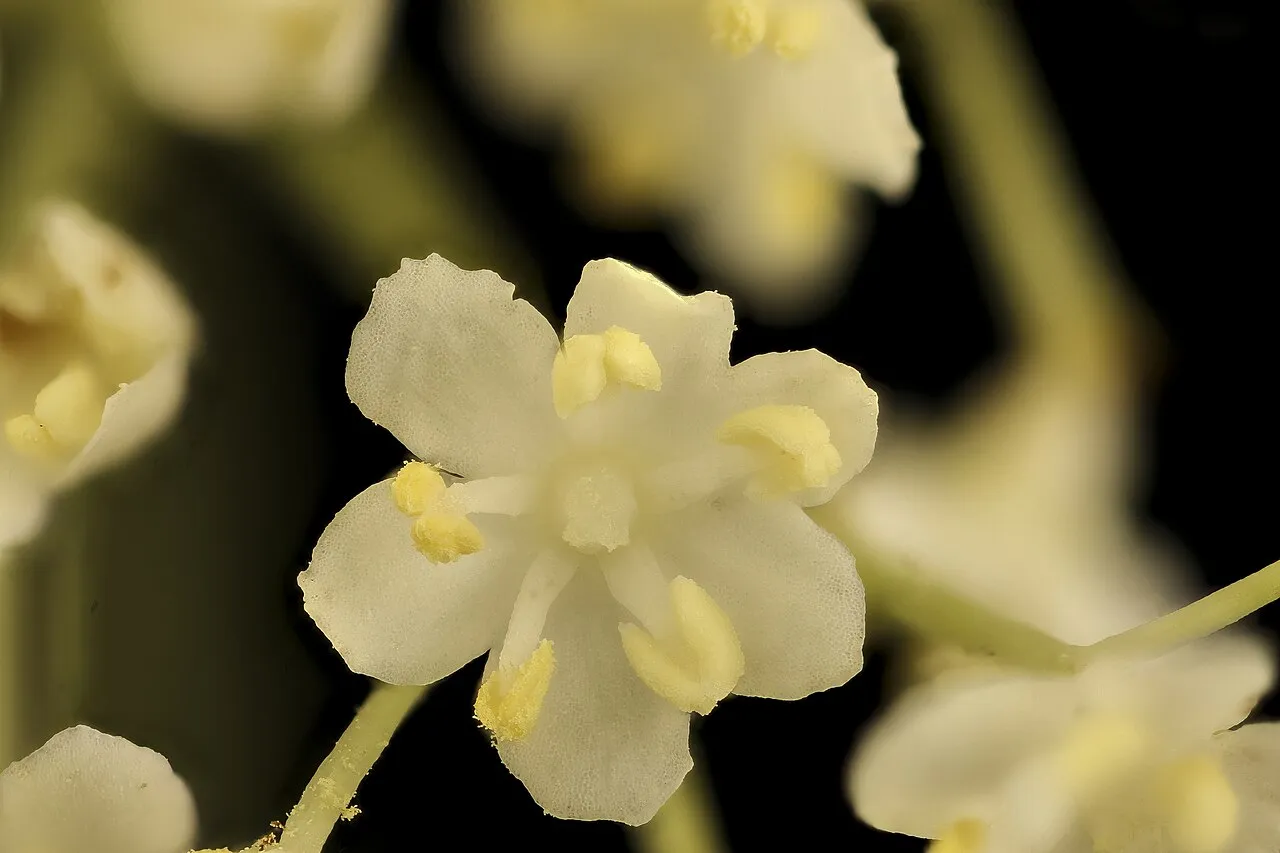
Elderberry habitat in the wild
The Wildflower Center lists its native habitat as alluvial forests, bogs, ditches, drier old fields, and the edges of riparian thickets, across a native range from Nova Scotia to Florida and west to southern Manitoba, the eastern Dakotas, eastern Oklahoma and Texas 1. It is a forest-edge species that will grow in full sun if the soil is well tilled and watered 1.
What elderberry does for birds
The purple-black fruit is attractive to birds that spread the seeds, and the berries are relished by many bird species and mammals; deer browse the twigs and leaves 1. Among the birds profiled on this site, Northern Cardinals eat fruit including dogwood, mulberry, sumac and blackberry 3, and American Robins eat an enormous variety of fruit 4 — an elderberry in fruit from late summer draws both. The shrub also provides nesting structure for native bees 1.
Leaves, twigs, roots and unripe fruit are poisonous (low toxicity); the ripe berries are inedible raw for people but reputedly used for jelly and wine 1.
Growing elderberry in a yard
It reaches about 12 feet, blooms white in May and June, and takes part shade, medium water and wet soil, tolerating a wide variety of wet to dry soils but preferring rich, moist, slightly acid ground 1.
Elderberry is a fast grower and an aggressive competitor; prune heavily in winter to keep a thick form, and cutting the whole bush to the ground every other year may be needed to keep it in check 1. Individual plants are short-lived but root masses keep producing new shoots, and it can be planted as a hedge 1.
Planting it for birds: native range and care
Check the native range before buying: the Wildflower Center record for this species lists the states and provinces where it occurs naturally 1, and Audubon's zip-code native plant database narrows that to your area and the bird groups each plant attracts 2. Once established, native plants generally need little maintenance and far less water than lawn, and they do not need the pesticides that make a yard poor bird habitat 2.
Native plants are those that occur naturally in the region where they evolved, and Audubon calls them the ecological basis on which birds depend: without them and the insects that co-evolved with them, local birds cannot survive 2. The scale matters — a native oak supports over 500 species of caterpillars where a ginkgo hosts five, and it takes more than 6,000 caterpillars to raise one brood of chickadees 2. Most nursery landscaping plants are alien species, so choosing natives is the single landscaping decision with the clearest effect on bird populations 2.
Birds this plant supports
More plant guides
Frequently asked questions
What is the habitat of American elderberry?
Wet, rich ground — alluvial forests, bogs, ditches, riparian thicket edges — from Nova Scotia to Florida and west to the Dakotas and Texas 1.
Which birds eat elderberries?
The Wildflower Center says the berries are relished by many bird species; cardinals and robins are fruit-eaters that take similar berries 134.
Is elderberry poisonous?
Leaves, twigs, roots and unripe fruit have low toxicity; ripe fruit is used cooked for jelly and wine 1.
Sources
- Lady Bird Johnson Wildflower Center, Native Plant Database — Sambucus nigra ssp. canadensis (USDA symbol SANIC4)
- National Audubon Society — Why Native Plants Matter
- All About Birds (Cornell Lab of Ornithology) — Northern Cardinal: Overview and Life History
- All About Birds (Cornell Lab of Ornithology) — American Robin: Overview and Life History