Lobelia cardinalis · Campanulaceae
Cardinal Flower for Hummingbirds
Cardinal flower is the native perennial built for hummingbirds: most insects find its long tubular red flowers difficult to navigate, so the plant depends on hummingbirds, which feed on the nectar, for pollination 1.
The growing facts below come from the Lady Bird Johnson Wildflower Center's record for Lobelia cardinalis 1; the case for planting natives is Audubon's 2; hummingbird feeding behavior is from All About Birds 3.
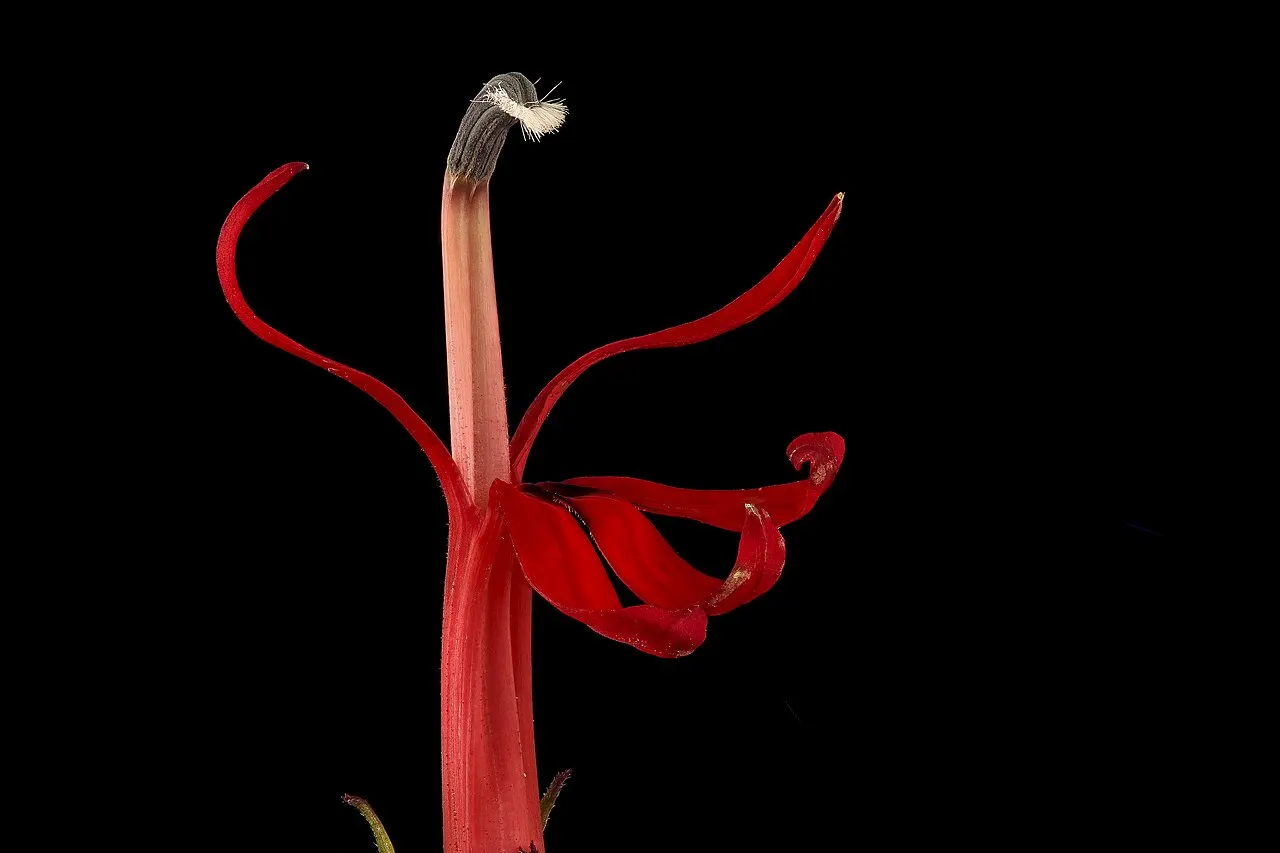
What cardinal flower looks like
A 1–6 foot perennial with showy red flowers in 8-inch terminal spikes; each flower has three spreading lower petals and two upper petals united into a tube at the base, on erect leafy stems that often grow in clusters and look like flaming red spires 1. It blooms May through October depending on latitude, with dark green foliage and a seed capsule after flowering 1.
Although relatively common, overpicking has made it scarce in some areas — one reason to buy nursery-grown plants or seed rather than dig wild ones 1.
What cardinal flower does for birds
The Wildflower Center's wildlife note is short and specific: in bloom, cardinal flower attracts hummingbirds, and it is listed as a nectar source for hummingbirds and as attracting birds and butterflies 1. All About Birds lists cardinal flower among the tubular red or orange flowers — with trumpet creeper, honeysuckle, jewelweed and bee-balm — that Ruby-throated Hummingbirds feed at, alongside the sugar-water feeder 3.
All parts are poisonous, though toxic only if eaten in large quantities 1; deer resistance is moderate 1.
Native range and growing conditions
Native from southern New Brunswick to Ontario and southeastern Minnesota, south to Florida, Texas and southern California, and on through Mexico and Central America 1. Its habitats are ditches, ravines, stream banks, wet meadows, swamps and the edges of lakes and ponds 1.
It needs moist to wet, humus-rich soil — the soil must be kept moist or wet at all times — in sun, part shade or shade, with medium-to-high water use and low drought tolerance 1. A winter mulch helps in northern climates, and it can be propagated by pinning a stem into mud, or from seed given three months of cold-moist stratification 1.
Planting it for birds: native range and care
Check the native range before buying: the Wildflower Center record for this species lists the states and provinces where it occurs naturally 1, and Audubon's zip-code native plant database narrows that to your area and the bird groups each plant attracts 2. Once established, native plants generally need little maintenance and far less water than lawn, and they do not need the pesticides that make a yard poor bird habitat 2.
Native plants are those that occur naturally in the region where they evolved, and Audubon calls them the ecological basis on which birds depend: without them and the insects that co-evolved with them, local birds cannot survive 2. The scale matters — a native oak supports over 500 species of caterpillars where a ginkgo hosts five, and it takes more than 6,000 caterpillars to raise one brood of chickadees 2. Most nursery landscaping plants are alien species, so choosing natives is the single landscaping decision with the clearest effect on bird populations 2.
Birds this plant supports
More plant guides
Frequently asked questions
Do hummingbirds use it?
Yes — it depends on hummingbirds for pollination because most insects cannot work its long tubular flowers, and it is listed as a hummingbird nectar source 13.
Does cardinal flower need wet soil?
Yes. The Wildflower Center says the soil must be kept moist or wet at all times; it has low drought tolerance 1.
Is cardinal flower poisonous?
All parts are poisonous, but toxic only if eaten in large quantities 1.