Cornus florida · Cornaceae
Flowering Dogwood for Birds
Flowering dogwood is sometimes considered the most spectacular of the native flowering trees, and its red fall fruit is on the wild diet list of both the Northern Cardinal and the American Robin 134.
The growing facts below come from the Wildflower Center's record for Cornus florida 1; the native-plant case is Audubon's 2; bird diets from All About Birds 34.
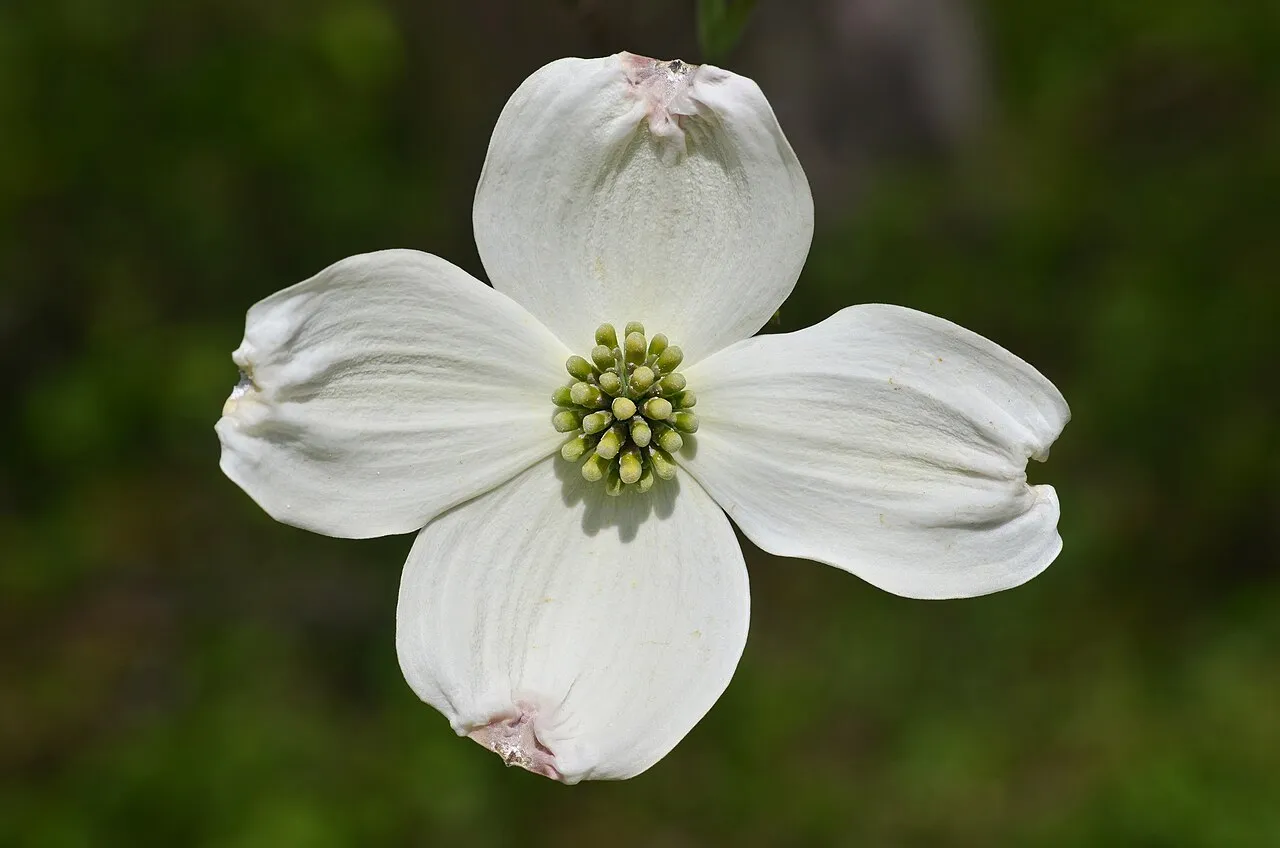
What flowering dogwood looks like
A 20–40 foot, sometimes taller, single- or multi-trunked deciduous tree with a spreading crown of nearly horizontal, graceful tiered branches, long-lasting showy white and pink spring blooms, red half-inch fruits and scarlet-red fall foliage 1. It blooms February through June depending on latitude 1.
What flowering dogwood does for birds
The Wildflower Center lists its wildlife use as fruit for birds, mammals and deer, and it is a larval host for the Spring Azure butterfly 1. All About Birds lists dogwood among the wild foods of the Northern Cardinal 3 and among the fruits — with chokecherries, hawthorn, sumac and juniper — that American Robins eat year-round 4. As a native tree it also supports the caterpillars that nesting birds feed their young 2.
Native range and growing conditions
Native from Florida to east Texas and north to southern Maine and Ontario, with the range resuming in eastern Mexico 1. Its habitats are thickets, stream and river banks, shaded deciduous woods, bluffs and dry uplands 1.
It wants part shade to shade, low water use, dry to moist conditions, and rich, well-drained acid soil — sandy, sandy loam or medium loam 1. It is cold tolerant 1.
Planting it for birds: native range and care
Check the native range before buying: the Wildflower Center record for this species lists the states and provinces where it occurs naturally 1, and Audubon's zip-code native plant database narrows that to your area and the bird groups each plant attracts 2. Once established, native plants generally need little maintenance and far less water than lawn, and they do not need the pesticides that make a yard poor bird habitat 2.
Native plants are those that occur naturally in the region where they evolved, and Audubon calls them the ecological basis on which birds depend: without them and the insects that co-evolved with them, local birds cannot survive 2. The scale matters — a native oak supports over 500 species of caterpillars where a ginkgo hosts five, and it takes more than 6,000 caterpillars to raise one brood of chickadees 2. Most nursery landscaping plants are alien species, so choosing natives is the single landscaping decision with the clearest effect on bird populations 2.
Birds this plant supports
More plant guides
Frequently asked questions
Do birds eat flowering dogwood berries?
Yes — the Wildflower Center lists fruit for birds, and All About Birds names dogwood in the diets of cardinals and robins 134.
Does flowering dogwood need shade?
Part shade to shade, with rich, well-drained acid soil; it is an understory tree in the wild 1.
How tall does it grow?
Typically 20–40 feet, occasionally much taller 1.
Sources
- Lady Bird Johnson Wildflower Center, Native Plant Database — Cornus florida (USDA symbol COFL2)
- National Audubon Society — Why Native Plants Matter
- All About Birds (Cornell Lab of Ornithology) — Northern Cardinal: Overview and Life History
- All About Birds (Cornell Lab of Ornithology) — American Robin: Overview and Life History