Echinacea purpurea · Asteraceae
Purple Coneflower for Birds
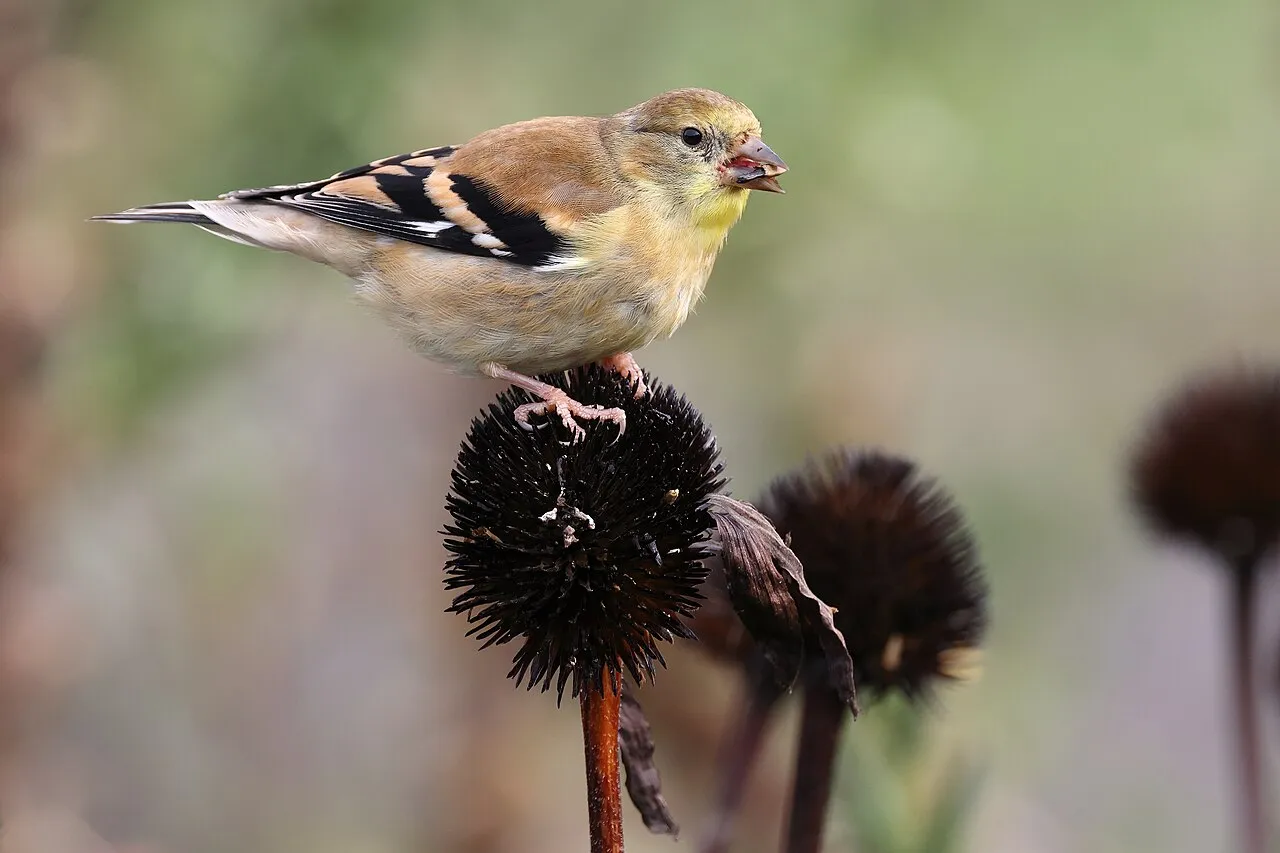
Purple coneflower is a prairie perennial that works twice for a bird garden: long-lasting lavender flowers that attract butterflies and hummingbirds, then domed, spiny seed heads that goldfinches pick through into winter 13.
The growing facts below come from the Wildflower Center's record for Echinacea purpurea 1; the native-plant case is Audubon's 2; goldfinch diet from All About Birds 3.
What purple coneflower looks like
What purple coneflower does for birds
The Wildflower Center lists it as a nectar source attracting butterflies and hummingbirds, with special value to native bees 1. The bird value is in the seed: American Goldfinches eat seeds almost exclusively — composites such as sunflowers, thistle and asters — plucking them from seedheads 3, and coneflower is a composite in the same family. Leave the heads standing through fall and winter.
Native range and growing conditions
Native from Georgia to extreme northeastern Texas, north to North Carolina, Ohio, Illinois and Iowa, in rocky open woods, thickets and prairies 1. It takes sun or part shade, medium water, and well-drained sandy or richer soils 1.
It suits a prairie garden and cut-flower arrangements, but it can become very aggressive, and it is not deer resistant 1. The Wildflower Center lists seed as the propagation material, so a patch left to seed will spread itself as well as feed the finches 1.
Planting it for birds: native range and care
Check the native range before buying: the Wildflower Center record for this species lists the states and provinces where it occurs naturally 1, and Audubon's zip-code native plant database narrows that to your area and the bird groups each plant attracts 2. Once established, native plants generally need little maintenance and far less water than lawn, and they do not need the pesticides that make a yard poor bird habitat 2.
Native plants are those that occur naturally in the region where they evolved, and Audubon calls them the ecological basis on which birds depend: without them and the insects that co-evolved with them, local birds cannot survive 2. The scale matters — a native oak supports over 500 species of caterpillars where a ginkgo hosts five, and it takes more than 6,000 caterpillars to raise one brood of chickadees 2. Most nursery landscaping plants are alien species, so choosing natives is the single landscaping decision with the clearest effect on bird populations 2.
Birds this plant supports
More plant guides
Frequently asked questions
Do goldfinches eat coneflower seeds?
Goldfinches eat composite seeds almost exclusively and pluck them from seedheads; coneflower is a composite — leave the heads standing 3.
Is purple coneflower deer resistant?
No, per the Wildflower Center record 1.
How much sun does purple coneflower need?
Sun or part shade, in well-drained soil 1.