Monarda fistulosa · Lamiaceae
Wild Bergamot Growing Conditions & the Birds It Attracts
Wild bergamot growing conditions are forgiving: the Wildflower Center says it thrives in a wide range of soils, from acid to lime, rich to poor, sand to clay, in sun or part shade, and its ragged lavender pompoms attract birds, hummingbirds and butterflies 1.
The growing facts below come from the Wildflower Center's record for Monarda fistulosa 1; the native-plant case is Audubon's 2; hummingbird notes from All About Birds 3.
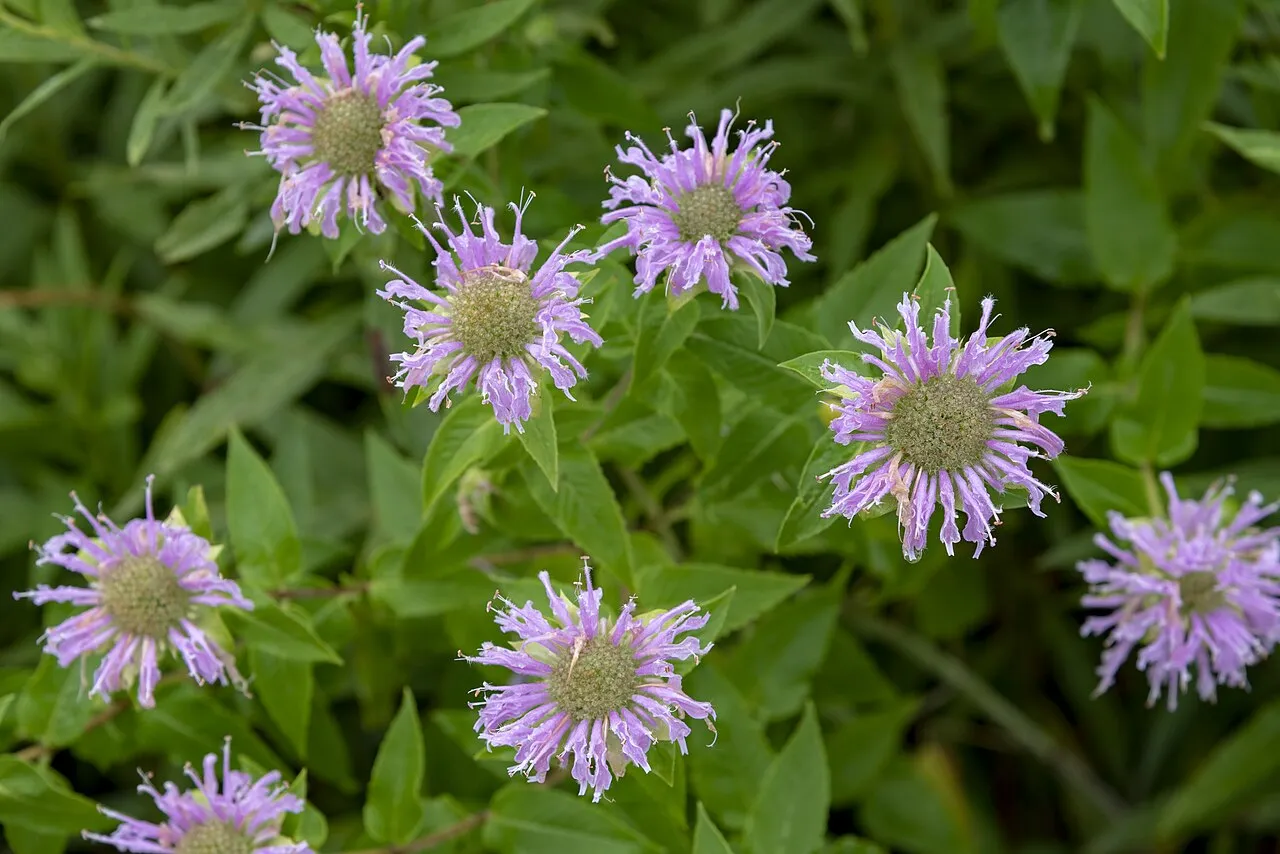
Wild bergamot growing conditions in the garden
Sun or part shade; medium water use; dry to moist soil; a wide range of soils from acid to lime, rich to poor, sand to clay; less tolerant of flooding but able to take it in winter; medium drought tolerance; zones 4 to 8 1. The one management note is to prevent mildew by providing good drainage and air circulation 1. It propagates by root division or seed 1.
In the wild it grows in dry open woods, fields, wet meadows and ditches, and at the edges of woods and marshes 1.
What wild bergamot looks like
Wild bergamot for hummingbirds and other birds
The Wildflower Center lists its wildlife use as birds, hummingbirds and butterflies, marks it a nectar source, and notes special value to native bees and bumble bees 1. All About Birds names bee-balm — Monarda — among the tubular flowers Ruby-throated Hummingbirds feed at 3. After bloom the nutlet heads hold seed that finches pick over, and as a native it supports the insects nesting birds need 2.
Planting it for birds: native range and care
Check the native range before buying: the Wildflower Center record for this species lists the states and provinces where it occurs naturally 1, and Audubon's zip-code native plant database narrows that to your area and the bird groups each plant attracts 2. Once established, native plants generally need little maintenance and far less water than lawn, and they do not need the pesticides that make a yard poor bird habitat 2.
Native plants are those that occur naturally in the region where they evolved, and Audubon calls them the ecological basis on which birds depend: without them and the insects that co-evolved with them, local birds cannot survive 2. The scale matters — a native oak supports over 500 species of caterpillars where a ginkgo hosts five, and it takes more than 6,000 caterpillars to raise one brood of chickadees 2. Most nursery landscaping plants are alien species, so choosing natives is the single landscaping decision with the clearest effect on bird populations 2.
Birds this plant supports
More plant guides
Frequently asked questions
What conditions does wild bergamot grow best in?
Sun to part shade, dry to moist soil of almost any type, good drainage and air circulation to prevent mildew; zones 4–8 1.
Do hummingbirds like Monarda?
Yes — it is listed as attracting hummingbirds, and All About Birds lists bee-balm among the flowers ruby-throats feed at 13.
Is it deer resistant?
High deer resistance per the Wildflower Center 1.