Fagus grandifolia · Fagaceae
American Beech for Birds
American beech is a sturdy, imposing 50–80 foot tree whose beechnuts are among the most important of wildlife foods — eaten by birds, mammals and rodents — and which also offers nesting sites and cover 1.
The growing facts below come from the Wildflower Center's record for Fagus grandifolia 1; the native-plant case is Audubon's 2; bird diets from All About Birds 34.
What American beech looks like
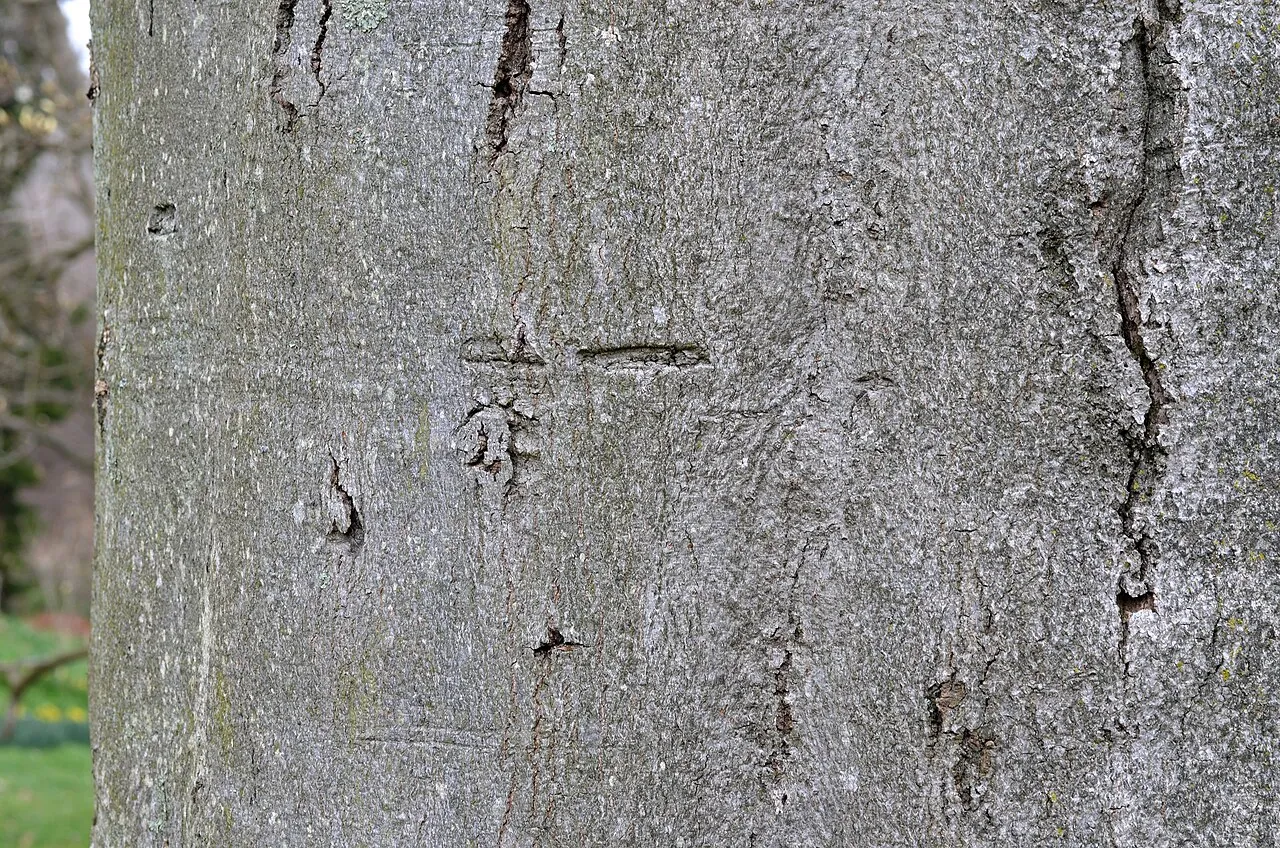
A large tree, 50–80 feet with a maximum of 120, with very smooth light gray bark that stays smooth with age, a rounded crown of long spreading horizontal branches, and dark green glossy leaves that turn copper in fall and hang on most of the winter 1. It blooms April–May and bears edible beechnuts 1.
What American beech does for birds
Beech nuts are eaten by many forms of wildlife; the Wildflower Center lists nesting site, fruit for birds, mammals, rodents and deer, cover and browse, and notes it was the tree most associated with the extinct Passenger Pigeon 1. Among today's birds, Tufted Titmice eat beech nuts and acorns and always choose the largest seeds they can 3, and Blue Jays' diet is mostly acorns, nuts, seeds and grain 4. It is a larval host for the Early Hairstreak butterfly 1.
Native range and growing conditions
Native from Florida to east Texas and north to southeastern Massachusetts, southern Ohio and Illinois, Indiana and Missouri, on moist or wet lowland sites 1. It wants part shade to shade, medium water and moist, rich, well-drained acid soils 1.
It is shade tolerant and long-lived but not suitable for small areas: it suckers from a vast surface root system, is extremely susceptible to root-zone disturbance and drought, leans toward the strongest light, and grass will not grow beneath it; a bark fungus disease has proven fatal 1.
Planting it for birds: native range and care
Check the native range before buying: the Wildflower Center record for this species lists the states and provinces where it occurs naturally 1, and Audubon's zip-code native plant database narrows that to your area and the bird groups each plant attracts 2. Once established, native plants generally need little maintenance and far less water than lawn, and they do not need the pesticides that make a yard poor bird habitat 2.
Native plants are those that occur naturally in the region where they evolved, and Audubon calls them the ecological basis on which birds depend: without them and the insects that co-evolved with them, local birds cannot survive 2. The scale matters — a native oak supports over 500 species of caterpillars where a ginkgo hosts five, and it takes more than 6,000 caterpillars to raise one brood of chickadees 2. Most nursery landscaping plants are alien species, so choosing natives is the single landscaping decision with the clearest effect on bird populations 2.
Birds this plant supports
More plant guides
Frequently asked questions
Which birds eat beechnuts?
Many — the Wildflower Center lists fruit for birds; titmice and jays are nut-eaters that take them 134.
Is American beech a good yard tree?
Only with room: it is long-lived and handsome but suckers widely, dislikes root disturbance and drought, and is not suitable for small areas 1.
How big does American beech get?
50–80 feet, up to 120 1.
Sources
- Lady Bird Johnson Wildflower Center, Native Plant Database — Fagus grandifolia (USDA symbol FAGR)
- National Audubon Society — Why Native Plants Matter
- All About Birds (Cornell Lab of Ornithology) — Tufted Titmouse: Overview and Life History
- All About Birds (Cornell Lab of Ornithology) — Blue Jay: Overview and Life History