Plant guide by bird
Plants for American Robins
Plants for American robins are fruit plants: robins eat an enormous variety of fruit year-round, including chokecherries, hawthorn, dogwood, sumac and juniper berries, alongside the earthworms and insects of spring and summer 1.
The eight natives below all carry fruit robins take; growing facts are from the Wildflower Center [3–10], the native-plant case is Audubon's 2.
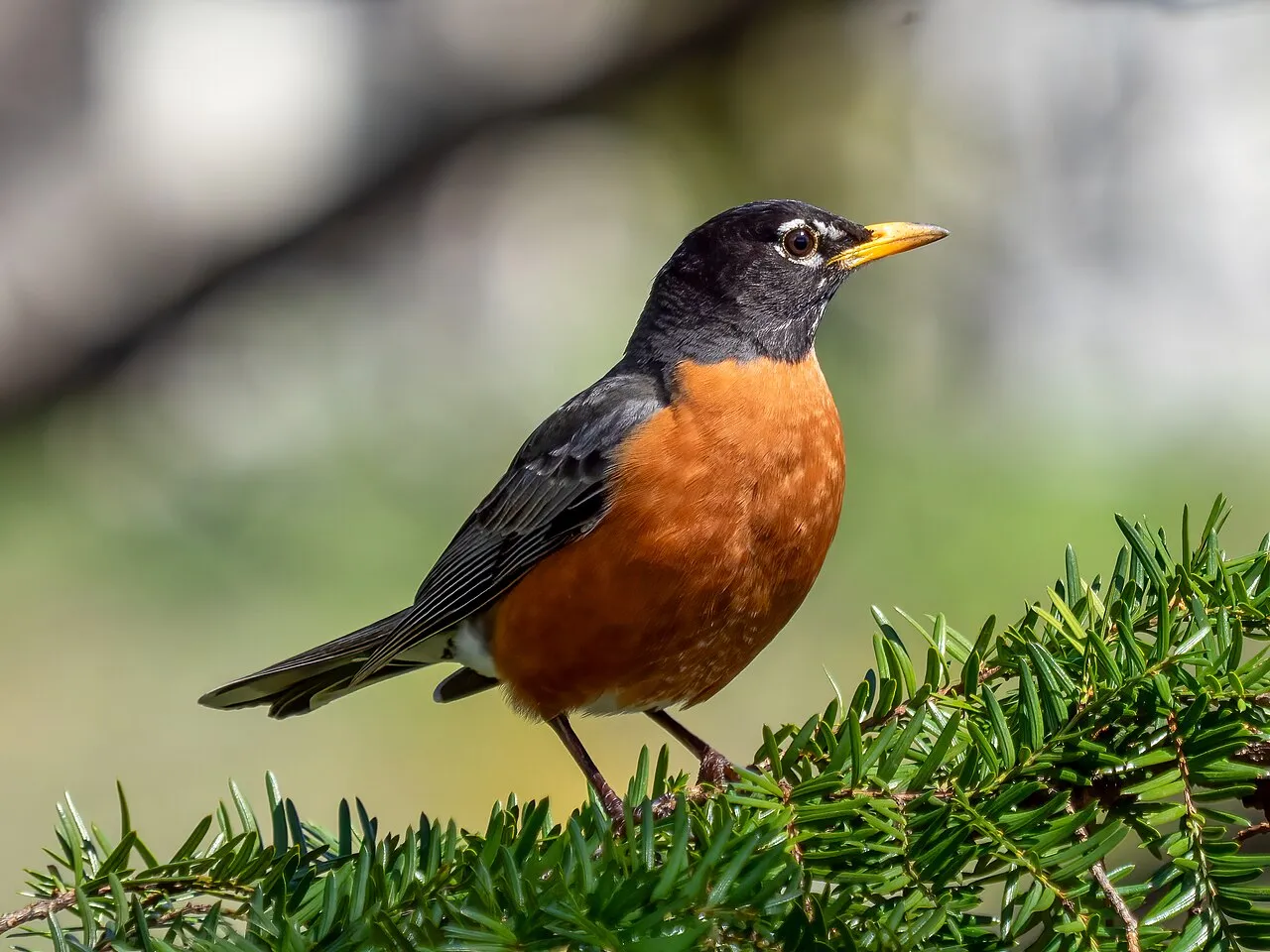
Plants for American robins: berries by season
Early summer: Canada serviceberry, an important food plant for birds 5, and red mulberry 9. Summer: trumpet honeysuckle, whose fruits are listed as attracting American Robin 10. Late summer and fall: American elderberry, relished by many bird species 6, and flowering dogwood — dogwood is on All About Birds' robin diet list 1 3. Winter: winterberry 7, American holly 8 and eastern red cedar — the juniper of the robin's diet, a staple for many birds 4.
In winter many robins move to moist woods where berry-producing trees and shrubs are common, and those that stay north roost in trees and feed on fruit rather than on lawns 1 — winter berries are why a robin stays.
The lawn, the worms and the nest
Robins find worms by staring at the ground with the head cocked and eat more earthworms in the morning and more fruit later in the day 1. Because they forage on lawns they are vulnerable to pesticide poisoning 1, so an unsprayed lawn is a robin plant too. They nest on horizontal branches hidden in or just below dense leaves, usually in the lower half of a tree 1 — dogwood's tiered branches and red cedar's density both serve.
Why native plants first
Native plants are those that occur naturally in the region where they evolved, and Audubon calls them the ecological basis on which birds depend: without them and the insects that co-evolved with them, local birds cannot survive 2. The scale matters — a native oak supports over 500 species of caterpillars where a ginkgo hosts five, and it takes more than 6,000 caterpillars to raise one brood of chickadees 2. Most nursery landscaping plants are alien species, so choosing natives is the single landscaping decision with the clearest effect on bird populations 2.
The alternative is what most yards already have. Audubon notes that manicured lawn now covers over 40 million acres of the United States as a green monoculture, that the traditional suburban lawn carries on average ten times more chemical pesticide per acre than farmland, and that the continental U.S. has lost 150 million acres of habitat and farmland to sprawl 2. Every bed of natives that replaces turf is habitat that lawn cannot be, and long-lived native trees such as oaks and maples also store carbon 2.
Check the native range before buying: the Wildflower Center record for this species lists the states and provinces where it occurs naturally 3, and Audubon's zip-code native plant database narrows that to your area and the bird groups each plant attracts 2. Once established, native plants generally need little maintenance and far less water than lawn, and they do not need the pesticides that make a yard poor bird habitat 2.
Related guides
More plant guides
Frequently asked questions
Sources
- All About Birds (Cornell Lab of Ornithology) — American Robin: Overview and Life History
- National Audubon Society — Why Native Plants Matter
- Lady Bird Johnson Wildflower Center, Native Plant Database — Cornus florida (USDA symbol COFL2)
- Lady Bird Johnson Wildflower Center, Native Plant Database — Juniperus virginiana (USDA symbol JUVI)
- Lady Bird Johnson Wildflower Center, Native Plant Database — Amelanchier canadensis (USDA symbol AMCA4)
- Lady Bird Johnson Wildflower Center, Native Plant Database — Sambucus nigra ssp. canadensis (USDA symbol SANIC4)
- Lady Bird Johnson Wildflower Center, Native Plant Database — Ilex verticillata (USDA symbol ILVE)
- Lady Bird Johnson Wildflower Center, Native Plant Database — Ilex opaca (USDA symbol ILOP)
- Lady Bird Johnson Wildflower Center, Native Plant Database — Morus rubra (USDA symbol MORU2)
- Lady Bird Johnson Wildflower Center, Native Plant Database — Lonicera sempervirens (USDA symbol LOSE)