Morus rubra · Moraceae
Red Mulberry for Birds
Red mulberry is the native mulberry, a medium-sized tree with milky sap and inch-long fruit for mammals and birds — mulberry is on All About Birds' wild-food list for both the Northern Cardinal and the House Finch 134.
The growing facts below come from the Wildflower Center's record for Morus rubra 1; the native-plant case is Audubon's 2; bird diets from All About Birds 34.
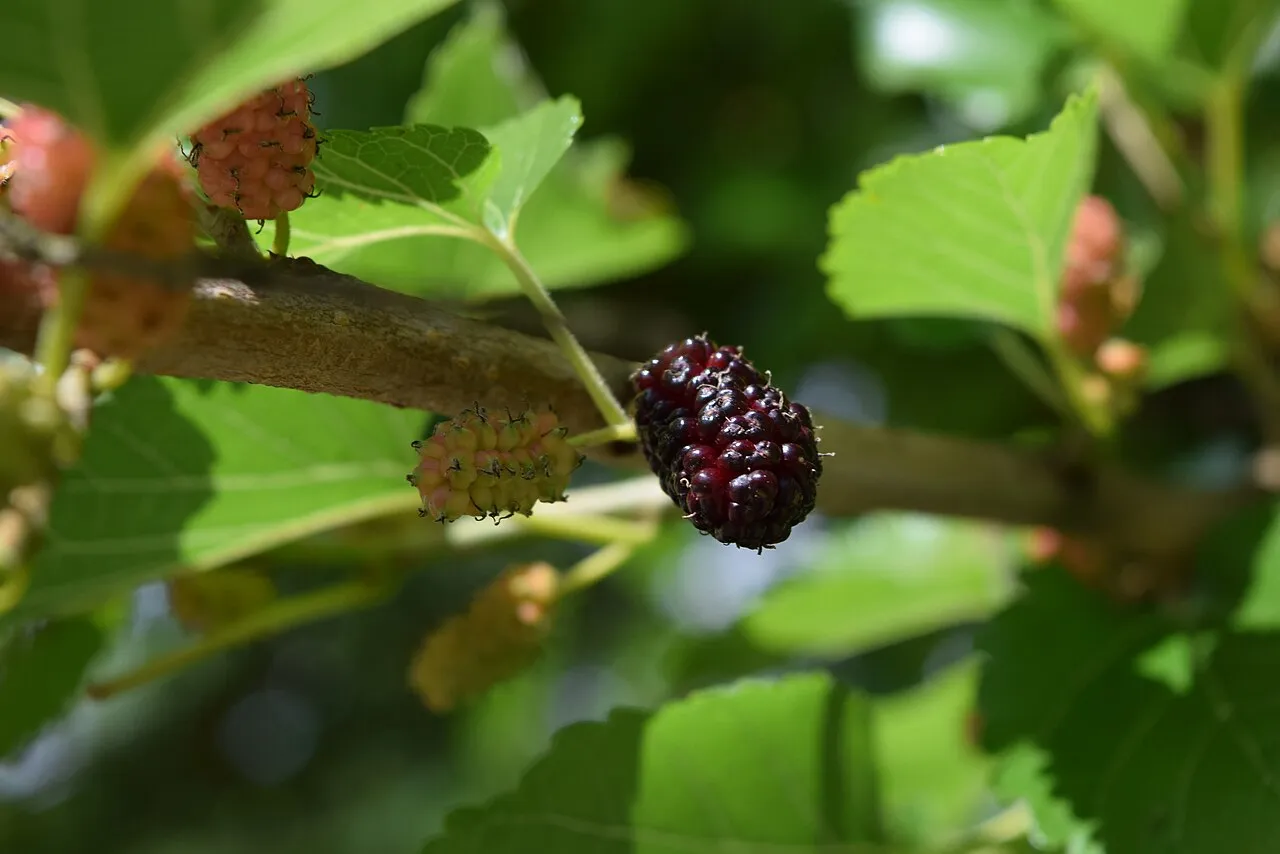
What red mulberry looks like
A medium-sized tree, up to about 65 feet but often shorter, with a short trunk, broad rounded crown and milky sap; leaves up to 8 inches, ovate with or without lobes, soft-hairy beneath, turning bright yellow in fall 1. It blooms March through August, and the fruit — black, purple or red syncarps — is ¾ to 1¼ inches long 1.
What red mulberry does for birds
The Wildflower Center lists fruit for mammals and birds, and the tree is a larval host for the Mourning Cloak butterfly 1. Northern Cardinals' wild foods include dogwood, wild grape, mulberry, hackberry, blackberry and sumac 3; House Finches eat seeds, buds and fruit including mulberry and orchard fruit 4. The fruit ripens over a long season and drops, so ground-feeding birds get a share too.
Unripe fruit and the milky sap have low toxicity if eaten; ripe fruit is edible 1.
Native range and growing conditions
Native from southern Ontario east to Massachusetts, south to southern Florida, west to central Texas and north to southeastern Minnesota, in shaded woods, along streams and rivers, in ditches and ravines 1. It takes sun to shade, medium water, dry to moist soils from sand to clay 1. Give it distance from paths and parked cars — the dropped fruit stains.
Planting it for birds: native range and care
Check the native range before buying: the Wildflower Center record for this species lists the states and provinces where it occurs naturally 1, and Audubon's zip-code native plant database narrows that to your area and the bird groups each plant attracts 2. Once established, native plants generally need little maintenance and far less water than lawn, and they do not need the pesticides that make a yard poor bird habitat 2.
Native plants are those that occur naturally in the region where they evolved, and Audubon calls them the ecological basis on which birds depend: without them and the insects that co-evolved with them, local birds cannot survive 2. The scale matters — a native oak supports over 500 species of caterpillars where a ginkgo hosts five, and it takes more than 6,000 caterpillars to raise one brood of chickadees 2. Most nursery landscaping plants are alien species, so choosing natives is the single landscaping decision with the clearest effect on bird populations 2.
Birds this plant supports
More plant guides
Frequently asked questions
Which birds eat red mulberry?
Fruit for birds generally; All About Birds lists mulberry in the diets of Northern Cardinals and House Finches 134.
Is red mulberry the same as white mulberry?
No — Morus rubra is the native species; white mulberry (M. alba) is an introduced Asian tree, though the flowers and fruits are similar 1.
Is red mulberry fruit edible?
Ripe fruit is edible and long used in Appalachia for pies and jams; unripe fruit and sap have low toxicity 1.
Sources
- Lady Bird Johnson Wildflower Center, Native Plant Database — Morus rubra (USDA symbol MORU2)
- National Audubon Society — Why Native Plants Matter
- All About Birds (Cornell Lab of Ornithology) — Northern Cardinal: Overview and Life History
- All About Birds (Cornell Lab of Ornithology) — House Finch: Overview and Life History