Juniperus virginiana · Cupressaceae
Eastern Red Cedar for Birds
Eastern red cedar is the most widely distributed eastern conifer, native in 37 states, and its juicy blue 'berries' are consumed by many kinds of wildlife including the Cedar Waxwing, which is named for the tree 1.
The growing facts below come from the Wildflower Center's record for Juniperus virginiana 1; the native-plant case is Audubon's 2; bird diets from All About Birds 34.
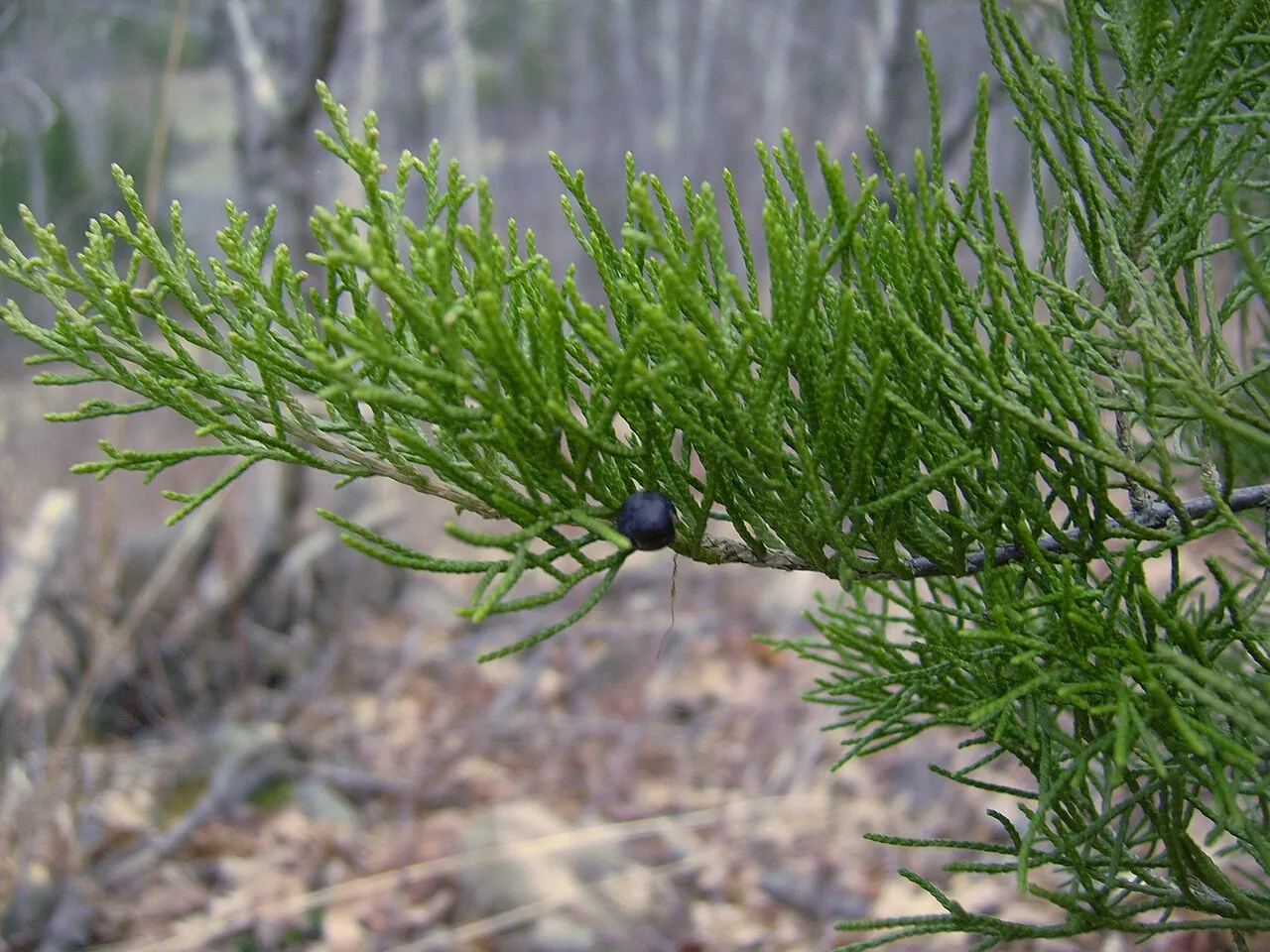
What eastern red cedar looks like
An evergreen, aromatic tree, usually 30–40 feet but reaching 90, pyramidal when young and variable when mature, with fragrant scale-like foliage from gray-green to blue-green that browns in winter and soft silvery bark 1. Pale blue fruits — seed cones, commonly called berries — occur on female plants 1.
What the tree does for birds
The fruits are a staple for many birds and small mammals, and the tree also provides nesting material and cover 1. American Robins eat juniper berries among their year-round fruits 3, and American Goldfinches take the seeds of western red cedar in the same genus 4. The dense evergreen foliage is the kind of cover Mourning Doves nest in 5 and feeder birds shelter in.
Fleshy cones and leaves have low toxicity if eaten; the tree can also injure nearby apple trees by carrying cedar-apple rust 1.
Native range and growing conditions
Planting it for birds: native range and care
Check the native range before buying: the Wildflower Center record for this species lists the states and provinces where it occurs naturally 1, and Audubon's zip-code native plant database narrows that to your area and the bird groups each plant attracts 2. Once established, native plants generally need little maintenance and far less water than lawn, and they do not need the pesticides that make a yard poor bird habitat 2.
Native plants are those that occur naturally in the region where they evolved, and Audubon calls them the ecological basis on which birds depend: without them and the insects that co-evolved with them, local birds cannot survive 2. The scale matters — a native oak supports over 500 species of caterpillars where a ginkgo hosts five, and it takes more than 6,000 caterpillars to raise one brood of chickadees 2. Most nursery landscaping plants are alien species, so choosing natives is the single landscaping decision with the clearest effect on bird populations 2.
Birds this plant supports
More plant guides
Frequently asked questions
Which birds eat eastern red cedar berries?
Many — the Wildflower Center calls them a staple for birds and names the Cedar Waxwing; robins eat juniper berries too 13.
Is it drought tolerant?
Yes — high drought tolerance and resistance to extremes of heat and cold 1.
Does eastern red cedar harm apple trees?
It can, by hosting cedar-apple rust; keep it away from orchards 1.
Sources
- Lady Bird Johnson Wildflower Center, Native Plant Database — Juniperus virginiana (USDA symbol JUVI)
- National Audubon Society — Why Native Plants Matter
- All About Birds (Cornell Lab of Ornithology) — American Robin: Overview and Life History
- All About Birds (Cornell Lab of Ornithology) — American Goldfinch: Overview and Life History
- All About Birds (Cornell Lab of Ornithology) — Mourning Dove: Overview and Life History