How to attract · guide
Balcony Birding
Balcony birding works because birds do not need a yard: Audubon says that if you have no yard you can still help birds with a native plant container garden on a patio or balcony, and that even very small patches of habitat give tired, hungry birds what they need during migration 3.
Feeder, food and water advice below is FeederWatch's 1; plant advice is Audubon's 3; glass safety is from All About Birds 2; the birds are from All About Birds species accounts 45.
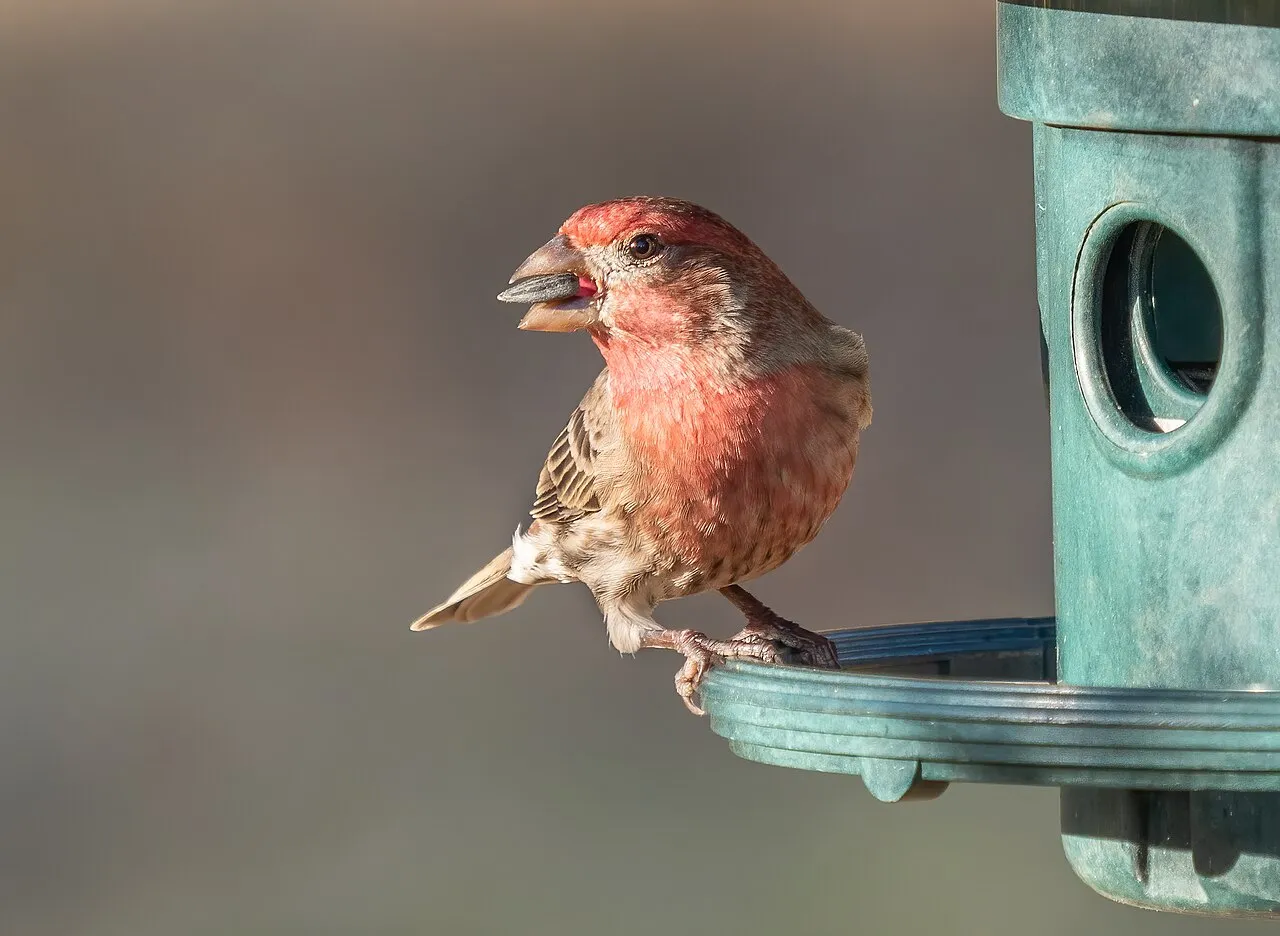
Balcony birding setup: feeder, water, containers
Use a small feeder: feeders with short perches accommodate small birds such as finches but exclude larger birds such as grackles and jays 1 — a suction-cup window feeder on the door glass or a short tube on a railing bracket. Fill it with sunflower chips or hulled seed so no shells fall on the floor below, and offer only what is eaten in a day. Add a shallow dish of water with a stone in it; birds are attracted to water just as they are to feeders 1. In containers, choose natives: Audubon suggests sunflowers, asters and coneflowers for seed and red tubular flowers such as columbine and honeysuckle for hummingbirds 3.
Balcony birding: which birds come
House Finches are the most dependable: they are birds of human-created habitats, and if they discover a feeder of small black-oil sunflower they may bring flocks of 50 or more 4. Black-capped Chickadees do not mind tiny hanging feeders that swing in the wind and readily visit window feeders 5; goldfinches use almost any feeder type; doves and sparrows find spilled seed on the floor 1. Height matters less than a clear approach — birds want to see the feeder from a tree or roofline and have somewhere to retreat.
The one real hazard is the glass door. Treat it with markings no more than 2 inches apart, dot tape, cords or an exterior screen rather than trying to keep the feeder far from it 12.
Keep the birds you attract safe: windows, cats, clean feeders
Window collisions kill perhaps a billion or more birds a year in North America, and far more die at homes and low-rise buildings than at high-rises simply because there are so many of them 2. Older rules about safe feeder-to-window distances are no longer thought valid; the fix is to make the glass visible — markings spaced no more than 2 inches apart on the outside, exterior screens, or hanging cords 12.
Cats are the most numerous pet in North America and kill hundreds of millions of birds each year; ground-feeding birds, ground-nesting birds and fledglings are at greatest risk, and feeder birds are easy prey, so FeederWatch strongly recommends keeping cats indoors 1. Clean seed and suet feeders every week or two — more often in heavy use or wet weather — with warm water and dish soap, since leftover seed and hulls harbor pathogens 1.
More attraction guides
Frequently asked questions
Can you attract birds to a high balcony?
Yes — house finches, chickadees, goldfinches and doves all use upper-floor feeders; Audubon notes even tiny habitat patches help migrants 345.
How do I keep a balcony feeder from making a mess?
Hulled seed or sunflower chips, a day's portion at a time, and a sweep of the floor so spilled seed does not mold 1.
Sources
- Project FeederWatch (Cornell Lab of Ornithology) — Feeding Birds: feeders, foods, water, placement, cleaning and safety
- All About Birds (Cornell Lab of Ornithology) — Why Birds Hit Windows, and How You Can Help Prevent It
- National Audubon Society — How to Make Your Yard Bird-Friendly
- All About Birds (Cornell Lab of Ornithology) — House Finch: Overview and Life History
- All About Birds (Cornell Lab of Ornithology) — Black-capped Chickadee: Overview and Life History