How to attract · species guide
How to Attract Ruby-throated Hummingbirds
How to attract ruby-throated hummingbirds combines a feeder and a garden: All About Birds' advice is a sugar-water feeder plus tubular flowers such as trumpet creeper, cardinal flower, honeysuckle, jewelweed and bee-balm 4.
Species facts are from All About Birds 4; feeder recipe and cleaning from FeederWatch 1; plants from Audubon 3; windows from All About Birds 2.
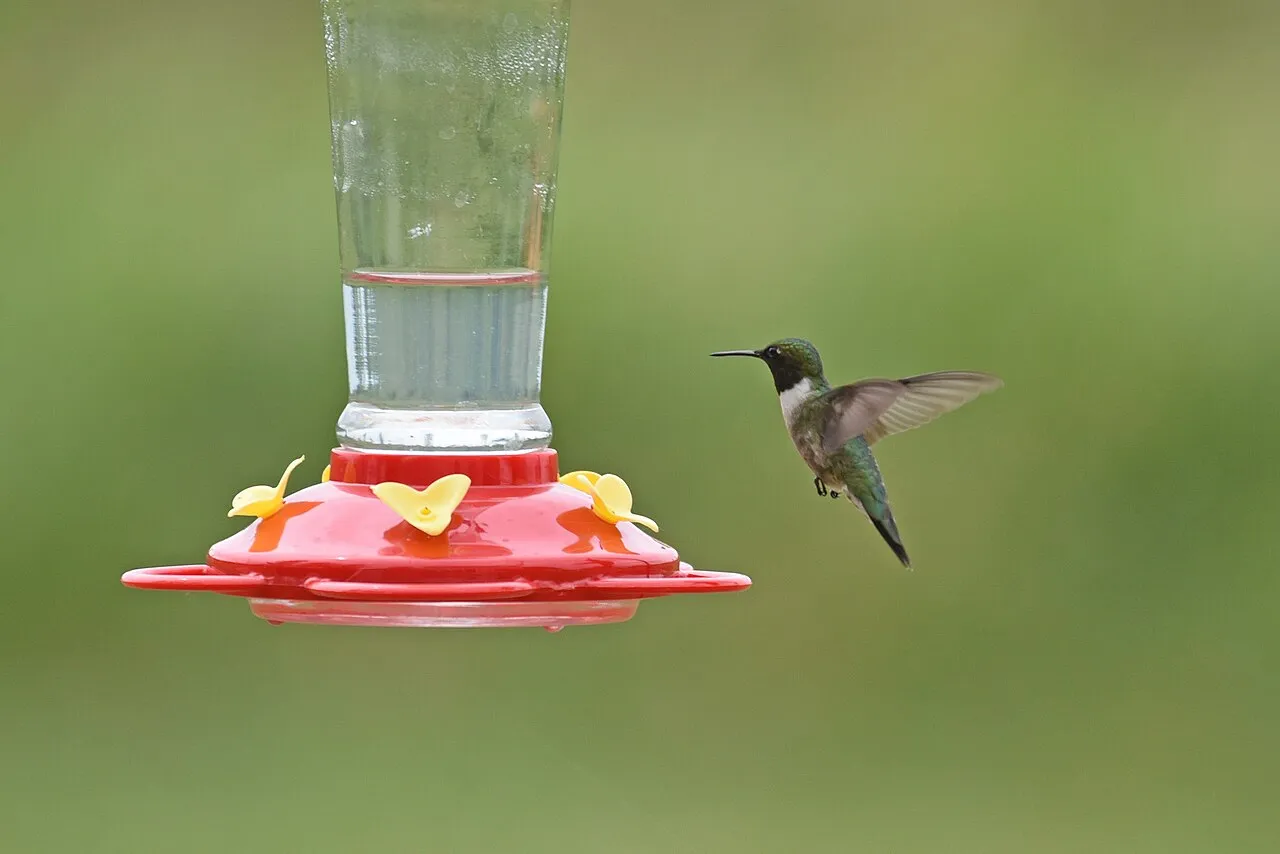
How to attract ruby-throated hummingbirds with a feeder
Make the mixture with about one-quarter cup of sugar per cup of water — FeederWatch's version is one part sugar to four parts boiling water, cooled — with no food coloring, which is unnecessary and, per FeederWatch, harmful; red portals or a red ribbon attract the birds just as well 14. Change the water before it grows cloudy or discolored, and remember that in hot weather sugar water ferments rapidly into toxic alcohol 4. Hummingbird feeders need cleaning more often than seed feeders — every couple of days, ideally at every refill — and at any sign of cloudy water or black mold, discard the solution and clean immediately 1.
Feeders are generally safe for hummingbirds but can be a problem if they make the birds easy targets for cats — some cats learn to lie in wait — or if placed near windows the birds might fly into 4; treat nearby glass with 2-inch-spaced markings 2.
Flowers that attract hummingbirds, and the garden
Ruby-throated Hummingbirds prefer red or orange flowers, and plant nectar sources: trumpet creeper, cardinal flower, honeysuckle, jewelweed and bee-balm 4; Audubon's list adds native columbine and penstemon 3. Cardinal flower depends on hummingbirds for pollination because most insects cannot navigate its long tubular flowers, and blooms May through October. They also catch insects in midair for protein 4, so an unsprayed garden feeds them twice.
Keep the birds you attract safe: windows, cats, clean feeders
Window collisions kill perhaps a billion or more birds a year in North America, and far more die at homes and low-rise buildings than at high-rises simply because there are so many of them 2. Older rules about safe feeder-to-window distances are no longer thought valid; the fix is to make the glass visible — markings spaced no more than 2 inches apart on the outside, exterior screens, or hanging cords 12.
Cats are the most numerous pet in North America and kill hundreds of millions of birds each year; ground-feeding birds, ground-nesting birds and fledglings are at greatest risk, and feeder birds are easy prey, so FeederWatch strongly recommends keeping cats indoors 1. Clean seed and suet feeders every week or two — more often in heavy use or wet weather — with warm water and dish soap, since leftover seed and hulls harbor pathogens 1.
Related guides for this bird
More attraction guides
Frequently asked questions
Sources
- Project FeederWatch (Cornell Lab of Ornithology) — Feeding Birds: feeders, foods, water, placement, cleaning and safety
- All About Birds (Cornell Lab of Ornithology) — Why Birds Hit Windows, and How You Can Help Prevent It
- National Audubon Society — How to Make Your Yard Bird-Friendly
- All About Birds (Cornell Lab of Ornithology) — Ruby-throated Hummingbird: Overview and Life History