How to attract · species guide
How to Attract Baltimore Orioles
How to attract Baltimore orioles, per All About Birds: cut oranges in half and hang them from trees, offer sugar water in an oriole feeder, put out small amounts of jelly, and plant raspberries, crab apples and trumpet vines to bring orioles back year after year 4.
Species facts are from All About Birds 4; feeder recipe and cleaning from FeederWatch 1; plants from Audubon 3; windows from All About Birds 2.
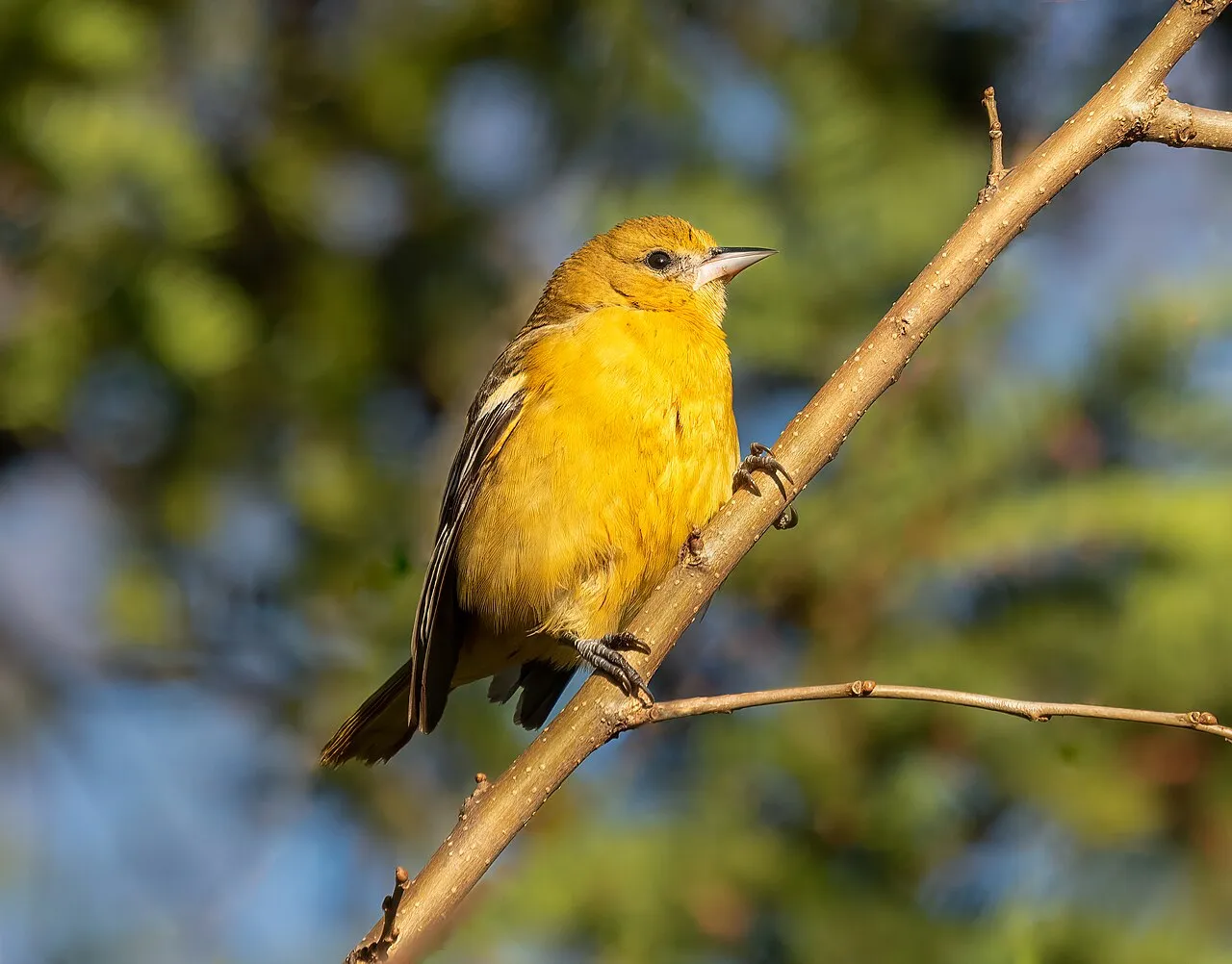
How to attract Baltimore orioles when they arrive
Timing is everything. Orioles eat insects, fruit and nectar in proportions that change with the season: in spring and fall, nectar and ripe fruit make up more of the diet because their sugars convert readily to fat for migration, while in summer, feeding young, much of the diet is protein-rich insects 4. So oranges, jelly and nectar work best in the first weeks after spring arrival; once nesting begins, orioles shift to caterpillars — including tent caterpillars and gypsy moth caterpillars — and visit less 4.
For the nectar feeder, FeederWatch gives a slightly more diluted mixture for orioles than for hummingbirds: one part sugar to six parts water, no red food coloring 1. Clean it as often as a hummingbird feeder — every couple of days — and never let jelly build up where it can soil feathers 14.
Trees and fruit for orioles, and the hanging nest
Orioles live high in leafy deciduous trees but not deep forest — open woodland, forest edge, river banks and small groves — and have adapted well to parks, orchards and backyards 4. The female anchors the sock-like woven nest to a fork in slender upper branches, often an American elm but also maples and cottonwoods 4; a tall deciduous tree at the yard edge is the nest site. For fruit, All About Birds' raspberries, crab apples and trumpet vines 4 fit Audubon's native-fruit layer — serviceberry and cherry for the breeding season, dogwood for fall 3.
Keep the birds you attract safe: windows, cats, clean feeders
Window collisions kill perhaps a billion or more birds a year in North America, and far more die at homes and low-rise buildings than at high-rises simply because there are so many of them 2. Older rules about safe feeder-to-window distances are no longer thought valid; the fix is to make the glass visible — markings spaced no more than 2 inches apart on the outside, exterior screens, or hanging cords 12.
Cats are the most numerous pet in North America and kill hundreds of millions of birds each year; ground-feeding birds, ground-nesting birds and fledglings are at greatest risk, and feeder birds are easy prey, so FeederWatch strongly recommends keeping cats indoors 1. Clean seed and suet feeders every week or two — more often in heavy use or wet weather — with warm water and dish soap, since leftover seed and hulls harbor pathogens 1.
Related guides for this bird
More attraction guides
Frequently asked questions
What is the best food to attract orioles?
Halved oranges, 1:6 sugar water in an oriole feeder, and small amounts of jelly — especially in the first weeks of spring 14.
Why did the orioles stop coming to my feeder?
Nesting: in summer they switch to insects for their young and visit fruit and nectar less; they return in late summer before migration 4.
Sources
- Project FeederWatch (Cornell Lab of Ornithology) — Feeding Birds: feeders, foods, water, placement, cleaning and safety
- All About Birds (Cornell Lab of Ornithology) — Why Birds Hit Windows, and How You Can Help Prevent It
- National Audubon Society — How to Make Your Yard Bird-Friendly
- All About Birds (Cornell Lab of Ornithology) — Baltimore Oriole: Overview and Life History