How to attract · guide
How to Attract Birds to a New Feeder
How to attract birds to a new feeder is a short list: the right seed, a spot near cover, dry fresh food, and time — birds find feeders by sight and by watching each other, and a new one can sit unvisited for days.
Everything below about foods, feeder types, placement and cleaning is from Project FeederWatch 1; window advice is from All About Birds 2.
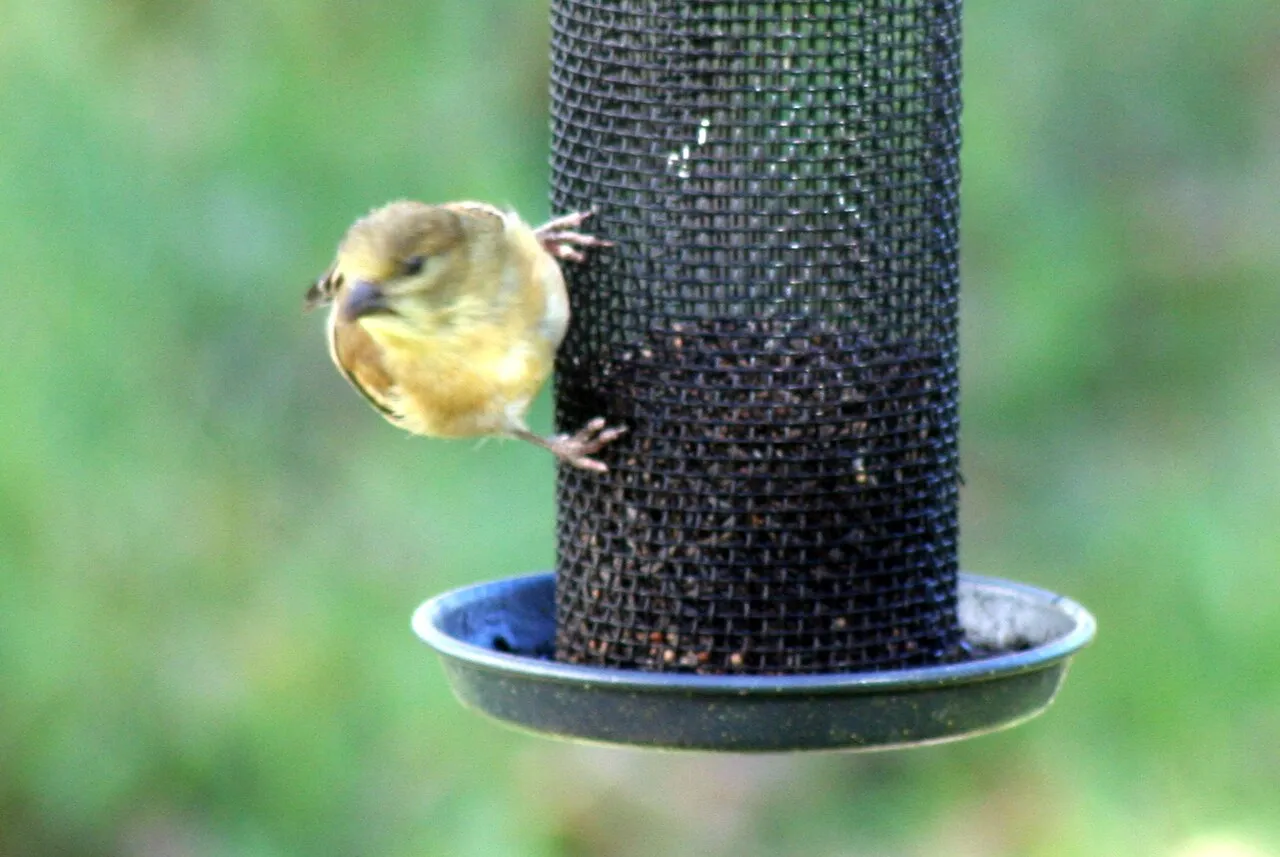
How to attract birds to a new feeder with the right seed
Start with black-oil sunflower: it is the preferred food item for a wide variety of birds and among the favorite feeder foods of cardinals, chickadees, finches and sparrows 1. Skip mixes heavy in milo, which is not a favorite of most birds and often goes to waste 1. Once regulars arrive, add a second feeder for a second crowd — nyjer for goldfinches, siskins and redpolls; suet for woodpeckers, nuthatches and chickadees; millet on the ground for juncos and sparrows 1.
Match the feeder to the birds: large hoppers attract most species and let doves and grackles feed; tubes with short perches suit finches and exclude jays and grackles; trays attract most species and, near the ground, juncos, doves and sparrows 1.
Feeder placement and the wait for the first birds
Place the feeder in a quiet area where it is easy to see and convenient to refill, close to natural cover such as trees or shrubs — evergreens are ideal — but not so close to strong branches that squirrels and cats have a jump-off point; about 10 feet is a good compromise 1. A loosely stacked brush pile near the feeder gives ground birds resting and escape cover 1.
Then wait. Keep the seed dry and fresh — clean feeders more often in wet weather and discard wet seed 1 — because stale food will not draw a first visitor. If nothing comes after two or three weeks, the site guide on why no birds are coming to a feeder walks through the usual causes: natural food in season, a hawk or cat, a window reflection, or simply a feeder that is hard to see from cover.
Keep the birds you attract safe: windows, cats, clean feeders
Window collisions kill perhaps a billion or more birds a year in North America, and far more die at homes and low-rise buildings than at high-rises simply because there are so many of them 2. Older rules about safe feeder-to-window distances are no longer thought valid; the fix is to make the glass visible — markings spaced no more than 2 inches apart on the outside, exterior screens, or hanging cords 12.
Cats are the most numerous pet in North America and kill hundreds of millions of birds each year; ground-feeding birds, ground-nesting birds and fledglings are at greatest risk, and feeder birds are easy prey, so FeederWatch strongly recommends keeping cats indoors 1. Clean seed and suet feeders every week or two — more often in heavy use or wet weather — with warm water and dish soap, since leftover seed and hulls harbor pathogens 1.
More attraction guides
Frequently asked questions
How long does it take birds to find a new feeder?
There is no fixed time; days to a few weeks is typical. Fresh black-oil sunflower near cover shortens the wait 1.
What seed attracts the most birds to a new feeder?
Black-oil sunflower — FeederWatch calls it the preferred food for a wide variety of birds 1.