How to attract · species guide
How to Attract American Goldfinches
How to attract American goldfinches is unusually simple, because they are one of the strictest vegetarians in the bird world: seeds almost exclusively, from composites like sunflowers, thistle and asters, grasses, and trees such as alder, birch, western red cedar and elm 4.
Species facts are from All About Birds 4; feeder facts from FeederWatch 1; plants from Audubon 3; windows from All About Birds 2.
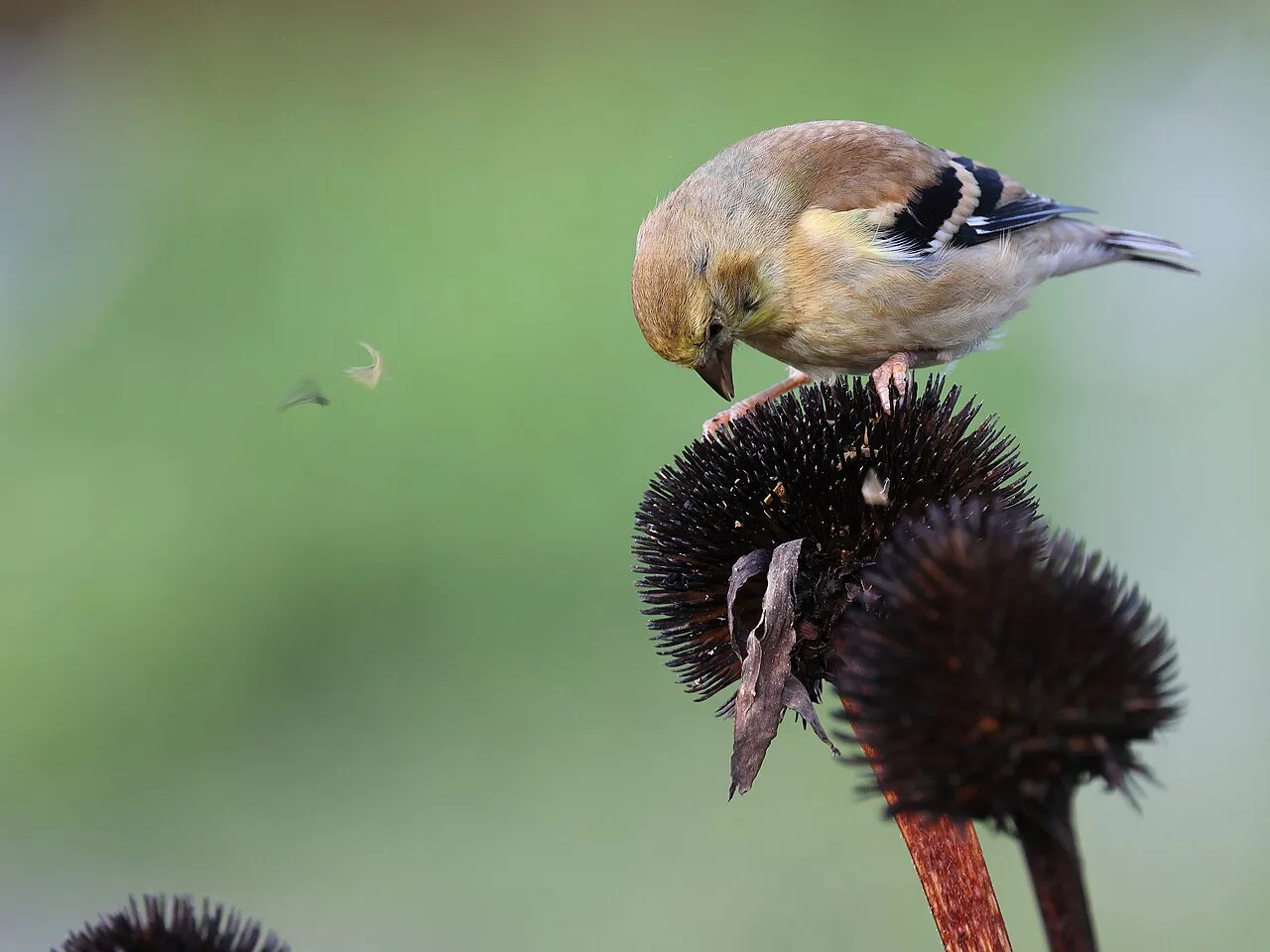
How to attract American goldfinches to feeders
At feeders goldfinches prefer nyjer and sunflower, use almost any feeder type — hopper, platform or hanging — do not mind feeders that sway in the wind, and happily feed on spilled seed on the ground 4. FeederWatch credits nyjer's popularity largely to its ability to attract finches including American Goldfinch, Pine Siskin and Common Redpoll 1; a mesh sock or fine-port tube keeps it dry, and tube feeders keep seed fairly dry generally 1. Replace nyjer that has gone stale or damp — goldfinches ignore it.
Plants that attract goldfinches, and their late nest
All About Birds' planting advice is native thistles, other composite plants and native milkweed 4; Audubon's seed list — native sunflowers, asters and coneflowers — adds the garden composites, left standing after bloom 3. Goldfinches breed later than most North American birds, waiting until June or July when milkweed, thistle and other plants have produced the fibrous seeds they weave into nests and feed to their young 4, so a yard that only feeds them in winter is missing the season they settle in.
They molt body feathers twice a year, in late winter and late summer, so the drab winter birds at the nyjer feeder in February are the same ones that turn bright yellow in April 4.
Keep the birds you attract safe: windows, cats, clean feeders
Window collisions kill perhaps a billion or more birds a year in North America, and far more die at homes and low-rise buildings than at high-rises simply because there are so many of them 2. Older rules about safe feeder-to-window distances are no longer thought valid; the fix is to make the glass visible — markings spaced no more than 2 inches apart on the outside, exterior screens, or hanging cords 12.
Cats are the most numerous pet in North America and kill hundreds of millions of birds each year; ground-feeding birds, ground-nesting birds and fledglings are at greatest risk, and feeder birds are easy prey, so FeederWatch strongly recommends keeping cats indoors 1. Clean seed and suet feeders every week or two — more often in heavy use or wet weather — with warm water and dish soap, since leftover seed and hulls harbor pathogens 1.
Related guides for this bird
More attraction guides
Frequently asked questions
What is the best food to attract goldfinches?
Nyjer (thistle) and sunflower, in any feeder — even one that sways; plus native thistles and composites in the garden 14.
Why do goldfinches disappear in summer?
They nest late — June or July — and spend that time in weedy fields with thistle and milkweed; they return to feeders once the young fledge 4.
Sources
- Project FeederWatch (Cornell Lab of Ornithology) — Feeding Birds: feeders, foods, water, placement, cleaning and safety
- All About Birds (Cornell Lab of Ornithology) — Why Birds Hit Windows, and How You Can Help Prevent It
- National Audubon Society — How to Make Your Yard Bird-Friendly
- All About Birds (Cornell Lab of Ornithology) — American Goldfinch: Overview and Life History