How to attract · guide
How to Attract Birds to a Birdhouse
How to attract birds to a birdhouse is mostly about building and mounting it right: NestWatch's checklist is untreated wood, thick walls, drainage and ventilation holes, an extended sloped roof, rough interior walls, no outside perch, a predator guard, and a metal pole 4.
Box specifications are NestWatch's 4; species tips are from All About Birds for chickadees and titmice 56 and NestWatch for bluebirds 7; safety rules from FeederWatch and All About Birds 12.
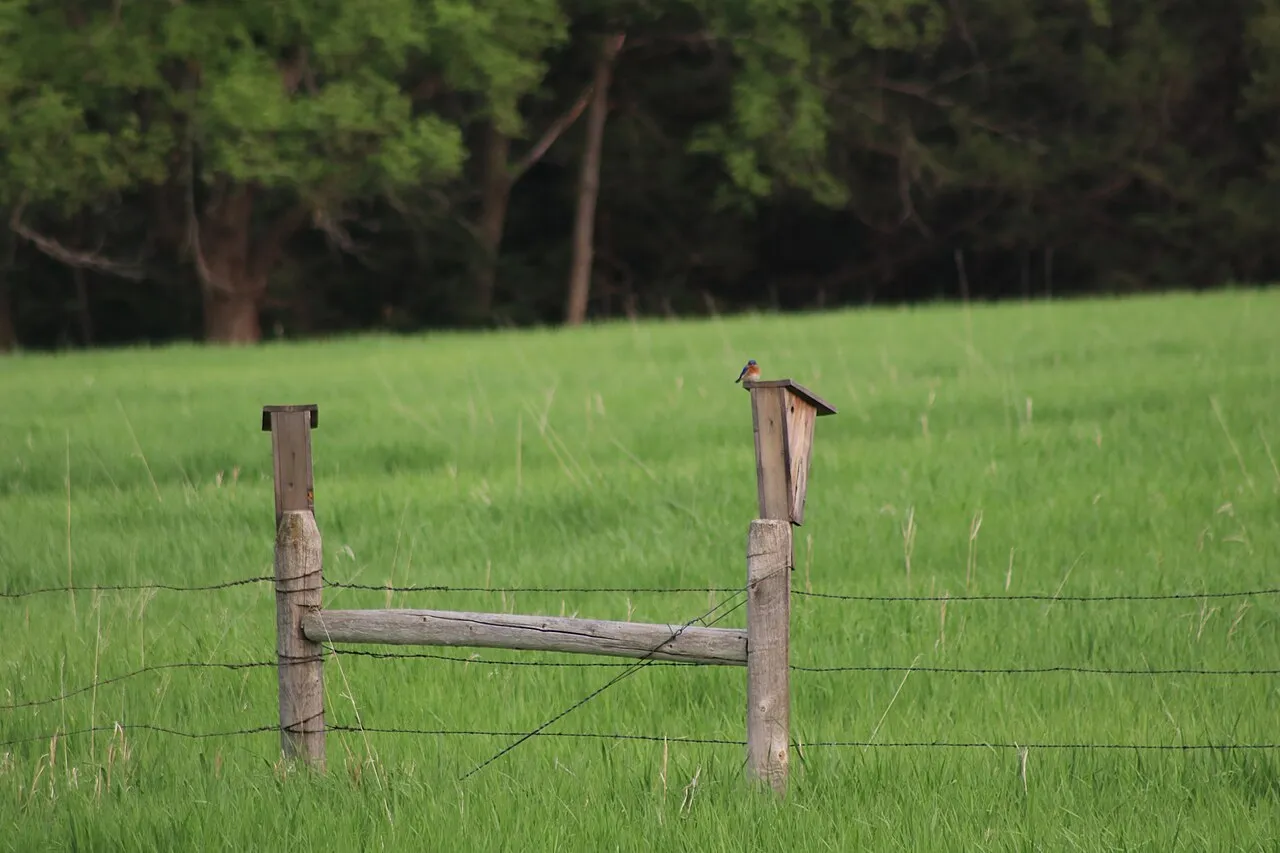
How to attract birds to a birdhouse: build it to the checklist
Use untreated, unpainted wood — cedar, pine or cypress — with galvanized screws rather than nails, walls at least ¾ inch thick to insulate the nest, and a sloped roof that overhangs the front by 2–4 inches and the sides by 2 4. Add at least four drainage holes of ⅜ to ½ inch in the floor, recess the floor ¼ inch, and cut two ⅝-inch ventilation holes near the top of each side wall 4. Roughen the interior wall below the entrance so nestlings can climb out, and give the box a hinged side with a latch for monitoring and cleaning 4.
Leave off the perch: it is unnecessary for the birds and can help predators gain access 4. Size the hole for the bird you want — 1 9/16 inches is the smallest a European Starling fits through and 1¼ inches the smallest a House Sparrow fits, so go smaller to exclude them 4.
Birdhouse mounting, predators and which birds use it
Mount the box on a metal pole with a baffle — a cone baffle about 3 feet across, or a stovepipe baffle 8 inches in diameter and 24–36 inches long — rather than on a tree or fence post; raccoons remember box locations year to year, chipmunks compete for boxes, snakes climb unguarded poles, and cats leap to box tops from nearby trees 4. Keep boxes away from brush piles 4.
Then match the bird. Black-capped Chickadees take a box put up well before the breeding season, with a predator guard, filled with sawdust or wood shavings they can excavate, at least 60 feet into woodland to keep House Wrens out 5. Tufted Titmice cannot dig their own cavity and readily use a box with a predator guard 6. Eastern Bluebirds take a box built to NestWatch's bluebird plan — 5½ by 5½ inches inside, 9 inches deep, with the entrance size the plan specifies — mounted 4–6 feet up, facing east toward open habitat, boxes 300 feet apart, cleaned out as soon as a brood fledges 7.
Keep the birds you attract safe: windows, cats, clean feeders
Window collisions kill perhaps a billion or more birds a year in North America, and far more die at homes and low-rise buildings than at high-rises simply because there are so many of them 2. Older rules about safe feeder-to-window distances are no longer thought valid; the fix is to make the glass visible — markings spaced no more than 2 inches apart on the outside, exterior screens, or hanging cords 12.
Cats are the most numerous pet in North America and kill hundreds of millions of birds each year; ground-feeding birds, ground-nesting birds and fledglings are at greatest risk, and feeder birds are easy prey, so FeederWatch strongly recommends keeping cats indoors 1. Clean seed and suet feeders every week or two — more often in heavy use or wet weather — with warm water and dish soap, since leftover seed and hulls harbor pathogens 1.
More attraction guides
Frequently asked questions
Why won't birds use my birdhouse?
Usually a perch, a wrong-sized hole, a tree mount predators can climb, or a box put up too late; NestWatch's checklist fixes each 4.
Sources
- Project FeederWatch (Cornell Lab of Ornithology) — Feeding Birds: feeders, foods, water, placement, cleaning and safety
- All About Birds (Cornell Lab of Ornithology) — Why Birds Hit Windows, and How You Can Help Prevent It
- National Audubon Society — How to Make Your Yard Bird-Friendly
- NestWatch (Cornell Lab of Ornithology) — Features of a Good Birdhouse
- All About Birds (Cornell Lab of Ornithology) — Black-capped Chickadee: Overview and Life History
- All About Birds (Cornell Lab of Ornithology) — Tufted Titmouse: Overview and Life History
- NestWatch (Cornell Lab of Ornithology) — Eastern Bluebird: nest box placement and measurements