How to attract · guide
How to Attract Birds Without a Feeder
How to attract birds without a feeder is, in FeederWatch's own words, not a compromise: bird feeders are not the only way — or even the best way — to feed birds, and planting native plants is one of the best ways to support bird populations 1.
This guide follows Audubon's native-plant habitat steps 34 and FeederWatch's water advice 1; window safety is from All About Birds 2.
How to attract birds without a feeder: grow the food
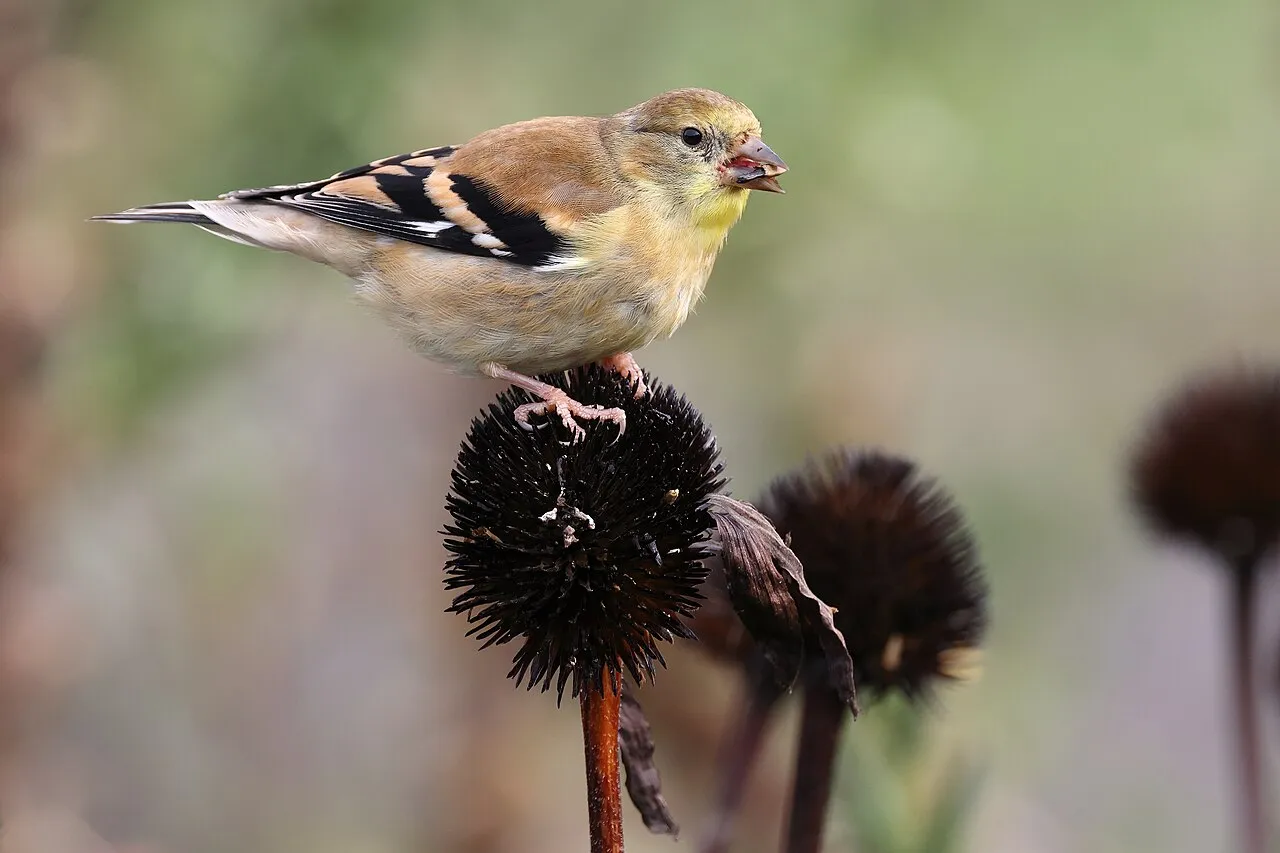
Native plants brim with insects, berries, nectar and seeds 3. For insects — the protein 96 percent of land birds rely on to feed chicks — plant native trees such as oaks, willows, birches and maples and herbaceous natives like goldenrod, milkweed and sunflowers 3; a native oak supports over 500 caterpillar species against five for a ginkgo, and one chickadee brood needs more than 6,000 caterpillars 4. For fruit, stagger the season: serviceberry and cherry in summer, dogwood and spicebush for fall migrants, cedar and holly for winter 3. For seed, native sunflowers, asters and coneflowers — and do not deadhead them, since seedheads are fall and winter food 3. For nectar, red tubular natives such as columbine, penstemon and honeysuckle 3.
Attract birds with water, cover and the things you stop doing
Water draws birds just as feeders do: a shallow dish or bath, ideally with a dripper for moving water, the water changed daily 1. Cover comes from shrubs, evergreens and a brush pile — Audubon recommends building one for shelter 3 — and from what you leave alone: fallen leaves as mulch and insect habitat, dead trees and branches where safe for cavity nesters, and no pesticides, because a bird-friendly garden is a bug-friendly garden 3.
The payoff is a food supply FeederWatch calls easier and more dependable than any feeder, and one that does not need weekly scrubbing 1.
Keep the birds you attract safe: windows, cats, clean feeders
Window collisions kill perhaps a billion or more birds a year in North America, and far more die at homes and low-rise buildings than at high-rises simply because there are so many of them 2. Older rules about safe feeder-to-window distances are no longer thought valid; the fix is to make the glass visible — markings spaced no more than 2 inches apart on the outside, exterior screens, or hanging cords 12.
Cats are the most numerous pet in North America and kill hundreds of millions of birds each year; ground-feeding birds, ground-nesting birds and fledglings are at greatest risk, and feeder birds are easy prey, so FeederWatch strongly recommends keeping cats indoors 1. Clean seed and suet feeders every week or two — more often in heavy use or wet weather — with warm water and dish soap, since leftover seed and hulls harbor pathogens 1.
More attraction guides
Frequently asked questions
Can you attract birds without feeding them?
Yes — FeederWatch says feeders are not the best way to feed birds; native plants, water and cover do it more dependably 13.
What plants attract birds without a feeder?
Oaks, birches and goldenrod for insects; serviceberry, dogwood, cedar and holly for fruit; sunflowers, asters and coneflowers for seed; columbine and honeysuckle for nectar 3.
Sources
- Project FeederWatch (Cornell Lab of Ornithology) — Feeding Birds: feeders, foods, water, placement, cleaning and safety
- All About Birds (Cornell Lab of Ornithology) — Why Birds Hit Windows, and How You Can Help Prevent It
- National Audubon Society — How to Make Your Yard Bird-Friendly
- National Audubon Society — Why Native Plants Matter