Cephalanthus occidentalis · Rubiaceae
Common Buttonbush for Birds
Common buttonbush is the shrub for the wet corner of the yard: it tolerates poor drainage and standing water, its pincushion flowers are a nectar and honey plant, and ducks, other water birds and shorebirds consume the seeds 1.
The growing facts below come from the Wildflower Center's record for Cephalanthus occidentalis 1; the native-plant case is Audubon's 2.
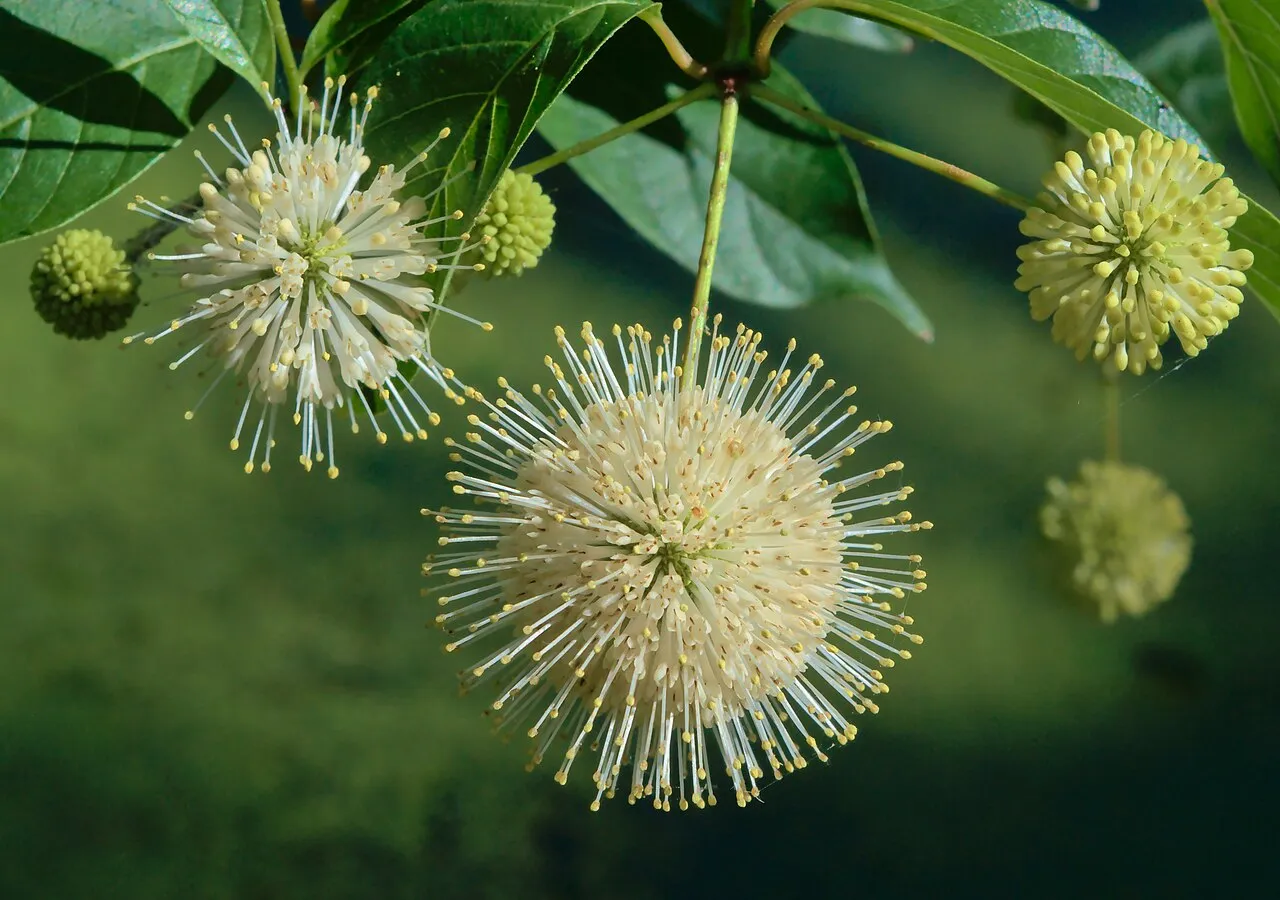
What common buttonbush looks like
A multi-stemmed shrub of 6–12 feet, occasionally taller, with glossy dark green leaves in pairs or threes and small flowers in dense spherical one-inch heads, white or pale pink, with pistils protruding like pins 1. It blooms June through September, and the rounded masses of nutlets persist through winter; trunks are often twisted 1.
What buttonbush does for birds
The Wildflower Center's wildlife uses are nectar for butterflies, bees and insects, and fruit for birds; its comments add that ducks and other water birds and shorebirds consume the seeds 1. It is a nectar source with special value to native, bumble and honey bees, and an adult food source for two sphinx moths 1 — the insect life that in turn feeds insectivorous songbirds 2. The foliage is poisonous and unpalatable to livestock 1.
Native range and growing conditions
Native from New Brunswick and Quebec to the upper Mississippi valley, eastern Nebraska and Kansas, south to Florida and Texas, in swamps, around ponds and on the margins of streams, marshes and lakes 1. It takes part shade to shade, high water, moist to wet soils of any texture including limestone, and is fine with poor drainage or standing water 1. It is cold tolerant 1.
Planting it for birds: native range and care
Check the native range before buying: the Wildflower Center record for this species lists the states and provinces where it occurs naturally 1, and Audubon's zip-code native plant database narrows that to your area and the bird groups each plant attracts 2. Once established, native plants generally need little maintenance and far less water than lawn, and they do not need the pesticides that make a yard poor bird habitat 2.
Native plants are those that occur naturally in the region where they evolved, and Audubon calls them the ecological basis on which birds depend: without them and the insects that co-evolved with them, local birds cannot survive 2. The scale matters — a native oak supports over 500 species of caterpillars where a ginkgo hosts five, and it takes more than 6,000 caterpillars to raise one brood of chickadees 2. Most nursery landscaping plants are alien species, so choosing natives is the single landscaping decision with the clearest effect on bird populations 2.
Birds this plant supports
More plant guides
Frequently asked questions
Can buttonbush grow in standing water?
Yes — moist, poor drainage or standing water are all listed as acceptable 1.
Which birds use buttonbush?
Fruit for birds generally; ducks, other water birds and shorebirds consume the seeds 1.
Is buttonbush poisonous?
The foliage is poisonous and unpalatable to livestock 1.