Ilex verticillata · Aquifoliaceae
Winterberry Holly for Birds
Winterberry holly is the holly that drops its leaves: after the first frost the foliage turns black and falls, leaving dense clusters of bright red berries that remain on the branches through winter — cover, nesting site and fruit for birds 1.
The growing facts below come from the Wildflower Center's record for Ilex verticillata 1; the native-plant case is Audubon's 2; bird diets from All About Birds 3.
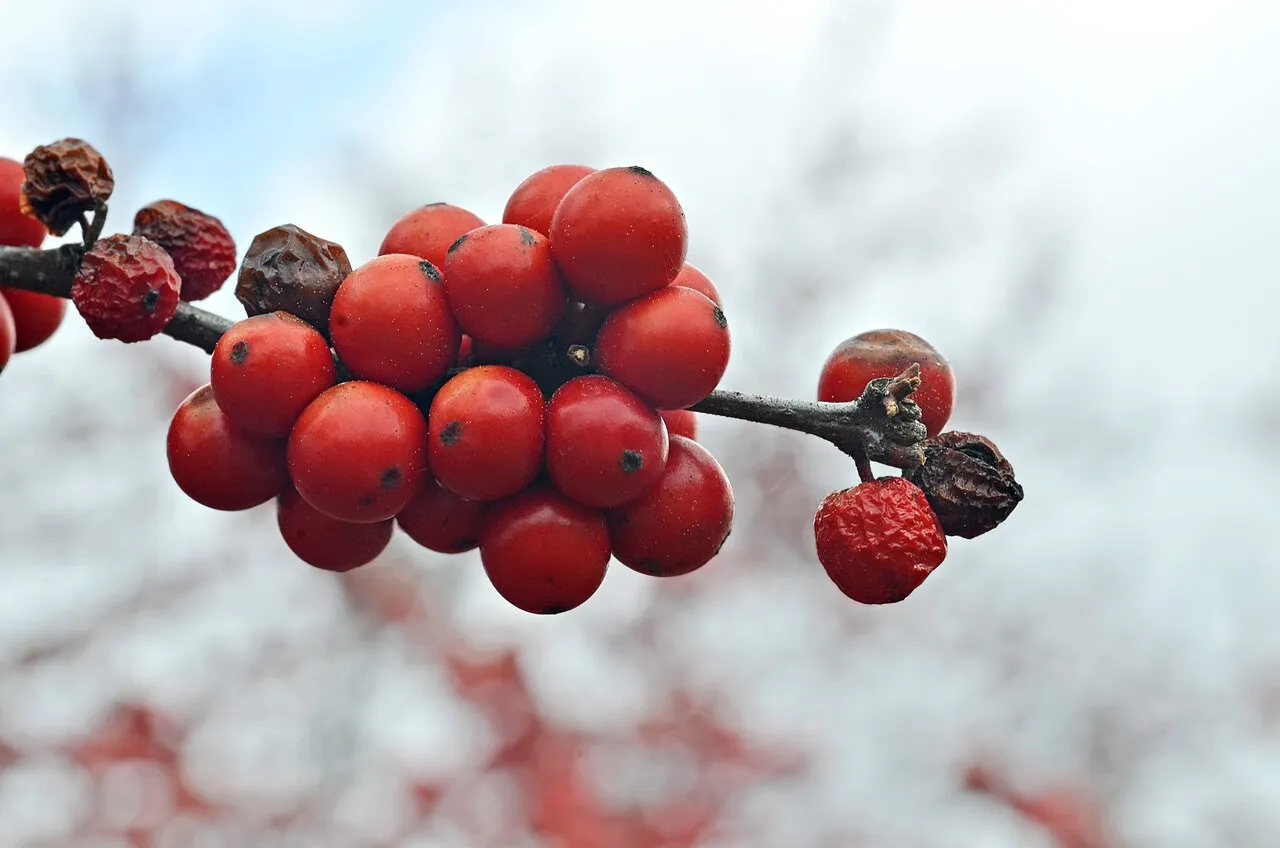
What winterberry holly looks like
A globular, upright, medium-sized shrub typically 6–10 feet tall (to 20 feet in some circumstances) with leaves that lack the sharp teeth of other hollies and are not evergreen 1. Its inconspicuous white-to-greenish flowers appear April through July; the red or orange fruit — technically drupes, commonly called berries — is extremely showy in late fall and early winter 1.
What winterberry does for birds
The Wildflower Center's wildlife uses are cover, nesting site, nectar for insects and fruit for birds 1. Because the fruit persists into winter it feeds birds when little else does; American Robins, which eat a wide range of fruit and in winter move to moist woods where berry-producing trees and shrubs are common, are regular winterberry visitors 3. It is also a larval host for Henry's Elfin butterfly 1.
Like all Ilex, it may be somewhat toxic if ingested; children are most vulnerable 1.
Native range and growing conditions
Native from Nova Scotia to the Florida panhandle and west to Minnesota, southeastern Missouri and east Texas, in swamps, along streams and rivers and near lakes and ponds 1. It takes sun to shade, high water use, and moist acidic soils from sand to clay, tolerating poor drainage; it is quite winter-hardy 1.
You must have both a male and a female plant to get berries — the male must be the same species and bloom at the same time 1.
Planting it for birds: native range and care
Check the native range before buying: the Wildflower Center record for this species lists the states and provinces where it occurs naturally 1, and Audubon's zip-code native plant database narrows that to your area and the bird groups each plant attracts 2. Once established, native plants generally need little maintenance and far less water than lawn, and they do not need the pesticides that make a yard poor bird habitat 2.
Native plants are those that occur naturally in the region where they evolved, and Audubon calls them the ecological basis on which birds depend: without them and the insects that co-evolved with them, local birds cannot survive 2. The scale matters — a native oak supports over 500 species of caterpillars where a ginkgo hosts five, and it takes more than 6,000 caterpillars to raise one brood of chickadees 2. Most nursery landscaping plants are alien species, so choosing natives is the single landscaping decision with the clearest effect on bird populations 2.
Birds this plant supports
More plant guides
Frequently asked questions
Why doesn't my winterberry have berries?
Winterberry is dioecious: you need a female plant and a male of the same species blooming at the same time nearby 1.
Which birds eat winterberry?
The Wildflower Center lists fruit for birds; robins, which feed on berry-producing shrubs in winter, are typical 13.
Does winterberry need wet soil?
It is a swamp and streambank shrub with high water use; it tolerates poor drainage and prefers moist acidic soil 1.